Why I Ditched Weird Lifts for Basic Exercises for Strength
I remember scrolling through Instagram and seeing a guy doing a 'stability-focused' squat on a Bosu ball with a kettlebell in one hand and a resistance band around his neck. I tried it once in my garage. I looked like a baby giraffe on ice and felt exactly zero tension in my quads. That was the day I realized I was wasting my time on 'optimization' instead of actually working. If you want to get big and strong, you have to stop chasing the algorithm and start mastering basic exercises for strength.
- Mastering the 'Big Four' movements builds more muscle than any machine.
- Progressive overload is only possible when the movement is repeatable.
- You don't need fancy gear—you need heavy iron and a stable floor.
- Consistency is boring, but it is the only thing that works.
Social Media is Ruining Your Gains
Instagram and TikTok thrive on novelty. If a creator posts the same barbell row every week for a year, the algorithm buries them. So, they invent 'hacks' and 'new variations' that look cool but do very little. They are selling you entertainment, not results. I’ve spent years in my garage, and I’ve seen people spend $2,000 on 'functional' cable attachments only to have a 185-lb deadlift.
The truth is, the human body hasn't changed much in the last few thousand years. Your muscles respond to mechanical tension and metabolic stress. You get that by moving heavy things through a full range of motion. When you switch exercises every two weeks because some influencer called a standard bench press 'sub-optimal,' you lose the ability to track progress. You aren't getting stronger; you're just getting better at being confused.
What Actually Qualifies as a Basic Strength Exercise?
Not every movement deserves a spot in your program. A true basic strength exercise has to meet three criteria. First, it must be a compound movement, meaning it uses more than one joint. If you're only moving your elbow, it's an accessory, not a base. Second, it has to be scalable. You need to be able to add weight—even just 2.5 lbs—consistently over a long period. Third, it has to be stable enough that your strength is the limiting factor, not your balance.
I’ve tested hundreds of movements, from Zercher squats to Bulgarian split squats. While the fancy stuff has its place, it should never replace the foundation. If you can’t move 1.5 times your body weight on a basic lift, you have no business doing 'unstable surface training.' You are trying to build a skyscraper on a swamp. Stick to the movements that allow for the most weight to be moved safely.
The Foundational Four: Lifts That Actually Matter
There are really only four movement patterns you need to care about: the squat, the hinge, the push, and the pull. These form the core of the best exercises for a full body workout. If you hit these four patterns with intensity, you’ve covered 95% of your muscular needs. The other 5% is just bicep curls for the beach, which is fine, but don't mistake the icing for the cake.
The Squat (And Why You Can't Skip It)
The squat is the ultimate test of lower body power. Whether you prefer a high-bar position or a low-bar powerlifting style, you’re taxing your quads, glutes, and core simultaneously. I’ve seen people try to replace squats with leg extensions and leg curls, but the hormonal response and sheer systemic fatigue just aren't the same. If you’re looking for effective leg workout exercises, start with a goblet squat to master the depth, then move to the barbell. Don't worry about 'toning'; worry about adding 10 lbs to the bar.
The Hinge, Push, and Pull
The hinge—usually the deadlift—is how you build a back like a barn door. It’s about picking something heavy off the ground with a flat spine. It’s the most 'functional' thing you can do. Then you have the push. I’m a fan of the overhead press for shoulder health, but the bench press is the king of chest development. Finally, the pull. Heavy rows or weighted pull-ups will do more for your physique than any 'lat isolation' machine ever will. I personally prefer a Pendlay row because it forces you to be explosive from a dead stop.
Stop Buying Gimmicks to Do These Lifts
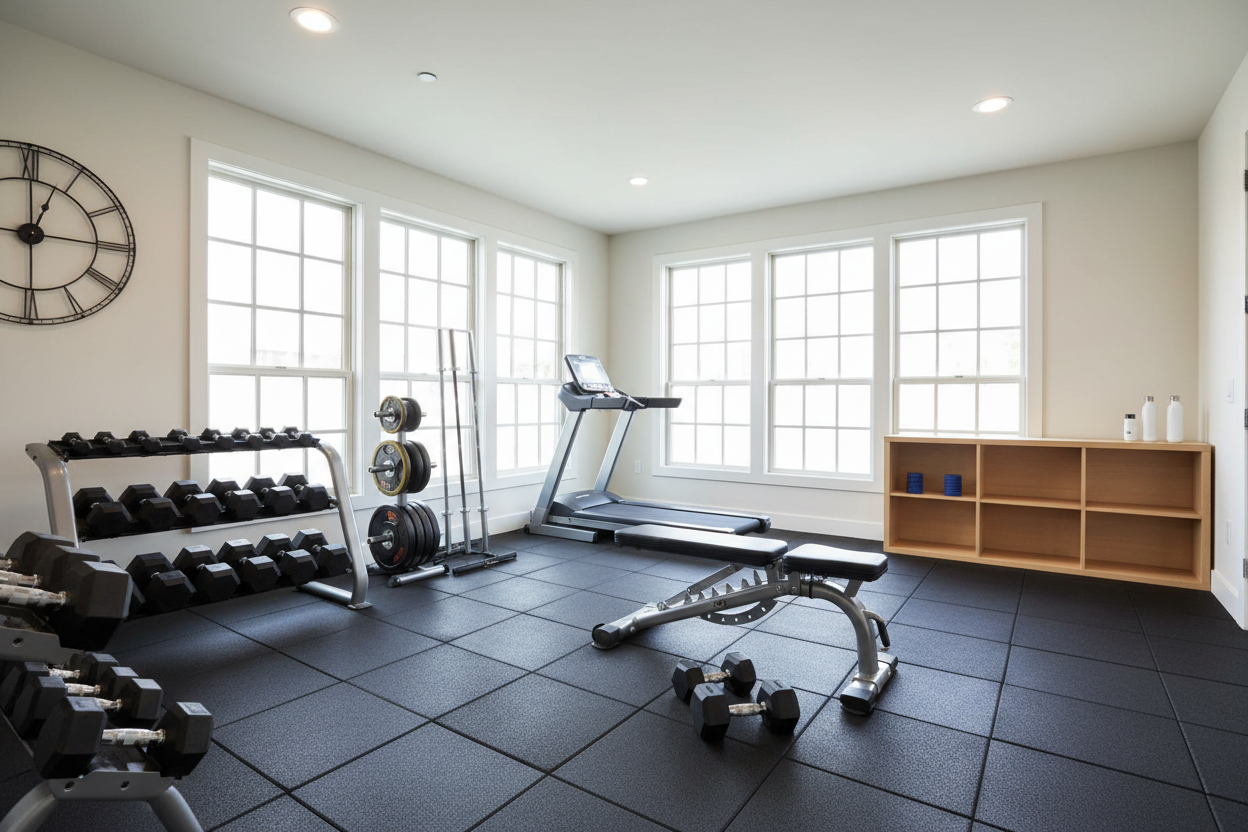
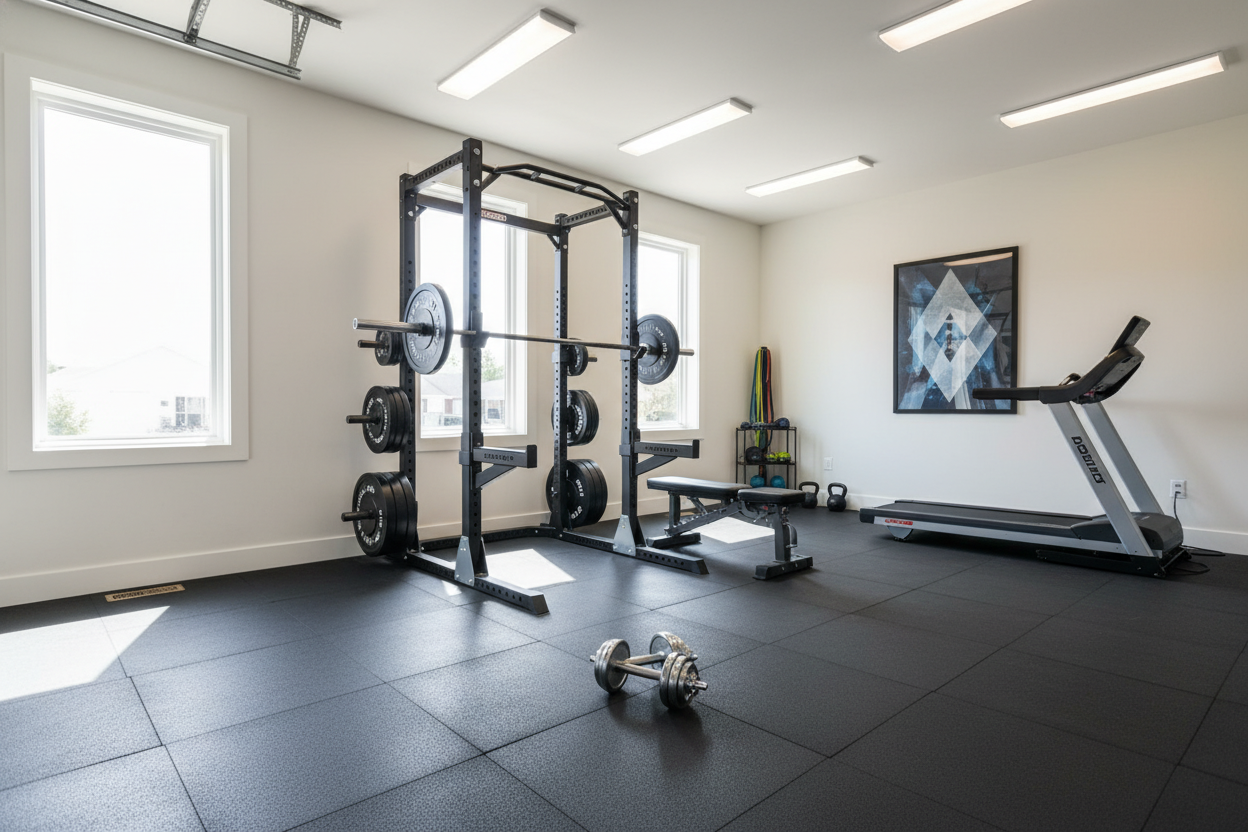
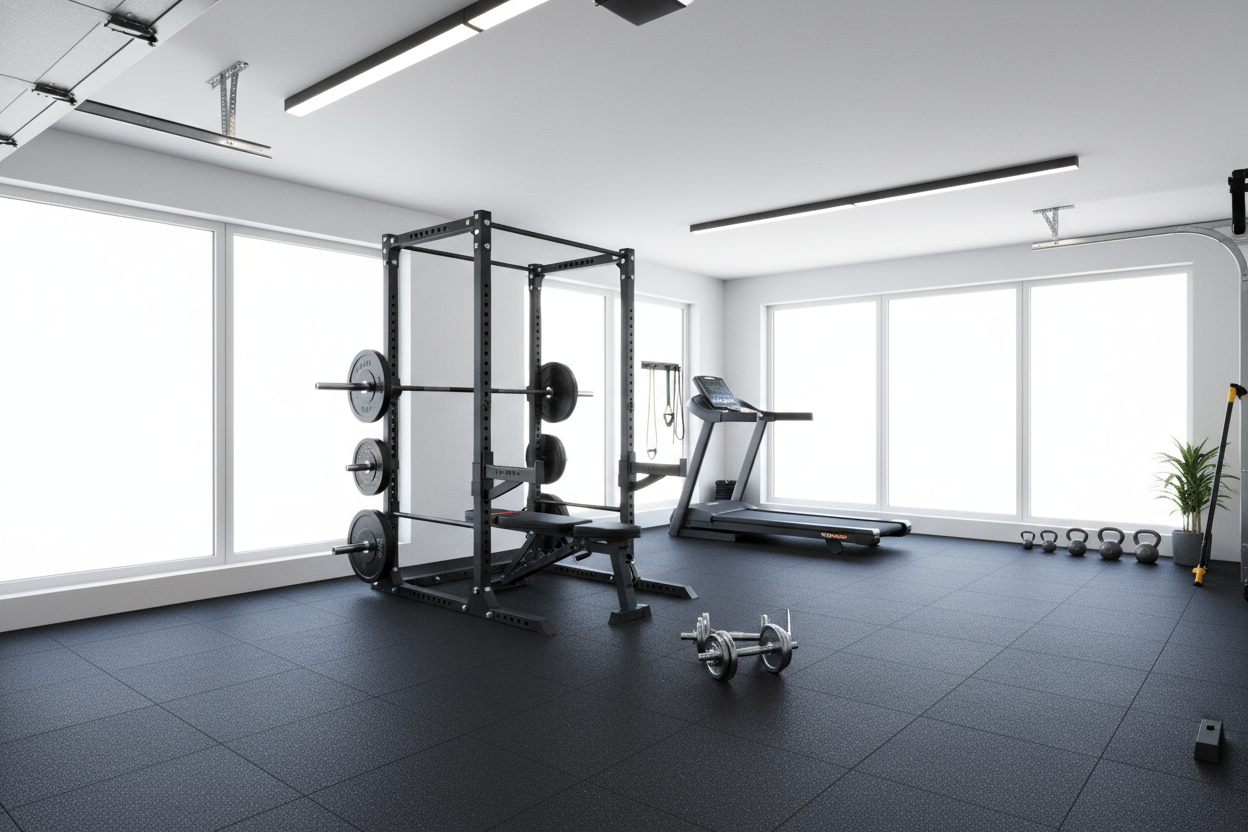
You don't need a $500 'vibration plate' or a cable machine that requires a PhD to assemble. You need heavy-duty strength equipment that can take a beating. I’ve seen racks that sway when you re-rack 225 lbs; avoid those like the plague. You want 11-gauge steel and 3x3 posts. Anything less is a toy that won't grow with you as you get stronger.
And please, stop deadlifting on your wife's yoga mat. You need solid gym flooring that doesn't compress. If your feet are sinking into the foam, you're losing power and risking an ankle roll. A 3/4-inch rubber mat is the gold standard. It protects your concrete, dampens the noise so your neighbors don't hate you, and gives you a stable platform to drive from. I once tried pulling 400 lbs on cheap foam tiles and felt the floor shift mid-lift—never again.
3 No-BS Strength Workout Ideas You Can Start Today
If you're ready to stop playing around, here are three strength workout ideas that actually work. First, the 'Starting Strength' style 3x5. You do squats, presses, and pulls three times a week, adding weight every single session. It’s brutal, it’s boring, and it works better than anything else for beginners. Second, the Upper/Lower split. You hit upper body movements on Monday/Thursday and lower body on Tuesday/Friday. This allows for more volume on the accessory lifts like curls or face pulls.
Third, the 'Full Body Power' routine. You pick one variation of the four main movements each session and go heavy. For these heavy days, I highly recommend investing in useful strength training accessories. A solid 10mm leather lifting belt and some chalk are worth their weight in gold. Don't use them as a crutch for bad form, but use them when you're pushing into that 90% range to keep your spine supported and your grip secure so you can focus on the move.
Embrace the Boredom
The secret that nobody wants to tell you is that getting strong is repetitive. It’s about doing the same five exercises for years. It’s not about 'muscle confusion' or 'shocking the system.' It’s about showing up when you’re tired of looking at the same barbell and doing the work anyway. I’ve been training in my garage for over a decade. The most progress I ever made wasn't when I found a new program; it was when I decided to stop changing my program. Master the basics, eat enough protein, and stay consistent. The rest is just noise.
FAQ
Can I build a complete physique with just these four lifts?
Mostly, yes. If you squat, deadlift, press, and row, you will have more muscle than 90% of the people at your local gym. Adding some curls or tricep work at the end is fine, but they should never be the focus of your session.
How often should I change my routine?
Only when it stops working. If you are still adding weight to the bar every week or two, don't touch a thing. Most people change routines because they are bored, not because the routine failed. Mastery takes time.
Do I need a barbell for these?
A barbell is the best tool for loading, but you can do variations with heavy dumbbells or kettlebells. Just know that you will eventually run out of weight with dumbbells, whereas a barbell can be loaded with plates indefinitely.