Why Heavy Squats Aren't Building Your Butt (And The Muscle You’re Ignoring)
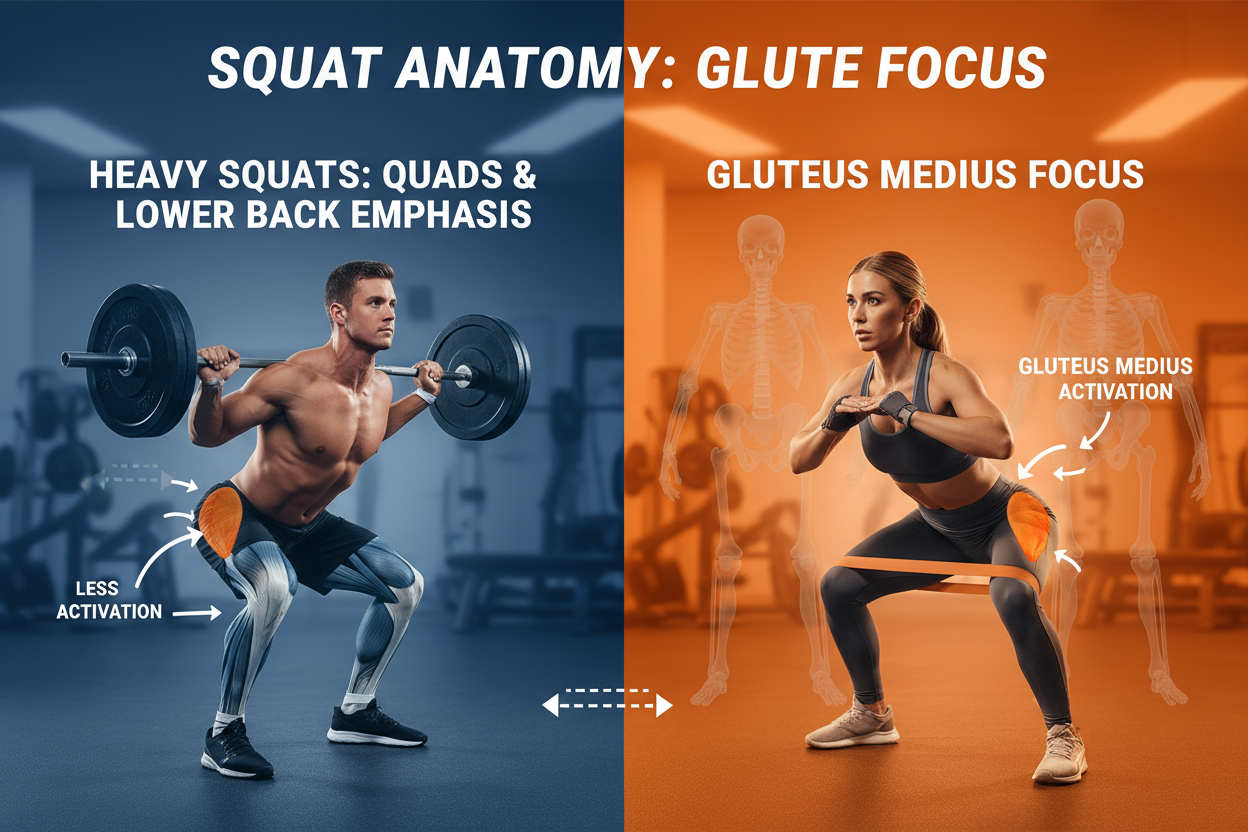
You are squatting heavy. You are deadlifting until your grip fails. Yet, when you look in the mirror, your glutes haven't changed much, or worse, you are dealing with nagging lower back pain and knee instability. The problem usually isn't a lack of effort; it is a lack of specific activation. Most standard leg days focus heavily on the sagittal plane—moving forward and backward—which hammers the glute maximus but completely neglects the crucial stabilizers that give the hips their shape and function. If you want 3D development, you have to stop training in 2D.
The missing link for most lifters is the gluteus medius. This muscle sits on the upper, outer surface of the butt and is responsible for hip abduction and stabilization. When people start researching athlean x glutes training principles, they often discover that Jeff Cavaliere—a physical therapist and strength coach—obsesses over this specific muscle for a reason. Without a strong medius, your knees cave inward during squats (valgus collapse), and your lower back takes over the load your hips should be carrying. Fixing this requires shifting your focus from moving heavy weight from point A to point B, to actually contracting the muscle intended to do the work.
The Anatomy of the Problem
The glutes are composed of three main muscles: the maximus, medius, and minimus. The maximus is the big powerhouse. It’s what you use when you stand up from a chair or sprint. Most gym-goers have a decent maximus simply from compound lifting. However, the medius is the architect of the hip. It creates that shelf-like appearance on the upper glute and prevents the "pancake" look.
Functionally, the medius keeps your pelvis level when you stand on one leg. If you walk and your hip drops to the side with every step, you have a weak medius. This weakness is catastrophic for heavy lifting. I realized this the hard way a few years ago. I had hit a plateau on my squat and developed a persistent ache in my right SI joint. No amount of stretching fixed it. It wasn't until I looked into the mechanics behind the athlean x glute medius approach that I realized my right hip was essentially asleep at the wheel. My lower back was stabilizing my entire body because my side glute wouldn't fire.
My Experience with Activation
Correcting this imbalance was humbling. I had to strip the weight off the bar and look at movements that felt awkward at first. I remember trying a specific side-lying leg lift variation where the toe is pointed down (internal rotation). I cramped almost instantly. That cramp was the best thing that could have happened—it confirmed that the muscle was weak and had been dormant for years.
Incorporating specific activation drills before my heavy compounds changed everything. Within a month, the knee pain vanished. More importantly, I could actually feel my glutes pushing me out of the hole in a squat, rather than just my quads and lower back. The aesthetic difference followed shortly after. The upper glute filled out, changing the overall shape of the posterior chain.
The "Sack Drop" and Hip Abduction
One of the most effective concepts involves manipulating the pelvis to force the glute medius to work overtime. In many athlean-x glute medius videos, you will see a focus on the "hip drop" mechanic. This is often demonstrated through a lunge variation where you don't just step back; you allow the hip of the working leg to pop out to the side, stretching the medius, before forcefully contracting it to bring the hips back to square.
This mimics how the muscle works in real life. We don't usually lie on the floor and lift our legs sideways like Jane Fonda (though that has its place). We stabilize our hips while gravity tries to pull us down. By consciously dropping the hip and hiking it back up, you overload the medius in a functional standing position. This dynamic stability is what transfers to athleticism and heavier lifts.
Structuring a Complete Routine
You don't need to abandon squats and deadlifts. You simply need to accessorize them correctly. A well-rounded athlean x glute workout structure usually involves a pre-exhaustion or activation phase followed by compound movements.
1. The Banded Monster Walk
Place a resistance band around your ankles—not your knees. Keeping the band at the ankles increases the lever arm, making the glutes work harder. Take diagonal steps forward and backward. The key here is to never let the band go slack. Keep tension constant. This wakes up the lateral hip rotators and the medius before you touch a barbell.
2. The Hip Thrust (With a Twist)
The hip thrust is the king of glute maximus exercises, but you can tweak it for the medius. Place a band around your knees. As you thrust the weight up, actively drive your knees outward against the band. This forces you to combine hip extension (maximus) with hip abduction (medius). You get a much harder peak contraction this way.
3. Single-Leg Touchdowns
Stand on a box or a step with one leg hanging off the side. Keeping your standing leg straight, lower your free leg toward the floor by dropping your hip. Then, hike that hip up as high as possible using only the side of your standing butt. This is pure medius isolation. It looks subtle, but it burns intensely after ten reps.
Mind-Muscle Connection Over Ego
The biggest hurdle in glute training is the ego. It is easy to load up a leg press and move weight. It is much harder to perform a single-leg Romanian Deadlift with perfect hip alignment. If your hips rotate open during a single-leg movement, you are cheating. You are using your lower back and groin to stabilize rather than the glute.
To truly fix flat glutes, you must slow down. Pause at the peak of every contraction. Poke the muscle with your thumb to ensure it is hard. If you are doing a kickback and you feel it in your lower back, stop. Reset your pelvis, brace your core, and reduce the range of motion. Glute training is about tension, not just movement.
Building a physique that looks athletic and performs pain-free requires addressing these weak links. By prioritizing the glute medius and respecting the anatomy of the hip, you unlock the potential for both size and strength that standard squatting simply cannot provide on its own.
Frequently Asked Questions
How often should I train my glutes?
Because the glutes are large, powerful muscles accustomed to carrying your body weight, they can handle high frequency. You can train them 2-3 times per week, provided you vary the intensity. For example, have one heavy compound day (squats/thrusts) and one or two days focused on lighter, high-repetition accessory work like band walks and lunges.
Can I build glutes without heavy weights?
You can build significant shape and tone with bodyweight and bands, especially by focusing on the glute medius and high metabolic stress. However, to add significant mass to the glute maximus, you eventually need progressive overload. This doesn't always mean a barbell; it can mean single-leg variations which effectively double the load on the working muscle.
Why do I feel leg exercises in my lower back instead of my glutes?
This is usually due to anterior pelvic tilt. If your pelvis is tipped forward, your glutes cannot fully contract, and your lower back extensors take over to complete the movement. Focus on bracing your core and tucking your pelvis slightly (posterior tilt) at the top of movements like hip thrusts to ensure the load stays on the hips.