Why At Home Exercise Workouts Need Isometric Holds
I remember training a client in a cramped 400-square-foot apartment back in 2020. We had exactly one 15-pound kettlebell, a frayed resistance band, and a downstairs neighbor who banged a broom on the ceiling if we jumped. Trying to build muscle under those conditions felt impossible at first. Doing standard at home exercise workouts usually meant cranking out endless sets of 50 bodyweight squats until boredom, rather than muscle failure, ended the session.
That is when I introduced him to isometric pre-fatigue. By forcing the muscle to hold a static, excruciatingly tense position right before moving into regular repetitions, we made that single 15-pound kettlebell feel like 50 pounds. If you want to experience the best at home workout without buying a massive squat rack, mastering this technique is non-negotiable.
Quick Takeaways
- Isometric pre-fatigue depletes muscle oxygen before you even start your reps.
- Pairing a 30-to-60 second static hold with 10-15 dynamic reps maximizes muscle fiber recruitment.
- A non-slip, high-grip floor is mandatory for deep static holds to prevent injury.
- This method bridges the gap between pure bodyweight training and heavy lifting.
The Missing Element in Most Living Room Routines
Most people hit a wall with living room fitness because they simply run out of resistance. Your legs carry your body weight all day. Asking them to grow by doing 20 standard air squats is like asking a marathon runner to get faster by walking to the mailbox. Muscle hypertrophy requires mechanical tension and metabolic stress. Without heavy barbells, you have to manufacture that stress artificially.
This is the professional trainer's secret to making light resistance feel incredibly heavy. Instead of doing 100 easy reps, we manipulate time under tension. By holding a muscle in its most contracted, vulnerable position, you trap blood in the muscle belly. You force the nervous system to recruit larger, fast-twitch muscle fibers just to maintain the position.
I have tested this with dozens of clients. A standard set of push-ups might barely warm up an intermediate lifter. But if I make them hold a mid-rep push-up position hovering one inch off the floor for 45 seconds first, they suddenly struggle to complete five full repetitions afterward. You get the exact same mechanical failure you would from heavy bench pressing, but with zero risk of dropping a barbell on your neck.
The beauty of this method is its efficiency. You cut your workout time in half because you skip the junk volume. You do not need to spend forty minutes doing endless, mindless repetitions. You create targeted, intense fatigue in a fraction of the time, making it ideal for anyone squeezing a session into a lunch break.
What is Isometric Pre-Fatigue?
To understand why this creates the best home workouts, we have to look at the physiology of a static contraction. When you hold a muscle in a fixed position under tension, the continuous contraction clamps down on the local blood vessels. This creates an occlusion effect, temporarily restricting fresh, oxygen-rich blood from entering the muscle and preventing metabolic waste products from leaving.
Within seconds, the working muscle burns through its readily available ATP (energy) stores. The localized lack of oxygen forces your body to abandon the endurance-focused slow-twitch muscle fibers. To keep you from collapsing, your nervous system hits the panic button and recruits the larger, stronger fast-twitch muscle fibers. These are the exact fibers responsible for visible muscle growth and explosive strength.
By the time you finish a 45-second isometric hold, your muscle is heavily fatigued, acidic, and screaming for oxygen. That is the exact moment you transition immediately into your dynamic, moving repetitions. Because the muscle is already pre-exhausted, every single dynamic rep you perform afterward is highly stimulatory. You are essentially skipping the first 15 easy reps of a set and jumping straight to the final, agonizing five reps that actually trigger adaptation.
I use this exact science when programming for clients who travel frequently. You cannot pack a 200-pound barbell in a suitcase. But you can pack the knowledge of how to manipulate your own physiology. This method forces you to focus heavily on the mind-muscle connection. You have to actively squeeze the target muscle during the hold, rather than just passively hanging out in the joints.
This technique also protects your joints. Heavy lifting takes a toll on your knees, elbows, and lower back. Because isometric pre-fatigue uses light weights or just bodyweight, the sheer force on your connective tissue is minimal. You get the muscular benefits of heavy lifting without the structural wear and tear.
Structuring Your Isometric Pairings
Building a routine around this concept requires a specific blueprint. You cannot just hold a random pose and then do a random exercise. The isometric hold and the dynamic movement must target the exact same muscle group, and the transition between the two must be under three seconds. If you rest for ten seconds in between, the muscle replenishes its oxygen, and you lose the occlusion effect.
I typically program these in blocks. We start with a 30 to 60-second static hold. You want to pick a position where the muscle is under maximum tension, usually at the midpoint of the exercise's range of motion. The second your timer goes off, you immediately perform 8 to 15 dynamic repetitions of a similar movement. You then rest for 90 seconds and repeat for three to four sets.
One crucial factor that ruins this technique is poor traction. When you are holding a deep, agonizing static lunge, you are pushing massive amounts of horizontal force into the floor. If you are doing this on a hardwood floor with sweaty socks, or on a cheap yoga mat that bunches up, your foot will slip. The moment you slip, your nervous system kills the muscle contraction to protect your joints. You lose the tension, and the set is ruined.
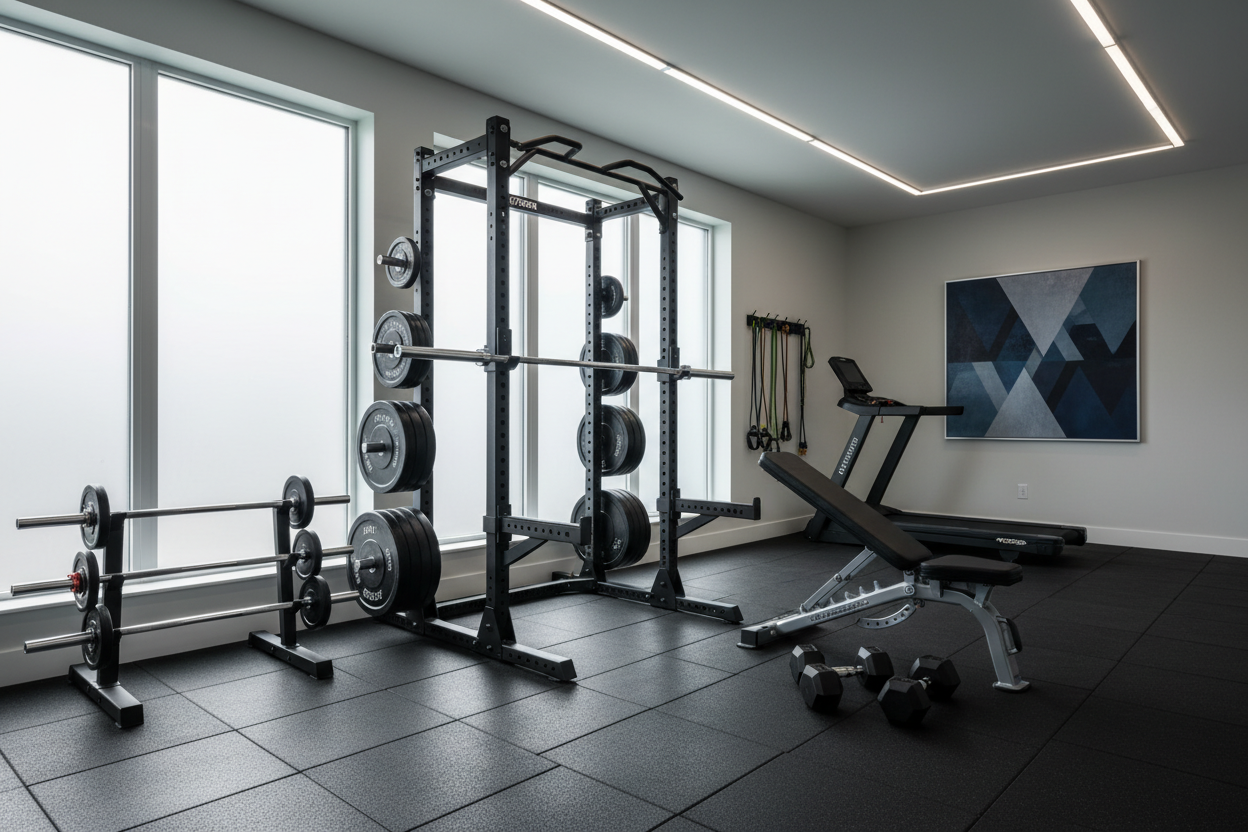
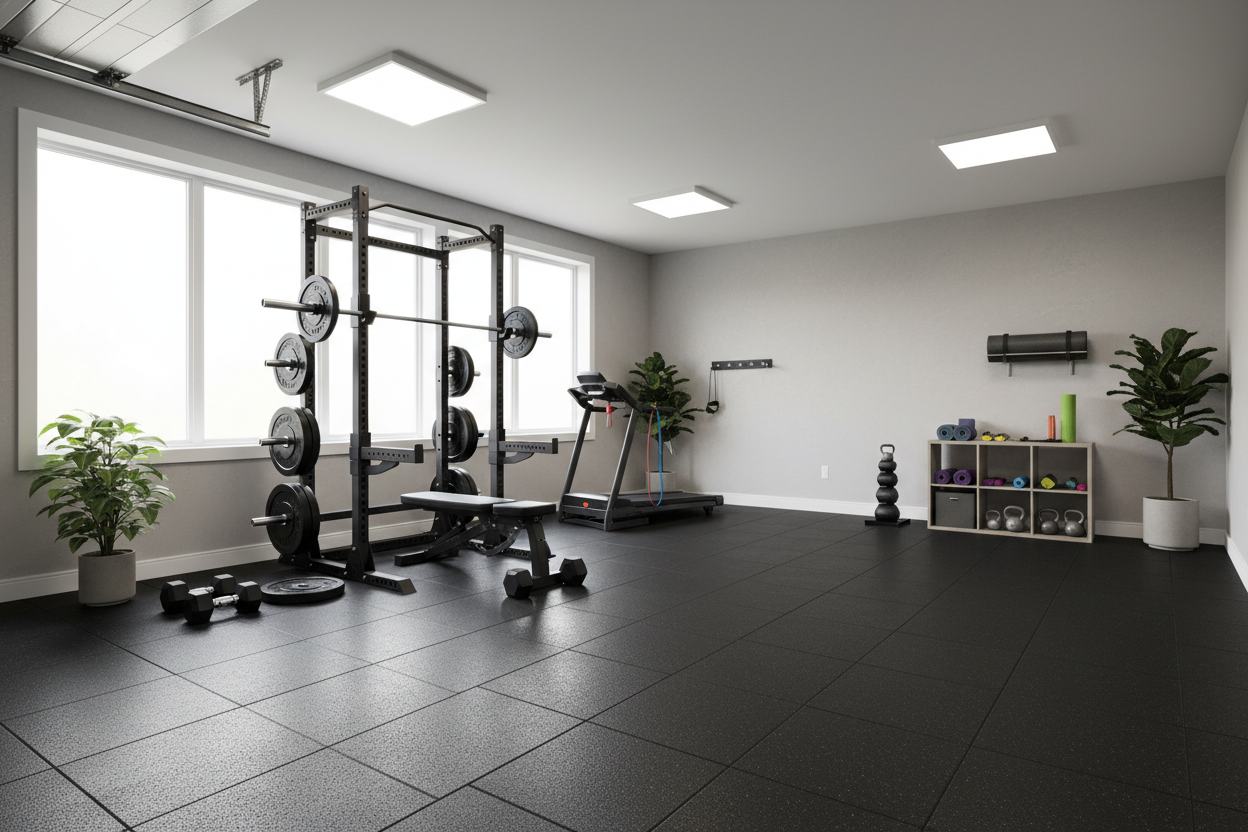
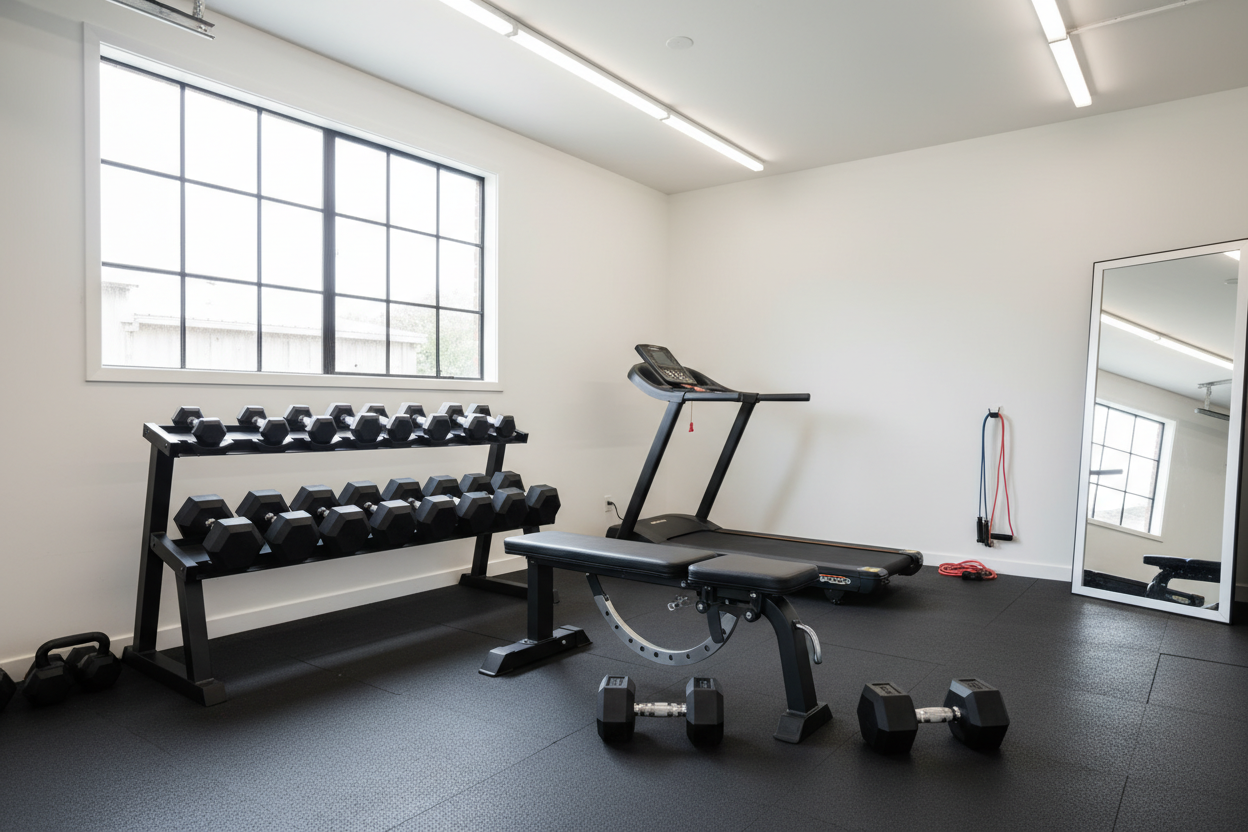
This is why a stable, non-slip foundation is mandatory. If you are setting up a dedicated space, I strongly advise clients to put down proper 6x8ft gym flooring for home workout sessions. A heavy-duty mat grips the floor and provides the exact friction your shoes need to lock in a static hold. It also absorbs the impact when your legs inevitably give out and you drop to your knees after a brutal set of pre-fatigued squats.
I recommend starting with two isometric pairings per workout. Do not try to do this for every single exercise. It is highly taxing on the central nervous system. Pick one major lower body pairing and one major upper body pairing. Focus on perfect execution, deep breathing during the hold, and explosive concentric movements during the dynamic reps.
Lower Body: Turning Up the Leg Burn
Let us look at a specific lower body pairing to build the best at home workout for your quads and glutes. Find a blank wall and drop into a wall sit. Your thighs must be exactly parallel to the floor, creating a 90-degree angle at the knee. Do not rest your hands on your thighs. Hold this strict position for 45 seconds.
As the clock ticks, your quads will start shaking. The moment you hit 45 seconds, push off the wall and immediately perform 15 bodyweight squats. Because your quads are completely drained from the wall sit, those bodyweight squats will feel like you have a 135-pound barbell on your back. To make it even harder, use a slow tempo on the way down for the squats, taking three full seconds to descend on every single rep.
Another excellent lower body pairing focuses on the hamstrings and glutes. Perform a single-leg glute bridge isometric hold. Drive your heel into the floor and squeeze your glute hard at the top position for 30 seconds. Immediately transition into 15 dynamic single-leg glute bridge thrusts. The burn will be localized, intense, and highly effective for muscle growth.
Upper Body: Pushing Past the Plateau
Upper body isometric pairings require a bit more creativity but are incredibly effective. A classic combination targets the chest and shoulders. Grab a thick bath towel, roll it up, and hold it in front of your chest with straight arms. Try to physically rip the towel in half by pulling your hands apart as hard as humanly possible. Hold this maximum isometric contraction for 30 seconds.
Drop the towel and immediately drop to the floor for push-ups. Go to absolute failure. Because your chest and front deltoids are pre-exhausted from trying to tear the towel, you might only get 8 to 10 push-ups, even if you normally can do 30. Executing this requires expansive floor space, which is why having a large exercise mat for home gym setups is so helpful. It gives you the room to transition from standing towel pulls right into wide-grip push-ups without worrying about slipping or hurting your wrists on hard tile.
Transitioning to Loaded Movements Later
Isometric pre-fatigue is a brilliant tool, but it is ultimately a stepping stone. You use this bodyweight method to build an incredible baseline of strength, tendon resilience, and mind-muscle connection. However, there will come a day when a 60-second wall sit followed by 20 squats just does not trigger the same adaptation. Your body is an adaptation machine, and eventually, it will demand external load.
Once you outgrow pure bodyweight routines, you phase in equipment to create a top workout at home. You can still use the pre-fatigue method, but now you add resistance. Imagine doing that same 45-second wall sit while holding a 30-pound dumbbell, followed immediately by goblet squats. The intensity scales infinitely.
When you reach this point, investing in hardware makes sense. I tested a popular 5-52.5 lb adjustable dumbbell set for six months in my own garage. While the compact 15x8 inch footprint was fantastic for small spaces, the plastic dial mechanism proved fragile when dropped from knee height—a serious downside if you regularly train to muscular failure. You have to be careful with your gear.
If you have the space and budget, you can start looking into the best at home exercise machines to complement your free weights. A functional cable trainer or a compact leg press can take the foundational strength you built with isometrics and push it to the next level. Start with your body weight, master the static holds, and earn the right to lift heavy.
Frequently Asked Questions
How often should I use isometric pre-fatigue?
I recommend incorporating this technique two to three times per week. Because it generates significant metabolic stress, doing it every single day can lead to central nervous system burnout. Allow 48 hours of recovery for the specific muscle groups you target.
Can beginners do isometric pre-fatigue?
Absolutely. In fact, it is safer for beginners than jumping straight into heavy barbell lifting. It teaches proper joint alignment and muscle activation. Beginners should just start with shorter static holds, around 15 to 20 seconds, before moving to dynamic reps.
Does this method burn fat?
While the primary goal is muscle hypertrophy, the intense metabolic demand and elevated heart rate during the transition from static to dynamic movements burn a high number of calories. It is highly effective for body recomposition when paired with a calorie deficit.