Why Asking How Much Muscle Can You Gain a Month Is a Trap
I remember stepping on the scale after my first month of 'serious' lifting and seeing a 10-pound jump. I thought I was the next Ronnie Coleman until I realized my abs had vanished and my face looked like a sourdough loaf. Most people asking how much muscle can you gain a month are looking for a miracle, but biology doesn't care about your deadlines or your Instagram feed.
Quick Takeaways
- True muscle tissue grows slowly—think grams, not pounds, for experienced lifters.
- Initial weight spikes are usually glycogen and water, not contractile tissue.
- Beginners can realistically aim for 1-2 pounds of muscle per month.
- Consistency in a basic routine beats 'muscle confusion' every time.
The Difference Between Scale Weight and Actual Contractile Tissue
If you gain 8 pounds in your first 30 days, I hate to be the bearer of bad news, but you didn't build 8 pounds of muscle. That's physiologically impossible for a natural lifter. What you're seeing is mostly glycogen supercompensation. When you start lifting and eating more, your muscles store more carbohydrates and water to fuel the work. It makes you look 'fuller' and 'pumped,' but it's essentially just inflating the balloon, not adding more rubber.
Actual contractile tissue—the stuff that makes you stronger and stays with you—is built at a glacial pace. We are talking about microscopic repairs to protein filaments. When people talk about how much muscle weight can you gain in a month, they often conflate 'lean body mass' with 'muscle.' Lean mass includes water, bone, and organs. Don't let a deceptive scale reading trick you into thinking you've mastered hypertrophy in four weeks.
The Brutal Math: Newbie Gains vs. Veteran Lifters
Your training age determines your ceiling. According to the Lyle McDonald model, a beginner in their first year can realistically see an average muscle gain per month of about 1.5% to 2% of their total body weight. For a 150-lb guy, that's maybe 2 or 3 pounds. Once you've been training for three years? You're lucky to see 0.5 pounds of actual muscle growth in a month. It becomes a game of ounces.
To hit these upper limits, you have to nail your nutrition. You can't just eat everything in sight, or you'll end up needing a new wardrobe for the wrong reasons. I've found that learning how can I gain muscle without gaining fat is the real secret to long-term progress. You need a slight caloric surplus—maybe 200 to 300 calories over maintenance—to provide the energy for repair without spilling over into excess adiposity.
Why Your 30-Day Hypertrophy Window Needs a Boring Routine
The biggest mistake I see in home gyms is 'program hopping.' If you want to maximize muscle gain in one month, you need to do the same movements every single week. You cannot measure progress if you're constantly changing the variables. You need to pick five or six foundational lifts and beat them into the ground with progressive overload.
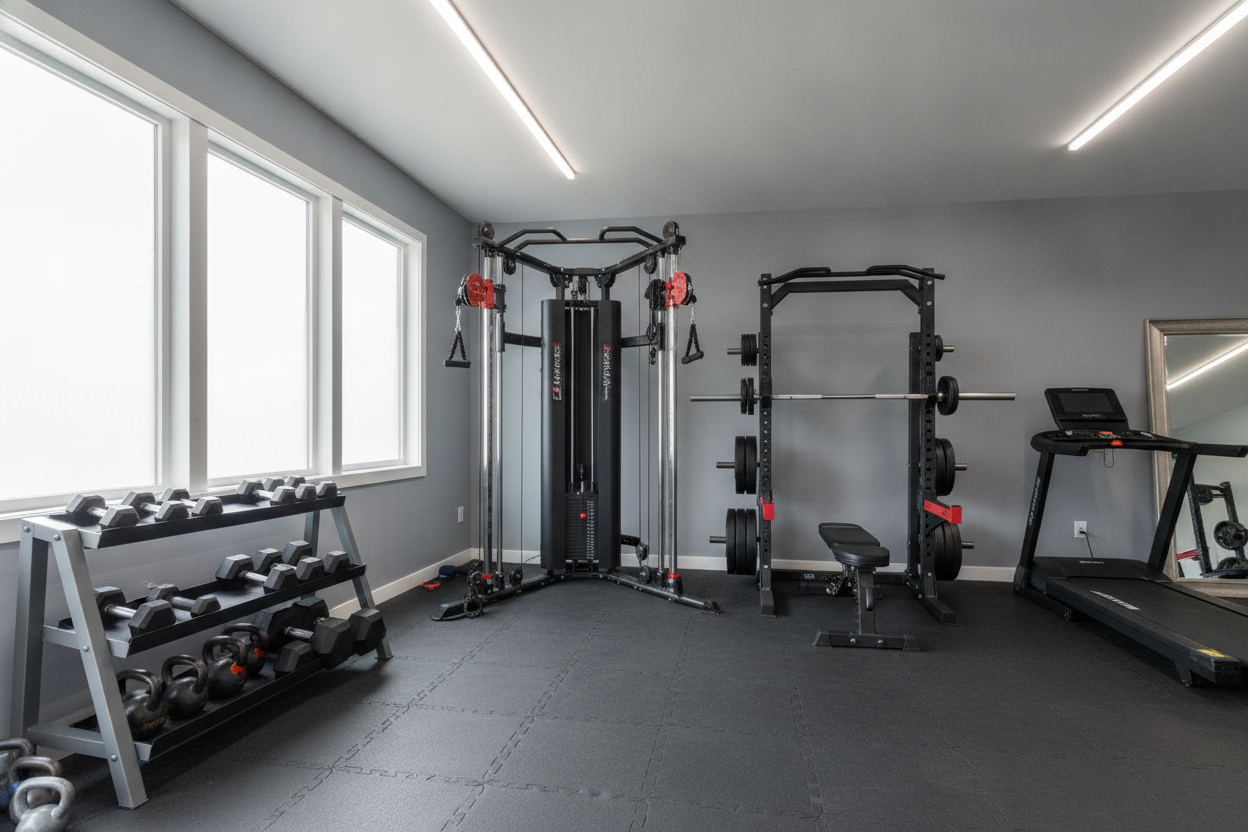
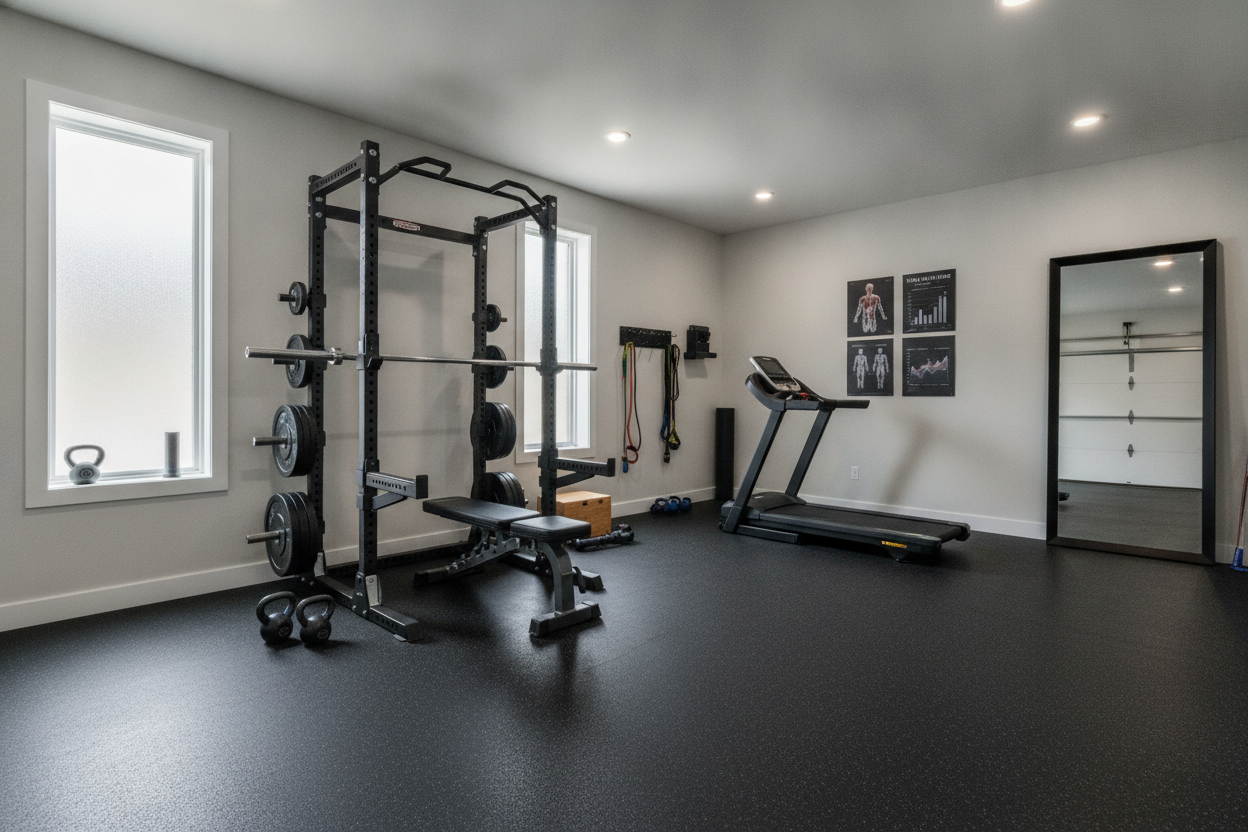
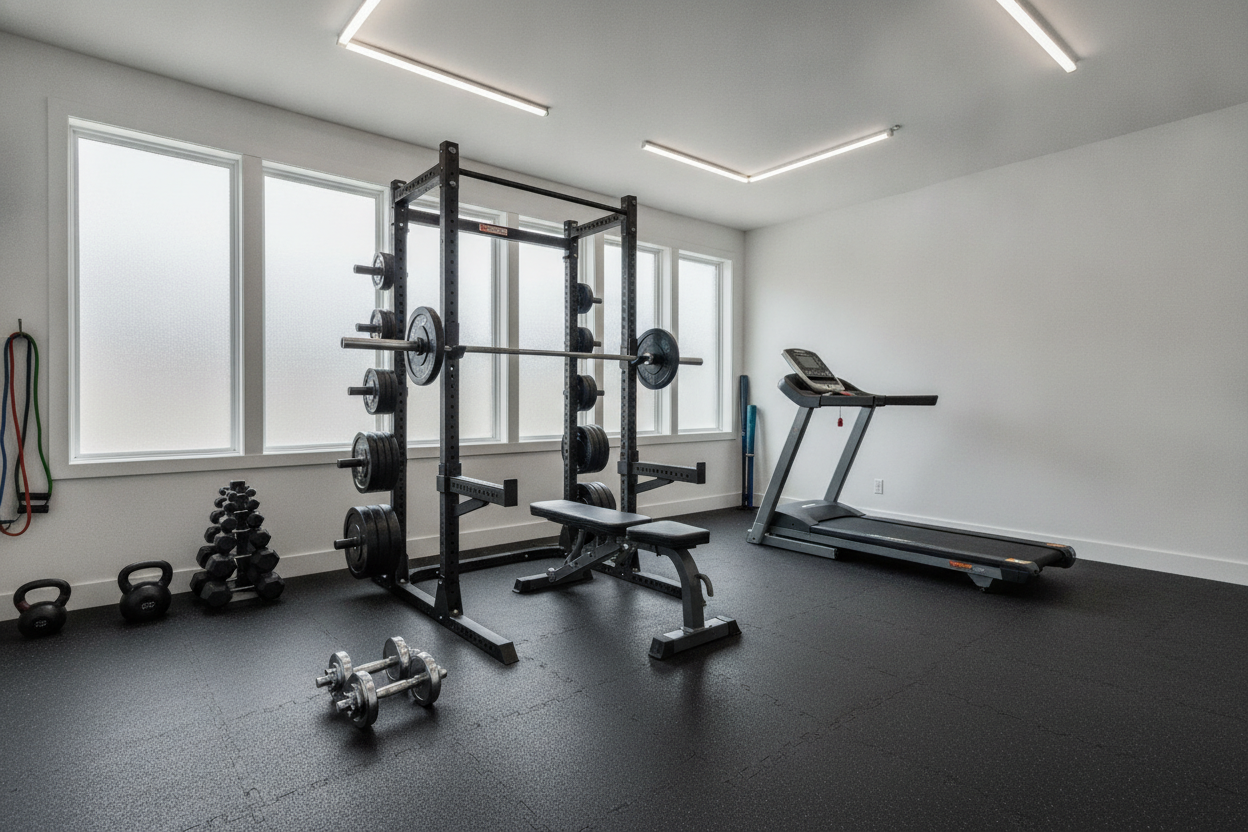
For those of us training at home, this means having gear that doesn't limit your output. A rickety bench will make you subconsciously hold back on heavy sets. Investing in a sturdy power rack weight bench package allows you to push toward failure safely, which is where the growth signal actually happens. You don't need a fancy $100-a-month app either; a simple free muscle gain workout plan PDF focused on compound movements is more than enough to max out your genetic potential for the month.
Stop Staring at the Mirror (And Start Tracking This Instead)
Muscle growth is too slow to eyeball in the mirror every morning. That's a one-way ticket to body dysmorphia. Instead, track your 'barbell math.' If you're doing 10 more pounds on your overhead press than you were 30 days ago, you've gained muscle. If your shirts are tighter in the shoulders but your belt still fits on the same notch, you're winning.
I also recommend tracking your sleep quality and using a simple tape measure once a month. If your arm circumference goes up but your waist stays the same, that's realistic muscle gain per month. Anything else is just noise.
My Personal Reality Check
A few years ago, I fell for the 'bulking' trap. I was obsessed with how much muscle can i gain in a month and decided to eat 4,000 calories a day. I gained 12 pounds in five weeks. My bench press went up 5 pounds, but I couldn't walk up a flight of stairs without getting winded. I didn't gain 12 pounds of muscle; I gained 2 pounds of muscle and 10 pounds of regret. Now, I aim for slow, boring progress. It’s less exciting for social media, but I don't have to spend three months cutting fat every time I want to see my feet.
FAQ
How much muscle can a man gain in a month?
A natural male beginner can gain about 1 to 2 pounds of actual muscle tissue. Advanced lifters should expect significantly less, often measured in ounces rather than pounds.
How much muscle can a woman gain in a month?
Generally, how much muscle can a woman gain in a month is about half the rate of a man, roughly 0.5 to 1 pound for a beginner, due to different hormonal profiles and total lean mass starting points.
Does creatine help you gain muscle in a month?
Creatine will make you gain weight quickly—often 2-4 pounds in the first week—but that is water being pulled into the muscle cells. It helps you train harder, which eventually leads to real muscle, but the initial jump is just hydration.