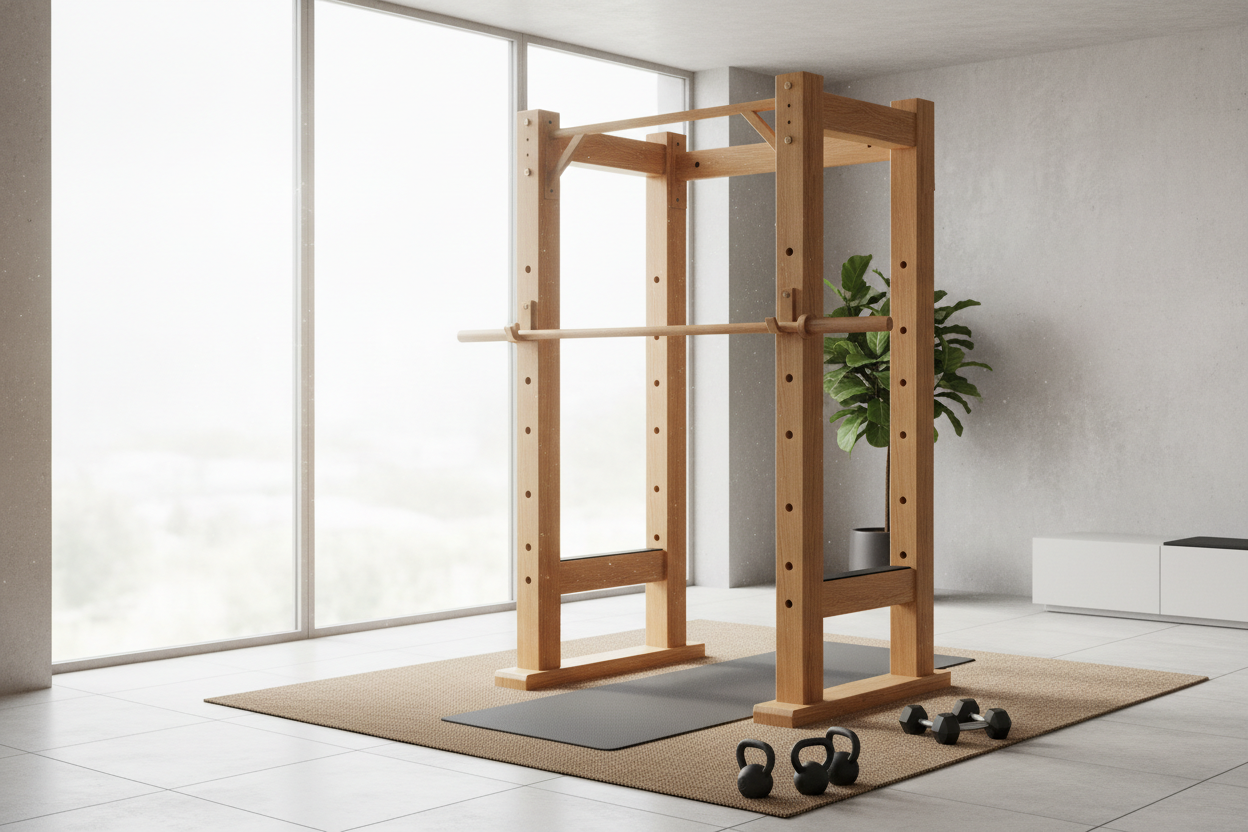
Why a Wooden Power Rack Could Be the Perfect Addition to Your Home Gym
When most fitness enthusiasts think of a power rack, metal frames and industrial designs come to mind. However, a growing number of home gym owners are discovering the appeal of a power rack wood construction. A wood power cage offers not only strength and durability but also aesthetic warmth that blends smoothly into home interiors. This combination of utility and style makes wooden racks a compelling option for those who want their training space to feel personal and inviting.
Understanding the Role of a Power Rack
A power rack is a staple for serious strength training. It allows safe performance of heavy lifts such as squats, overhead presses, and bench presses, thanks to its adjustable safety bars. While steel has dominated the market for decades due to its load-bearing capability, wood can provide comparable stability when engineered correctly. In many cases, treated hardwood combined with proper hardware can manage significant weight without compromising safety.
Benefits of Power Rack Wood Construction
The primary advantage of a wooden power cage lies in its aesthetics and customizability. Unlike standard metal racks, which often look industrial, wood allows for various finishes—from glossy varnish to matte oil—enhancing warmth and elegance in the space. Durability is another factor; hardwoods such as oak, maple, and ash are dense enough to handle repeated use when properly joined and reinforced. Additionally, wood can be sourced sustainably, making it attractive to environmentally conscious gym owners.
Strength and Stability Considerations
With the right choice of lumber and joinery, a wood power cage can rival steel models in terms of stability. Engineers and experienced woodworkers often recommend using laminated hardwood beams to minimize flex under load. A well-anchored base and cross-bracing are critical to prevent wobbling during heavy lifts. For athletes training with moderate to heavy weights, proper design ensures that safety remains uncompromised.
Practical Maintenance Tips
Maintaining a power rack wood structure is simpler than it may seem. Regular inspection for cracks or splinters is important, especially in high-stress joints. Periodic sanding and reapplication of protective finishes will preserve both appearance and performance. By contrast, metal racks can suffer from rust if exposed to moisture, while wood simply requires a routine care regimen using wood-friendly oils or sealants.
Custom Options and Adaptability
One reason many choose a wooden power cage is the freedom it offers in customization. Enthusiasts can tailor height, width, and accessory attachments to match available space. Add-ons such as pull-up bars, dip handles, or band anchors can be integrated seamlessly. For those who value minimalist design, it’s possible to create a rack that appears more like a crafted piece of furniture than gym equipment.
Personal Experience with a Wooden Power Cage
After years of using metal racks in both commercial and personal gyms, I decided to build a power rack wood unit for my basement training area. The result exceeded expectations—not only did the rack hold up under regular strength sessions, but it also made the space more inviting. The natural grain of the oak added warmth, and the ability to personalize dimensions meant I could fit it perfectly between walls without sacrificing functionality. Over time, the smooth finish stayed intact with minimal upkeep, and I found myself using the gym more simply because I enjoyed being there.
Safety Precautions for Wooden Power Rack Users
Safety is paramount. Ensure that all hardware—bolts, screws, and plates—is high-grade and rated for the weight you intend to lift. Test the stability gradually before attempting maximum loads. For home-built models, consulting structural guidelines or a professional carpenter eliminates guesswork and ensures the rack can handle intended stresses. Proper floor anchoring also prevents any movement during dynamic lifts.
Design Inspirations
Wood power cages can be designed to blend with various interior styles. In a rustic setting, reclaimed timber offers character with visible knots and grain patterns. Modern minimalist spaces might benefit from smooth, pale woods with clean lines. Matching the rack's finish to other furniture or flooring creates an integrated look that makes your gym feel like an extension of your living area rather than a separate utilitarian space.
Conclusion
A power rack made from wood is more than just an alternative to steel—it’s a statement piece that allows home gym users to combine performance, aesthetics, and personalization. With the right materials, design, and maintenance, a wood power cage can serve as a safe, functional, and beautiful centerpiece for a personalized training environment. Those who value craftsmanship and comfort alongside their fitness routine may find it the perfect fit.