Why a Foam Block for Hip Thrusts Beats Your Expensive Bench
You know the feeling. You are mid-set, 315 pounds on the bar, and your expensive flat bench starts migrating toward the other side of the garage. It is annoying, it is distracting, and it is exactly why I finally ditched my standard competition bench for a foam block for hip thrusts.
Standard weight benches are designed for pressing, not for acting as a pivot point for heavy hinging. If you are tired of bruised shoulder blades and a bench that refuses to stay put, it is time to look at why high-density foam is actually the superior choice for your glute days.
Quick Takeaways
- Standard 18-inch benches are usually too tall for optimal glute engagement.
- Foam blocks offer superior grip on rubber flooring compared to metal bench feet.
- A 12-to-14-inch height allows for a deeper stretch and better ribcage positioning.
- High-density foam eliminates the 'digging' sensation into your scapula.
The Problem With Your Standard Weight Bench
Most commercial and home gym benches sit at a standard height of 17 to 18 inches. While that is perfect for a bench press, it is an anatomical nightmare for hip thrusts. When the bench is too high, you have to over-extend your lower back just to get the bar off the floor. This hyperextension shifts the load away from your glutes and right into your lumbar spine.
Beyond the height, there is the 'edge' factor. Even the best competition benches have a relatively hard edge under that vinyl. When you have 200+ pounds pushing your back into that edge, it feels like a dull saw blade cutting into your shoulder blades. This discomfort often causes people to cut their range of motion short, which is why your workout often feels like a quad workout instead of the glute-focused session you planned.
Why a Foam Block for Hip Thrusts Changes Everything
Switching to a hip thrust foam box solves the two biggest complaints: comfort and stability. The foam is dense enough to support heavy weight without bottoming out, yet soft enough to contour to your upper back. This creates a much larger surface area for your shoulders to pivot on, which means less pressure on your spine and more focus on the squeeze.
Then there is the 'bench slide' issue. Metal bench feet are notorious for sliding on rubber floors once you start pushing horizontal force against them. A high-density foam box has a massive footprint and a grippy vinyl cover. When you pair it with a grippy gym flooring mat, the box stays exactly where you put it. You can finally stop using your heavy dumbbells as makeshift 'anchors' for your bench legs.
Getting the Height Right (The Magic of the Hip Thrust Plyo Box)
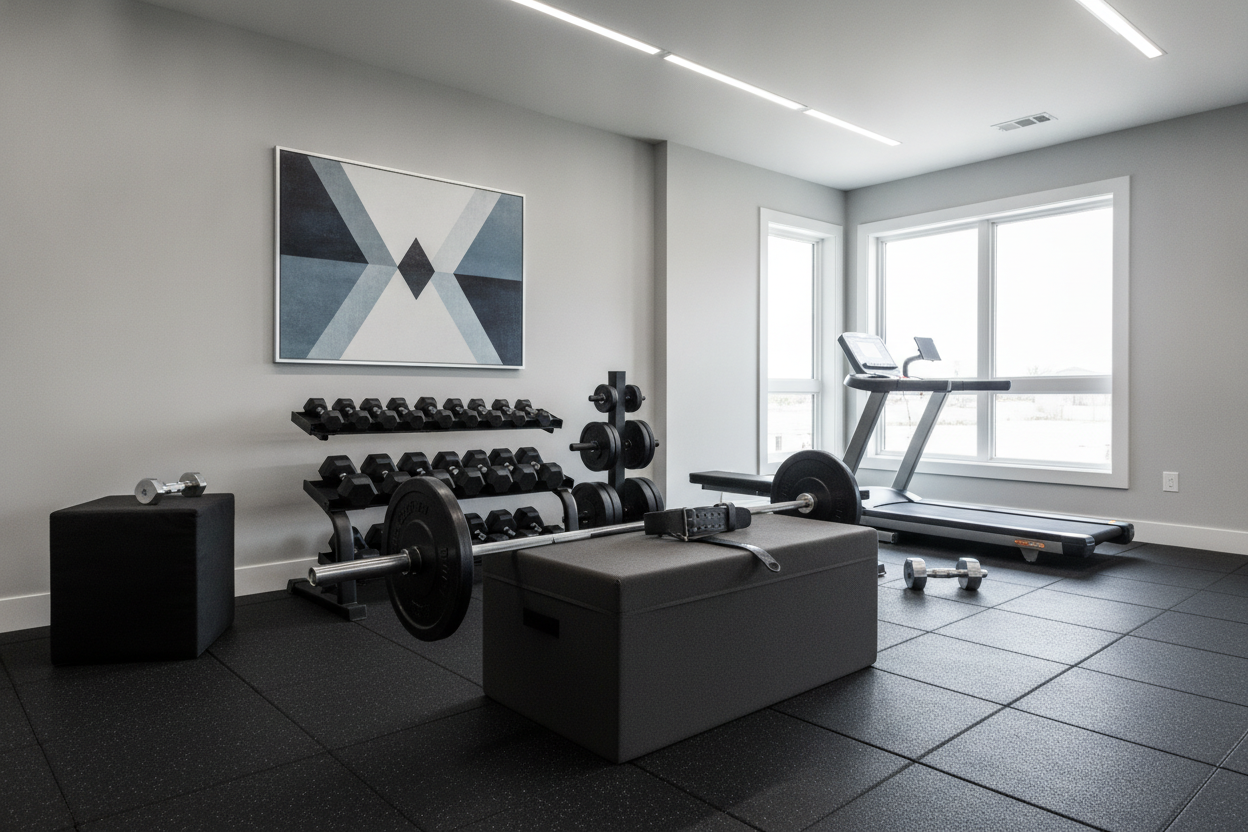
The beauty of a multi-sided hip thrust plyo box is the versatility. Most of these boxes come with 12-inch, 14-inch, and 16-inch sides. For the vast majority of lifters, the 12-inch or 14-inch side is the sweet spot. This lower height allows you to keep your chin tucked and your ribs down, which is the only way to get a full, deep contraction at the top of the movement.
How to Safely Set Up Your Hip Thrust on Plyo Box
Even though foam is grippy, you still need to be smart about your setup. I always recommend backing your hip thrust on plyo box against a wall or a heavy power rack. This provides a hard stop that ensures zero backwards movement. Position your shoulder blades right on the edge of the box, plant your feet, and brace your core before you even think about the lift-off.
If you are training in a tight space or feel a bit unstable with a massive barbell on a foam surface, you can always scale back to a dumbbells hip thrust. This keeps the load more centered and is much easier to bail on if your balance feels off. The foam box handles the concentrated weight of a heavy dumbbell much better than a narrow bench ever could.
Foam Box vs. Dedicated Glute Benches: What Should You Buy?
If you have a massive commercial-grade gym, a dedicated unit like the Gxmmat Hip Thrust Bench is a fantastic investment. These units are built with specialized padding and often include band pegs for extra resistance. They are stable, professional, and built for one thing: glute destruction.
However, for the average garage gym owner, a foam block is the smarter play. It is lighter, easier to move, and significantly cheaper. Plus, when you aren't doing hip thrusts, you can use it for box jumps, step-ups, or even as a seat between sets. In a small gym, versatility is king.
Personal Experience: The Lesson I Learned at 405 lbs
I used to be a 'bench purist' until I tried to hit a PR and my bench slid back about six inches mid-rep. I ended up on the floor with a loaded barbell on my hips and a very bruised ego. I bought a foam block the next day. The biggest mistake I made early on was buying a cheap, low-density foam box that compressed too much. Do not cheap out here—get the high-density stuff that feels firm to the touch. Your lower back will thank you.
FAQ
Will a foam box tip over during hip thrusts?
Not if you set it up correctly. Always place the box against a wall or a heavy piece of equipment. The horizontal force of a hip thrust can tip a light foam box if it is not anchored against something solid.
Is 16 inches too high for a hip thrust?
For most people, yes. A 16-inch height often forces the lifter to arch their back to reach the floor. Try the 12-inch or 14-inch side first to see if your glute engagement improves.
Can I use a regular wooden plyo box?
You can, but it is incredibly uncomfortable. The hard wood edge will dig into your back even worse than a weight bench. If you use wood, you will definitely need to wrap it in a thick towel or a barbell pad.