Why a Calisthenics Rack Was the Best Upgrade My Home Gym Ever Got
Most people start their bodyweight training journey with a simple plan: do some push-ups on the floor and maybe buy a cheap bar that wedges into a doorframe. It works for a while. You get a bit stronger, your lats start to grow, and you feel good. But eventually, you hit a wall. You want to try dynamic movements, weighted reps, or skills that require room to swing, and that flimsy piece of metal in the doorway starts to feel like a liability rather than an asset. This is exactly where a dedicated calisthenics rack transforms a casual workout corner into a serious training facility.
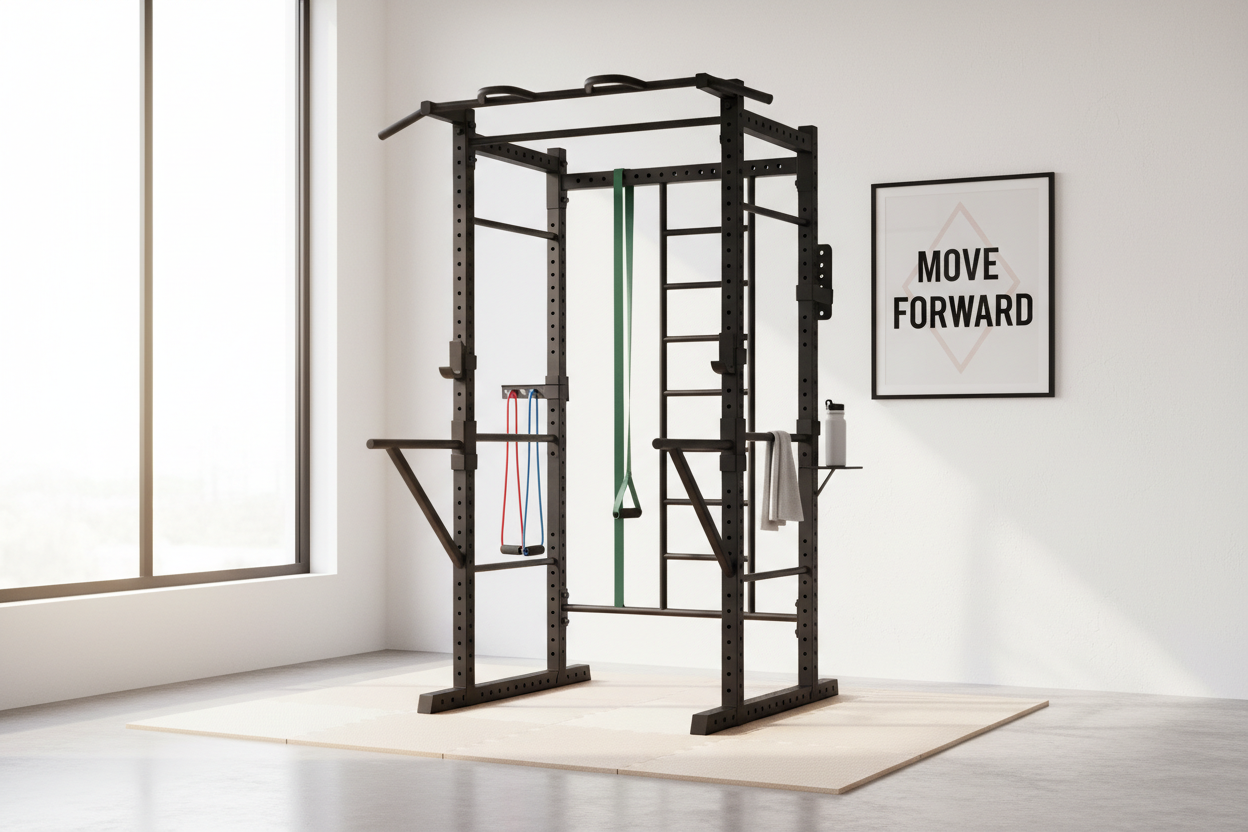
A calisthenics rack is essentially a freestanding or bolted structure designed to handle the high-impact, dynamic forces of bodyweight training. Unlike a standard power tower which might wobble during explosive movements, a proper rack offers the rigidity required for advanced skills like muscle-ups, front levers, and freestyle street workout combinations. It serves as the central hub for your fitness progression, allowing you to manipulate leverage and gravity without worrying about the equipment tipping over.
From Doorframe Anxiety to Solid Steel
I spent the first two years of my training using a telescopic bar twisted between the sides of my hallway doorframe. Every time I went for a heavy pull-up, I could hear the wood creaking. I subconsciously held back my effort because I was terrified of ripping the trim off the wall and landing on my tailbone. My form suffered because I couldn't fully extend my legs without hitting the floor.
Buying a proper rig changed everything. The first time I jumped up to grab the bar on my new setup, the difference was immediate. There was zero give. The stability allowed me to focus entirely on muscle engagement rather than balance or safety. I finally had the vertical clearance to hang with straight legs and the confidence to attempt explosive pull-ups. If you are serious about mastering your own body weight, the equipment needs to be invisible in the sense that you shouldn't be thinking about it while you train.
Key Features That Matter for Progression
When you start looking for a rig, the options can be overwhelming. You might see terms like "rig," "cage," or "station" used interchangeably, but for calisthenics specifically, you need to prioritize a few specific elements.
Bar Diameter and Finish
The pull-up bar is your primary interface with the machine. Standard gym bars often feature aggressive knurling designed to lock a barbell into your hands during a deadlift. For high-volume bodyweight reps or dynamic swinging, sharp knurling will tear your calluses apart in minutes. A purpose-built calisthenics rack usually features a smooth, powder-coated finish. This texture holds chalk well for grip but allows your hands to rotate slightly around the bar during muscle-ups without shredding your skin.
Stability and Footprint
Physics dictates that a wider base equals better stability. If you plan on performing levers (holding your body horizontal to the ground) or human flags, the center of gravity shifts dramatically. A lightweight tower will tip. High-quality racks often come with the option to bolt them to the floor, which is the gold standard. If bolting isn't an option for your space, look for a rack with extended stabilizer feet and a heavy enough gross weight to counterbalance your movement.
Versatility Beyond Pull-Ups
One common misconception is that a rack is just expensive pull-up equipment. In reality, it is a complete anchor system. By attaching gymnastics rings to the top bar, you instantly unlock hundreds of pushing and pulling variations. Rings allow for joint-friendly dips, ring push-ups, and face pulls that are difficult to replicate on static bars.
Furthermore, the vertical uprights are perfect for anchoring resistance bands. You can use these for mobility work, warming up your rotator cuffs, or making difficult exercises easier (regressions) and easy exercises harder (progressions). For example, learning the planche is nearly impossible for most without using bands for assistance in the early stages. Having a sturdy upright to tie a band around makes this training safe and accessible.
Indoor vs. Outdoor Configurations
Where you place your equipment dictates what material you should buy. Indoor racks are generally made of standard steel with a basic powder coat. However, the dream for many is a backyard setup. Outdoor calisthenics parks are the heart of the culture, and bringing that vibe home requires weatherproofing.
If you are setting up in the garden, look for galvanized steel. Galvanization involves coating the steel in a protective layer of zinc to prevent rust. Even a small scratch in the paint of a non-galvanized rack can lead to rapid corrosion when exposed to rain and humidity. While outdoor rigs are often more expensive, they tend to be larger and allow for taller uprights, which is a massive benefit if you are over six feet tall and want to hang freely.
Installation and Safety Considerations
Setting up a heavy-duty rack is a project. If you are renting an apartment, a freestanding unit is your only real choice. Ensure you have rubber floor mats underneath. Not only does this protect the floor from scratches, but it also prevents the metal base from sliding on hardwood or tile during horizontal pulling movements like rows.
For garage gym owners, drilling into the concrete allows for a smaller footprint because the bolts provide the stability that a wide base otherwise would. Just make sure you measure your ceiling height accurately. You need clearance not just for the rack, but for your head when it goes over the bar. There is nothing worse than completing your first muscle-up only to slam your head into the ceiling drywall.
The Return on Investment
Fitness trends come and go, often involving expensive electronic machines or subscriptions. A steel rack is a lifetime purchase. It has no motor to burn out, no software to update, and practically zero maintenance other than wiping it down. It stands as a silent reminder to put in the work.
The progression in calisthenics is infinite. Once you master the pull-up, you move to the muscle-up. Once you have the muscle-up, you work on the front lever. The rack supports you through every phase, from beginner to elite athlete. It creates a dedicated zone in your home that triggers the mindset to train, separating your living space from your working space.
Frequently Asked Questions
Can I perform weighted calisthenics on a freestanding rack?
Yes, but check the weight capacity rating of the specific model. Most high-quality freestanding racks are rated for at least 300-500 lbs, which is sufficient for weighted pull-ups and dips. However, avoid swinging heavily with added weight unless the unit is bolted down.
What is the ideal bar thickness for a calisthenics rack?
A diameter between 32mm and 34mm is generally considered the sweet spot for bodyweight training. This is slightly thicker than a standard barbell, which helps reduce hand fatigue during hanging exercises and provides a more comfortable surface for pushing movements like the top of a muscle-up.
Do I need a high ceiling for a home rack?
Ideally, yes. For standard pull-ups, you need a ceiling height that is about 12-18 inches higher than your reach. If you plan on doing muscle-ups where your upper body goes above the bar, you will need significantly more clearance, typically a ceiling height of at least 9 feet depending on the rack's height.