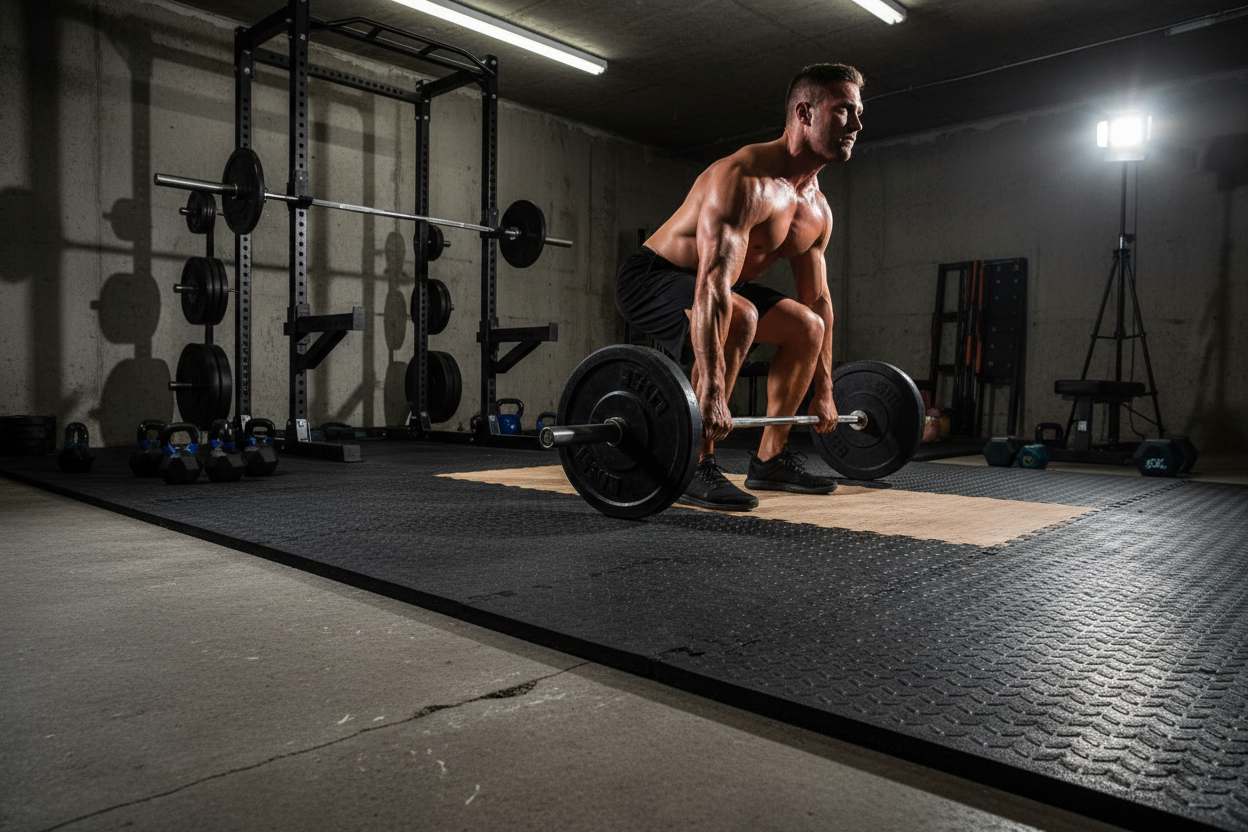
Why A 2" inch thick rubber mat Will Save Your Concrete
If you have ever winced while dropping a heavy barbell in your garage, you already know the anxiety of home gym flooring. Standard 3/4-inch stall mats are great for general use, but when you start moving serious weight, they often fail to protect the concrete underneath. Enter the 2" inch thick rubber mat. Built for Olympic weightlifting, heavy deadlifts, and commercial-grade abuse, this flooring upgrade promises to save your foundation—and your eardrums.
But is it actually necessary for your setup? In this guide, we will break down exactly who needs this level of protection, how it impacts your lifting space, and whether the investment makes sense for your specific training goals.
Key Takeaways
- Maximum shock absorption: Ideal for dropping heavy weights from overhead or waist height without cracking concrete.
- Noise and vibration reduction: Significantly dampens the sound of clashing bumper plates in residential spaces.
- Weight and permanence: Expect these mats to weigh upwards of 80-100 lbs each; they are incredibly hard to move once placed.
- Transition zones: You will need ramps or dedicated lifting platforms to avoid tripping hazards.
Why Upgrade? The Buying Guide
When comparing flooring options, thickness directly correlates with force dispersion. While standard 3/4-inch mats protect against scuffs and light drops, they transfer most of the kinetic energy straight into your subfloor.
Shock Absorption vs. Stability
A true 2-inch mat provides a massive buffer. However, the density of the rubber matters. You want high-density vulcanized rubber that prevents your feet from sinking during heavy squats. If the mat is too spongy, it compromises your power output and stability.
Space Planning in Your Home Gym
Integrating 2 inch thick rubber mats into a standard North American garage or basement setup requires some planning. You rarely need to cover your entire floor with them.
Creating a Drop Zone
Instead of wall-to-wall coverage, most lifters use these thick mats specifically for a dedicated deadlift or Olympic lifting zone. Because of the 2-inch height, creating a flush surface with the rest of your gym requires either building a wooden platform of the same height or using specialized transition ramps to prevent tripping.
From Our Gym: Honest Take
We recently built out a dedicated heavy lifting station in our facility using a specialized 2" inch thick rubber mat setup. I can confidently say the noise reduction is incredible. Dropping a 405-pound deadlift used to rattle the windows; now, it lands with a dull, controlled thud. My chalked lifting shoes feel completely planted, with zero squish underfoot.
However, I have to mention the drawbacks. First, moving these beasts is a two-person job—they are incredibly unwieldy. Second, out of the box, the off-gassing (that strong tire smell) was intense. It took a solid three weeks of leaving the garage door open with fans running before the smell faded to a tolerable level. If you are putting these in a poorly ventilated basement, be prepared for that.
Frequently Asked Questions
Is a 2-inch thick mat overkill for a home gym?
For the average lifter doing bodybuilding or general fitness, yes. But if you routinely drop heavy barbells, do Olympic weightlifting, or have a delicate concrete subfloor, the extra thickness is the best insurance policy you can buy.
Can I park my car on 2-inch rubber mats?
Yes, provided they are made of high-density vulcanized rubber. However, the 2-inch lip makes driving over the edge jarring without a transition ramp. Most people roll them up or avoid covering the parking area entirely.
How do I clean thick rubber gym mats?
A simple mop with warm water and a pH-neutral cleaner works perfectly. Avoid harsh chemicals like bleach or ammonia, which can break down the rubber over time.