Why 24x24 Foam Squares Are the Ultimate Home Gym Hack
Building a home gym is exciting until you hear the deafening crash of a dumbbell hitting bare concrete. Not only is the noise enough to wake the whole house, but the sudden impact can permanently damage both your weights and your foundation. If you are working with a tight budget or limited space, finding the right flooring can feel like an impossible puzzle.
That is where 24x24 foam squares come in. Often overlooked in favor of expensive commercial rubber rolls, these versatile tiles are the unsung heroes of adaptable home gym flooring. In this guide, we will break down exactly how to use them, where they excel, and what you need to know before laying them down.
Key Takeaways
- Easy Math: Each 24x24 tile covers exactly 4 square feet, making room calculations a breeze.
- Joint Protection: High-density EVA foam provides crucial shock absorption for plyometrics, yoga, and stretching.
- Cost-Effective: Significantly cheaper and easier to transport than horse stall mats or commercial rubber flooring.
- Application Limits: Ideal for dumbbells, kettlebells, and bodyweight exercises, but inadequate for heavy barbell drops.
Planning Your Floor Space
The 4-Square-Foot Advantage
Whether you are outfitting a sprawling two-car garage or a tight apartment corner, space planning is your first hurdle. The beauty of the 24x24 dimension is the math. Because each tile is exactly two feet by two feet, every single piece covers four square feet. Got a 10x10 spare bedroom? You have 100 square feet to cover, meaning you need exactly 25 tiles. This standard sizing prevents over-ordering and makes cutting edge-pieces incredibly straightforward with a standard utility knife.
Design and Customization
Elevating Your Gym's Look
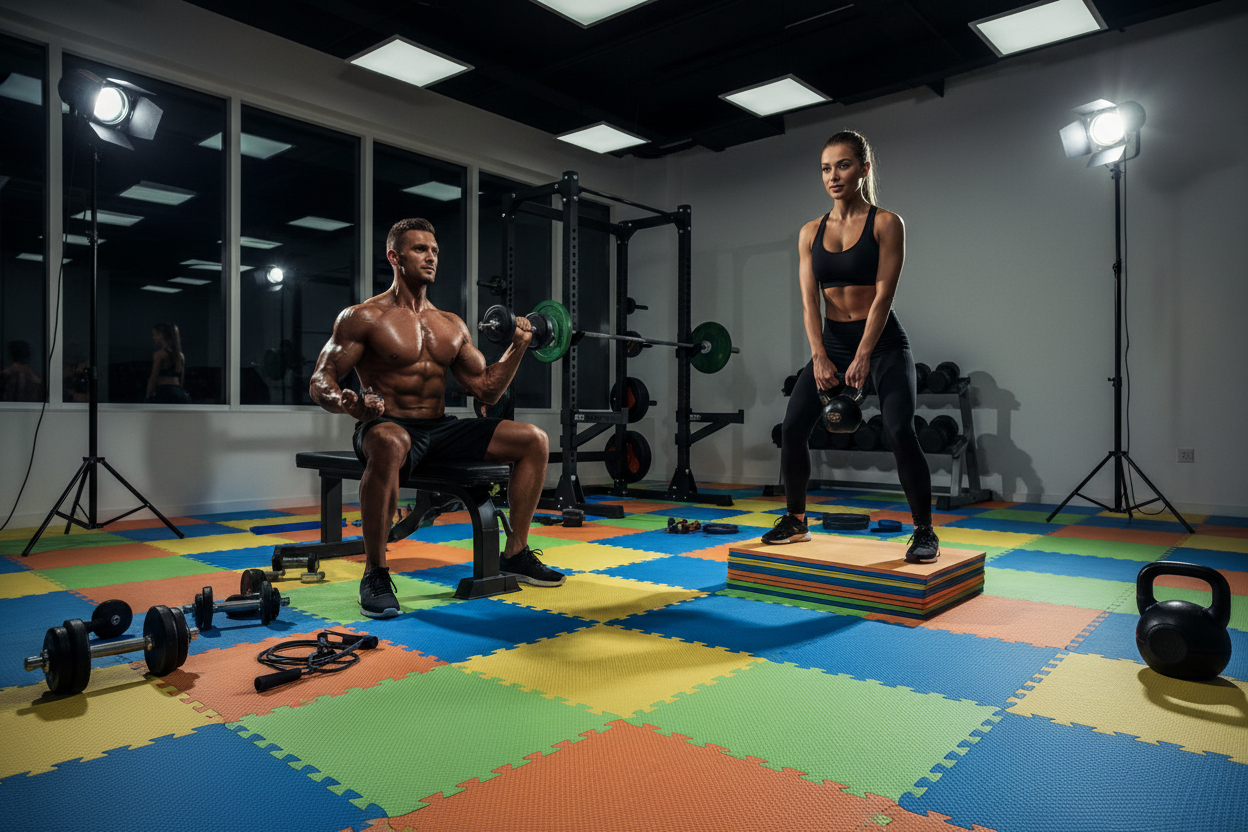
Gone are the days when your only flooring option was a sea of boring black rubber. Today, you can easily source high-quality colored interlocking foam mats that allow you to section off different training zones. You might use a sleek charcoal gray for your main lifting area and transition into vibrant, colorful foam floor mats for a dedicated family-friendly stretching or mobility zone. The interlocking teeth make it simple to mix and match colors to fit your specific aesthetic without needing messy adhesives.
Durability: Will They Hold Up?
High-Density EVA vs. Standard Foam
Not all foam is created equal. For fitness applications, you must look for high-density EVA (Ethylene-Vinyl Acetate) foam. Entry-level playroom mats will compress and permanently indent if you leave a heavy bench sitting on them. High-density EVA, usually around 0.5 to 0.75 inches thick, offers a much higher weight capacity and resists tearing from the knurling of dropped dumbbells. However, they do require some maintenance—sweat can pool on the moisture-resistant surface, so a quick wipe-down with a mild soap solution after intense sessions is highly recommended.
From Our Gym: Honest Take
I have tested dozens of flooring setups over the years, and I keep coming back to high-density EVA foam for low-impact areas. In my own 12x12 basement gym, I laid down a grid of these squares in under 20 minutes. The interlocking teeth fit snugly, and they instantly took the chill off the concrete floor during winter morning workouts.
However, I have to be brutally honest: if you are dropping 400-pound deadlifts, foam alone will not save your subfloor. You will still need a proper wooden lifting platform. But for kettlebell work, core routines, and standard dumbbell circuits, they are incredibly comfortable under bare feet. One minor caveat: they can slide slightly if placed directly over plush carpet without double-sided carpet tape, so keep that in mind if you are converting a carpeted bedroom.
Frequently Asked Questions
Are 24x24 foam squares good for heavy weightlifting?
For moderate weightlifting with dumbbells and kettlebells, they are excellent. However, for Olympic weightlifting or heavy deadlifts, foam compresses too much and will not adequately protect your subfloor from a dropped barbell. You should use a dedicated rubber or wood lifting platform for heavy barbell work.
How do I clean my foam gym mats?
Because EVA foam is closed-cell and water-resistant, cleaning is very simple. Sweep or vacuum up loose dirt, then mop with warm water and a few drops of mild dish soap. Avoid harsh chemicals like bleach, which can degrade the foam and strip the color over time.
Can I park my car on them in a garage gym?
No. The concentrated weight and friction of a vehicle's tires will permanently crush and warp EVA foam squares. If you have a multi-use garage gym where you still park your car, you need heavy-duty vulcanized rubber mats, not foam.