What Is a Power Rack Used For? The Complete Guide
If you have ever stared at a bare garage or an empty basement corner, dreaming of building a home gym, you have probably realized quickly that free weights alone are not enough. The biggest hurdle for home lifters isn't motivation—it's safety. Pushing for a new personal record on the bench press without a spotter is a risky game.
This is where the centerpiece of any serious strength setup comes into play. If you are wondering what is a power rack used for, you are in the right place. This guide will break down how this single piece of equipment can transform your training, keep you safe, and serve as the foundation for your entire home gym.
Key Takeaways
- Safety First: The primary function of a power rack is to act as a mechanical spotter for heavy barbell lifts.
- Ultimate Versatility: When people ask what are power racks used for, the answer ranges from squats and bench presses to pull-ups and rack pulls.
- Space Efficiency: Despite their size, they consolidate multiple workout stations into one footprint.
- Attachment Ready: Modern racks can be upgraded with lat pulldowns, dip bars, and landmines.
The Core Functions: Lifting Heavy and Safely
The Ultimate Mechanical Spotter
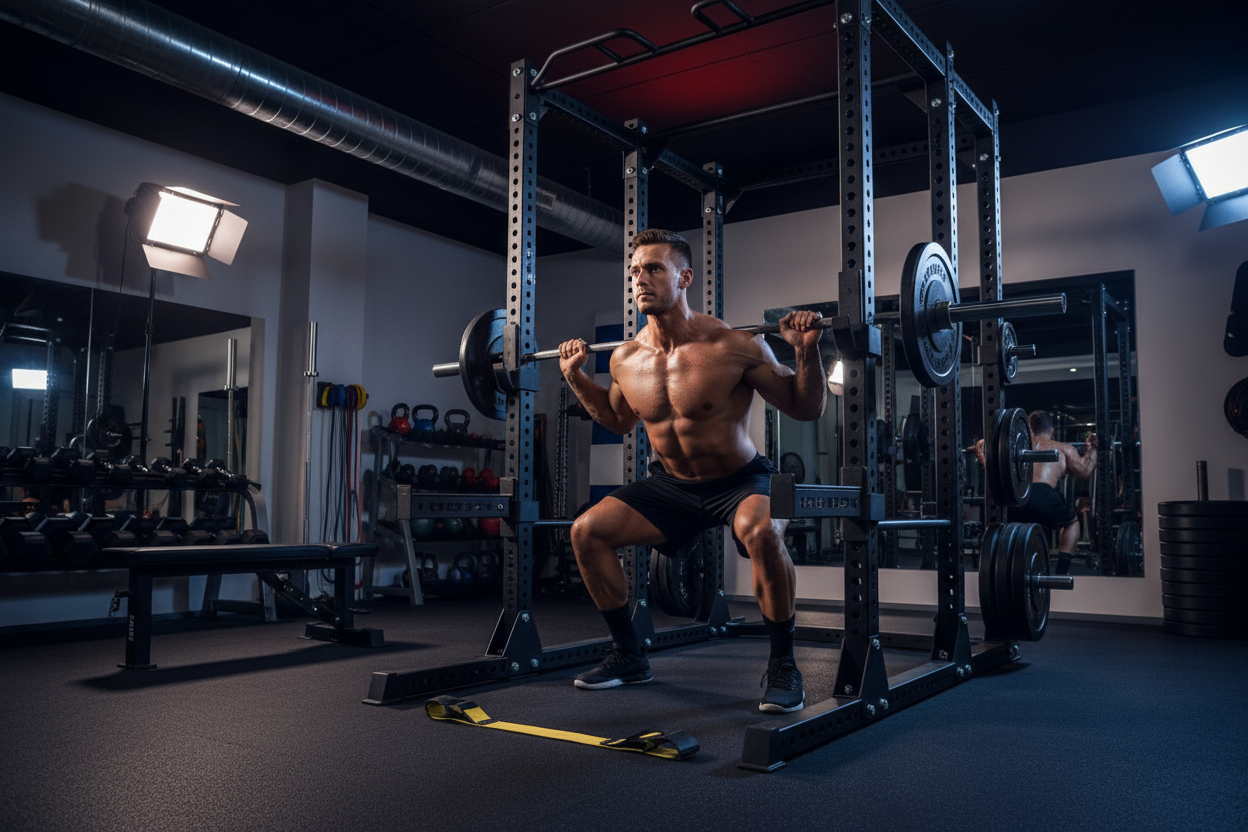
At its core, a power rack (or power cage) is a four-post steel frame designed to catch a barbell if you fail a lift. By setting the horizontal safety pins or safety straps at the correct height, you can squat or bench press to your absolute limit. If you can't push the weight back up, you simply lower the bar onto the safeties and slide out underneath. It is the ultimate insurance policy for solo lifters.
Versatility Beyond the Big Three
While squats, bench presses, and deadlifts are the bread and butter of rack training, its utility goes much further. You can perform overhead presses, barbell lunges, shrugs, and inverted rows. Most standard racks also come equipped with a pull-up bar, instantly adding a vital bodyweight component to your routine.
Fitting a Power Rack in Your Home Gym
Garage vs. Basement Clearances
A common mistake is buying a rack without measuring vertical clearance. Standard racks usually sit around 80 to 90 inches tall. If you have a standard 9-foot garage ceiling, you are generally fine. However, basement gyms often have drop ceilings or exposed ductwork. Always measure your floor-to-ceiling height and leave at least 6 to 8 inches of clearance above the rack so you don't hit your head during pull-ups.
Footprint and Flooring
Most power racks require a footprint of about 4x4 feet, but you need to account for the barbell. An Olympic barbell is 7 feet long, meaning you need an absolute minimum of 9 feet of width to comfortably load and unload plates. We highly recommend placing your rack on high-density rubber stall mats to protect your concrete or wood floors from dropped weights.
Is It Worth the Investment?
Expanding with Attachments
Entry-level racks might just hold a barbell, but commercial-grade and high-end home models offer infinite expandability. By adding attachments like J-cups, monolift hooks, dip stations, or a cable crossover ecosystem, your rack becomes a functional trainer. This modularity means you can spread out your investment over time, adding new capabilities as your training advances.
From Our Gym: Honest Take
When I first upgraded my home setup to a 3x3-inch, 11-gauge steel power rack, the difference in my training intensity was immediate. Before the rack, I was constantly holding back on my squat depth because I was terrified of getting pinned in my garage. Having heavy-duty safety straps changed everything. I also love the Westside hole spacing through the bench zone—it lets me set the J-cups exactly where I need them for my somewhat awkward arm length.
That said, it is not all perfect. A full power cage dominates the room. If you are working with a truly tight space, like a single-car garage that actually parks a car, a folding wall rack might be a better call. Additionally, to get the most out of a full rack, you really need to bolt it to the floor or a lifting platform. Doing heavy banded work on an unbolted rack is a recipe for a tipping hazard.
Frequently Asked Questions
Do I need to bolt my power rack to the floor?
It depends on the rack's design and your training style. Flat-footed racks with a rear stabilizer often don't require bolting for standard lifting. However, if you plan to use resistance bands, perform kipping pull-ups, or use a lever arm attachment, bolting it down is strongly recommended for safety.
What is the difference between a half rack and a power rack?
A full power rack has four or six vertical posts and you lift inside the cage. A half rack typically has two main uprights and you lift off the front of it, using extended spotter arms for safety. Half racks take up less space but generally offer slightly less stability and fewer attachment options.
Can I put a power rack in an apartment?
Yes, but with caveats. You must check your floor's weight capacity and be incredibly mindful of noise. You will need thick crash pads to deaden the sound of racking a heavy barbell, and you should opt for a shorter rack to accommodate standard apartment ceilings.