What I Consider Absolutely Essential for Home Gym Setups
I remember the day I finally quit my commercial gym. They had just raised the monthly fee again, and I spent twenty minutes waiting for a squat rack while three guys used it as a phone charging station. I went home and almost impulse-bought a cheap 'all-in-one' machine from a big-box store. Thankfully, I didn't. Building a space that actually works requires knowing what is essential for home gym success without falling for flashy marketing that prioritizes aesthetics over iron.
- The Foundation: A 3x3 or 2x3 steel power rack with safety spotters.
- The Bar: A 20kg Olympic barbell with at least 190,000 PSI tensile strength.
- The Surface: 3/4-inch rubber flooring to protect your concrete and your joints.
- The Mindset: Train movement patterns (squat, hinge, push, pull) rather than body parts.
Stop Training Like You're at a Commercial Gym
The biggest mistake I see people make is trying to recreate a 10,000-square-foot commercial gym in a 200-square-foot garage. You don't have room for a dedicated bicep curl station or a seated row machine. When you decide to buy gym equipment for home, you have to shift your mindset toward versatility. If a piece of gear only allows you to do one specific exercise, it is a luxury, not a necessity.
Focus on compound movements. A single barbell and a rack allow you to squat, bench, deadlift, and overhead press. Those four movements alone will build more muscle than a dozen fancy machines. Your home gym essentials should be built around the 'Big Three' lifts. Everything else is just noise until those are covered.
The Squat Rack: Your Non-Negotiable Anchor
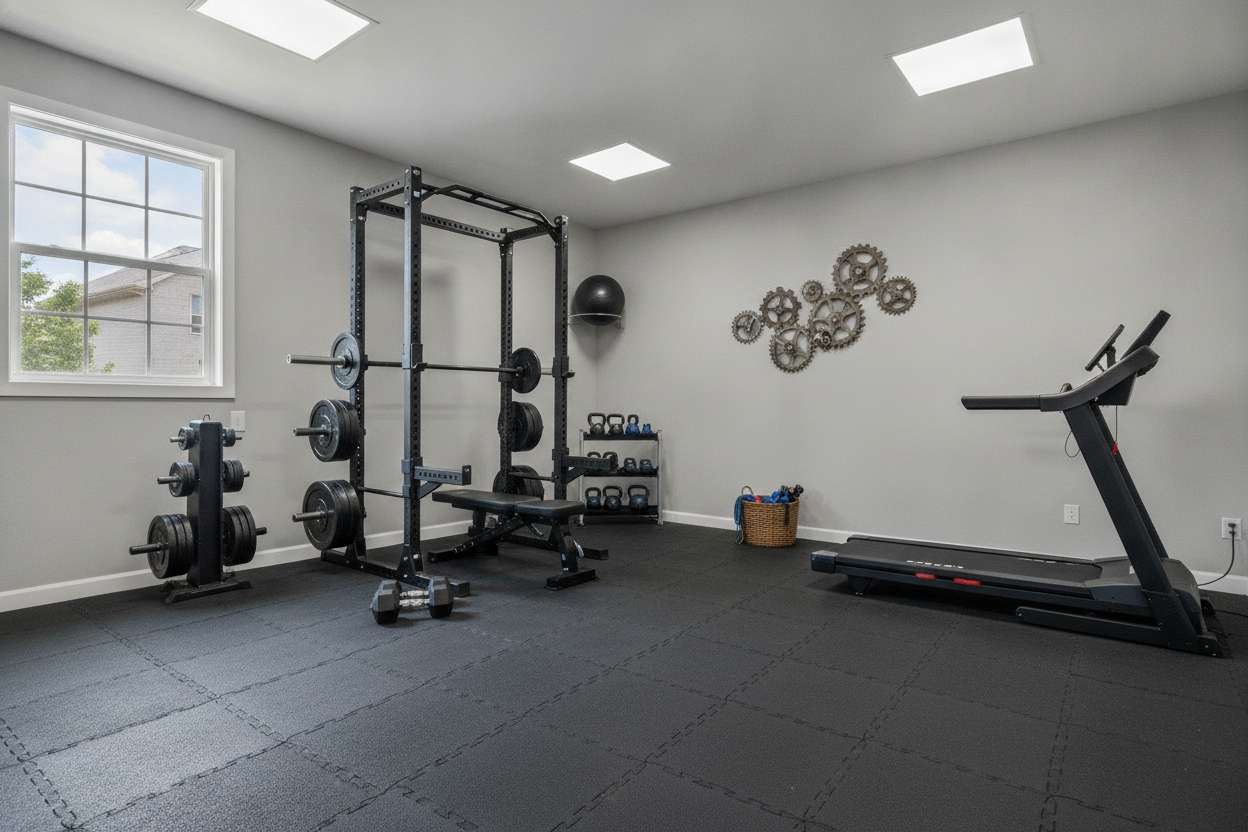
The rack is the heart of your gym. It’s not just a place to hang your bar; it’s your insurance policy. If you’re training alone—which most of us do at home—you need safety pins or spotter arms that won't buckle when 300 pounds comes crashing down. I recommend a four-post power rack if you have the space, but a solid squat stand can work if you’re tight on square footage.
Check your ceiling height before buying. Most standard racks are about 80 to 90 inches tall. If you’re in a basement with low beams, look for 'shorty' versions. Don't get distracted by 50 different attachments like dip bars or landmines right away. Get a sturdy frame first. A rack that wobbles when you rack a bar is a rack you'll eventually stop trusting.
A Bench That Won't Cave Under Pressure
I’ve seen people spend $1,000 on a rack and then buy a $60 bench that feels like it’s made of soda cans. That is a recipe for a shoulder injury. A stable pressing surface is a major must have home gym equipment priority. You want a bench with a high weight capacity—at least 600 pounds—because that includes your body weight plus whatever you're pressing.
An adjustable bench (FID: Flat, Incline, Decline) is usually the better move for home use. It opens up incline presses and seated dumbbell work. Look for a pad width of about 12 inches; anything narrower and your shoulder blades will hang off the sides, making it impossible to create a stable base for your bench press.
The Barbell and Plates (Where You Shouldn't Skimp)
Your barbell is the most important point of contact. A cheap bar has 'mushy' knurling that slips when your hands get sweaty, or worse, it develops a permanent bend after a few heavy deadlifts. Investing in a high-quality bar and essential home gym equipment like iron or bumper plates is where your budget should go. A good bar should last a lifetime if you keep it brushed and oiled.
For plates, iron is cheaper and takes up less space on the bar, but bumper plates (made of dense rubber) are necessary if you plan on doing cleans or dropping deadlifts. I use a mix: a pair of 45lb bumpers for the inner-most plate to protect the floor, then iron for the rest to save money. This hybrid approach keeps your home gym equipment list within a reasonable budget.
Protecting Your Foundation (Literally)
You might think your garage floor is indestructible, but repeated impacts from 400-pound deadlifts will eventually crack the concrete. Beyond that, the noise and vibration will drive your family or neighbors insane. You need dedicated gym flooring for home workout areas. Do not use those flimsy foam puzzle mats; they compress under weight and slide around like they're on ice.
Go for 3/4-inch thick rubber. It provides a non-slip surface and dampens the sound significantly. It also keeps your expensive barbell from getting scratched up by the grit of raw concrete. Flooring is the one thing people skip, and it's the one thing they regret skipping three months later when their floor looks like a tectonic plate shift.
How to Expand Once You Master the Basics
Once you have the rack, bar, bench, and floor, you have a world-class training facility. Only then should you look at 'Phase 2.' This is when you start hunting for home gym equipment deals on things like adjustable dumbbells, pull-up handles, or a set of resistance bands. These tools are great for accessory work, but they shouldn't take priority over your primary lifting station.
My advice? Spend six months with just the basics. You’ll quickly learn what movements you're missing. Maybe you realize you really want a pulley system for triceps, or maybe you find that a simple set of rings hanging from your rack is all you need. Let your training dictate your purchases, not your Instagram feed.
My Biggest Home Gym Mistake
I once bought a 'budget' rack that used 2x2 tubing with weird 1-inch hole spacing. I thought I was being smart and saving $200. I quickly realized that none of the cool attachments—like a quality dip bar or a weight storage peg—fit my rack. I was stuck with a piece of gear that couldn't grow with me. Eventually, I had to sell it for a loss and buy the 3x3 rack I should have bought in the first place. Buy once, cry once.
Home Gym FAQ
What is the minimum space needed for a home gym?
You can fit a full Olympic setup in an 8x8 foot area. This gives you enough room for a 7-foot barbell and the footprint of a standard power rack. Just watch your ceiling height for overhead presses.
Are bumper plates better than iron plates?
Not necessarily. Bumpers are essential if you are dropping the bar (Olympic lifting). If you're doing slow, controlled powerlifting moves, iron is thinner and allows you to fit more weight on the bar.
Do I really need a power rack?
If you plan on squatting or benching heavy without a human spotter, yes. The safety bars are the only thing that will save you if you fail a rep. It's the most important safety feature you can own.