Weighted Rowing: The Blueprint for a Thicker, Stronger Back
If you want a back that looks impressive not just from the front, but from the side, you have to prioritize horizontal pulling. While pull-ups get all the glory for width, weighted rowing is the undisputed king of density and thickness. Whether you are loading up a dip belt for inverted rows or stacking plates on a machine, the mechanics of pulling weight toward your torso are essential for complete back development.
Key Takeaways
- Focus on Elbow Drive: The primary cue for any row is driving the elbows back, not pulling with the biceps.
- Scapular Movement: Allow your shoulder blades to protract (stretch) at the bottom and retract (squeeze) at the top.
- Machine Advantages: A weighted row machine offers stability, allowing you to isolate the lats without lower back fatigue.
- Control the Tempo: Momentum kills back gains; use a controlled eccentric (lowering) phase.
The Anatomy of a Perfect Row
Many lifters treat rowing as a secondary movement, throwing it in at the end of a workout. This is a mistake. To build a shelf-like upper back, you need to understand what you are actually targeting.
When you perform a weight machine row or a free-weight variation, you are primarily targeting the latissimus dorsi, rhomboids, and middle trapezius. The angle of your elbow determines the focus. Flared elbows hit the upper back and rear delts, while tucked elbows target the lats.
Mastering the Seated Row Weight Machine
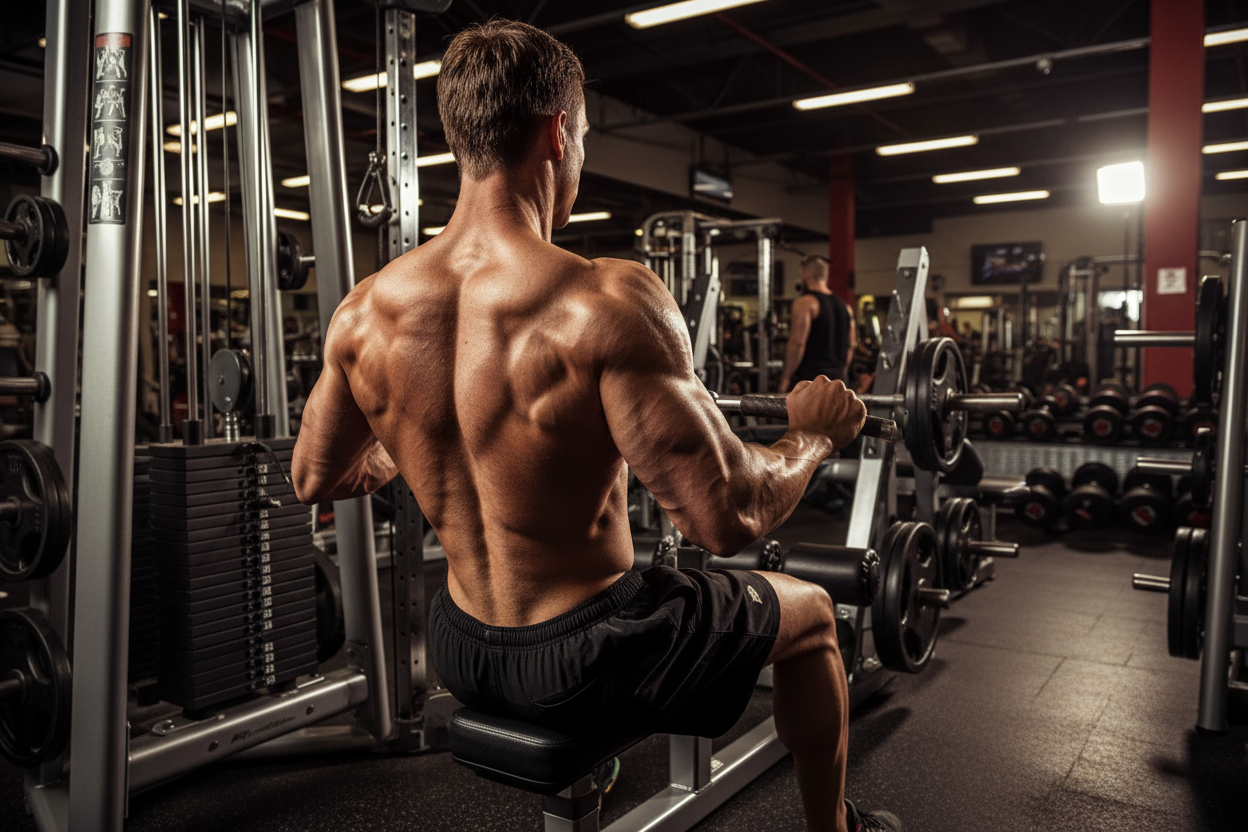
The seated row weight machine is often dismissed by purists, but it is one of the most effective tools for hypertrophy. Because your chest is supported, you remove the stability requirement of the lower back. This means you can take the muscles to absolute failure safely.
1. The Setup
Adjust the seat height so the chest pad sits comfortably on your sternum, not your stomach or your neck. When you reach for the handles, your shoulders should be slightly lower than your hands. This prevents the upper traps from taking over the movement.
2. The Initiation
Don't just yank the handles. Initiate the movement by depressing your shoulders (pushing them down away from your ears). This locks your lats into place. If you skip this, you’ll end up shrugging the weight, which leads to neck pain rather than back growth.
3. The Squeeze
Pull until your elbows are slightly past your torso. There is a misconception that you need to pull as far back as physically possible. However, once your elbows pass your ribs, the shoulder joint can roll forward (anterior glide), which puts unnecessary stress on the capsule. Stop where you feel maximum back tension, not joint pain.
Weighted Inverted Rows: The Calisthenics Approach
If you aren't using a machine, "weighted rowing" often refers to the inverted row (or Australian pull-up) with added load. This is a humble killer.
By wearing a weight vest or resting a plate on your chest, you turn a basic bodyweight move into a serious strength builder. The benefit here is core integration. Unlike the weighted row machine, your body acts as a rigid plank. If your glutes sag, the lift fails. This teaches whole-body tension that carries over to deadlifts and squats.
Common Mistakes to Avoid
Ego Lifting: If you have to swing your torso back and forth to move the stack, the weight is too heavy. You are using momentum, not muscle.
The "T-Rex" Arm: This happens when you pull primarily with your biceps, ending with your wrists curled in toward your chest. Keep your wrists neutral and think of your hands as hooks. The power comes from the back, the arms are just connecting cables.
My Training Log: Real Talk
I distinctly remember the first time I actually learned to use a weighted row machine correctly. For years, I avoided them because I thought machines were "soft." I stuck to barbell rows until my lower back was so fried I couldn't walk straight.
I switched to a chest-supported row to work around the injury. The specific thing I noticed wasn't just the pump—it was the gross feeling of the vinyl chest pad against my skin. When you are truly grinding out that last rep, you start sweating heavily, and I remember feeling my chest sliding slightly down the slick pad as my lats gave out. That friction, that stability, allowed me to focus 100% on my rhomboids without worrying about my spine snapping. It was a humbling realization that stability often equals better isolation. Now, I wipe that pad down religiously before and after, but I never skip the machine work.
Conclusion
Whether you choose a seated row weight machine for isolation or weighted inverted rows for total body tension, the horizontal pull is non-negotiable. Stop letting your biceps do the work. Drop the weight, engage the scapula, and pull with purpose. Your back development depends on the quality of your reps, not just the number on the weight stack.
Frequently Asked Questions
What muscles does weighted rowing work?
It primarily targets the latissimus dorsi (lats), rhomboids, and middle trapezius. It also heavily involves the rear deltoids and biceps as secondary movers.
Is a weight machine row better than free weights?
Neither is strictly "better." Free weights build core stability and coordination, while machines offer higher stability, allowing you to isolate the back muscles more effectively and train closer to failure safely.
How often should I perform weighted rowing?
For most lifters, performing rowing movements 2 times per week is optimal. This allows enough volume for growth while providing adequate recovery time for the back muscles.