Weight Lifters Shoulder: The Definitive Recovery Guide
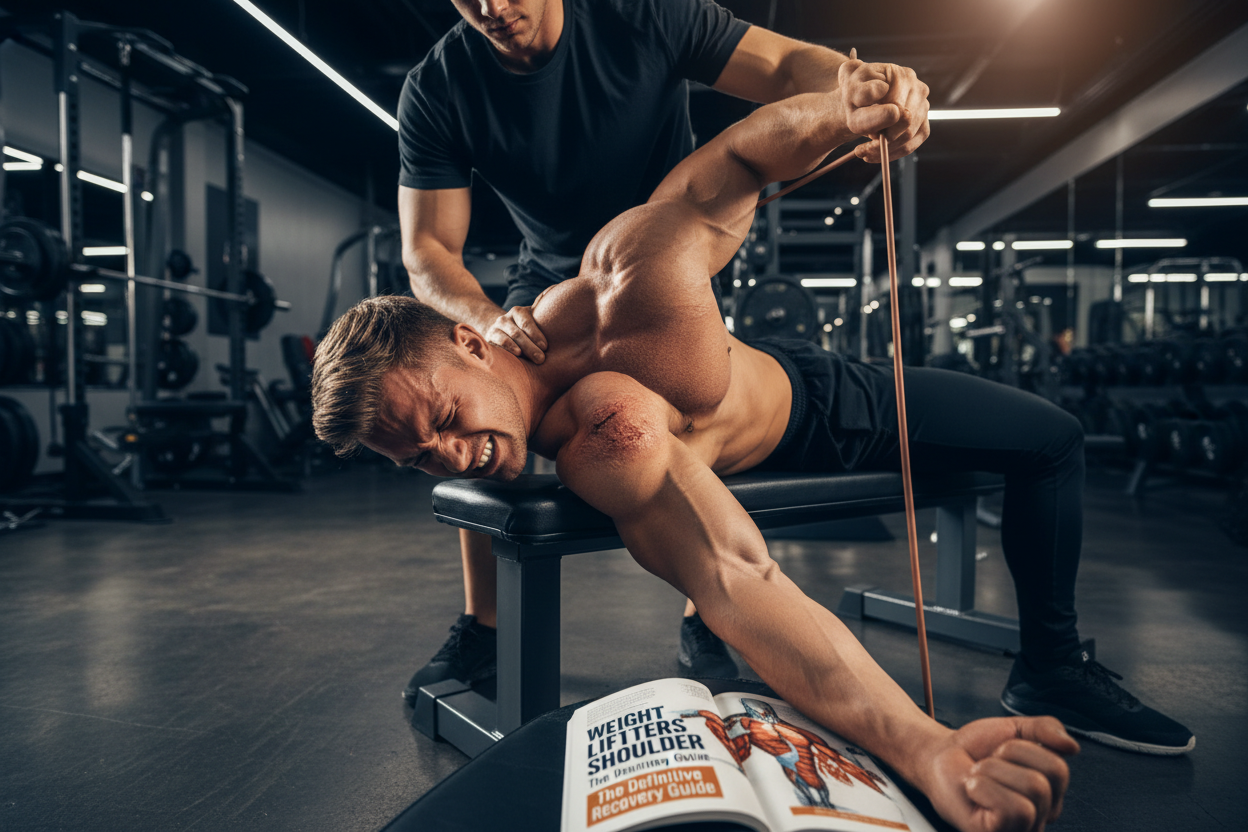
You know the feeling. You’ve just finished a heavy set of bench presses, and instead of a muscular pump, there is a distinct, dull ache radiating from the top of your AC joint. It’s not the sharp sting of a tear, but a persistent, toothache-like throb that ruins your sleep. This is the hallmark of weight lifters shoulder, medically known as Distal Clavicular Osteolysis (DCO).
It is one of the most frustrating injuries for strength athletes because it doesn't happen overnight. It is a stress injury to the bone at the end of the collarbone. Ignoring it won't make you tough; it will make you a candidate for surgery. Let's break down exactly what is happening inside your joint and how to fix it without losing all your gains.
Key Takeaways: Quick Summary
- What it is: Micro-fractures in the distal clavicle (collarbone) caused by repetitive heavy loading.
- Primary Culprits: Heavy bench press, deep dips, and behind-the-neck presses.
- Main Symptom: localized pain at the top of the shoulder (AC joint), especially during cross-body movements.
- Recovery Reality: This is a bone stress injury. Healing typically takes 6 to 12 weeks of modified training.
- Immediate Action: Stop exercises that compress the AC joint. Switch to neutral-grip pressing immediately.
Understanding Weightlifters Shoulder Symptoms
Many lifters confuse AC joint issues with rotator cuff tendonitis. The distinction is vital for your rehab. Weightlifters shoulder symptoms are highly specific.
The pain is almost always localized to the Acromioclavicular (AC) joint—the bony bump on top of your shoulder. You will likely feel a dull ache that turns sharp when you bring your arm across your chest (adduction). If you feel pain when reaching for the seatbelt or washing your opposite shoulder in the shower, that is a classic sign of DCO. Unlike a muscle strain, this pain often persists for hours after the workout ends.
The Mechanism: Why It Happens
This injury is essentially a stress fracture. When you lower a heavy barbell to your chest, your shoulders roll forward/down, and the scapula compresses against the clavicle. Over time, the body cannot repair the micro-damage to the bone as fast as you are creating it. The bone begins to dissolve (osteolysis) at the tip of the clavicle.
Exercises to Avoid with Weightlifters Shoulder
If you want to heal, you have to stop grinding the bones together. You must temporarily eliminate movements that maximize AC joint compression:
- Barbell Bench Press: The fixed hand position forces internal rotation and compression at the bottom of the rep.
- Dips (especially weighted): As you descend, the shoulder heads shear upward into the joint.
- Upright Rows: This raises the arm while internally rotating it, essentially grinding the joint space.
- Behind-the-Neck Press: This places extreme torque on the AC joint structure.
Weightlifters Shoulder Treatment and Rehab
The standard advice of "just rest" rarely works for people addicted to the iron. Complete rest causes atrophy, which destabilizes the joint further. The goal of weightlifters shoulder treatment is to maintain strength while offloading the bone.
Phase 1: Modification
Switch to dumbbells. Using a neutral grip (palms facing each other) opens up the joint space. Floor presses are also excellent because the floor stops your elbows before the range of motion becomes compressive.
Phase 2: Weightlifters Shoulder Rehab Exercises
Once the resting pain subsides, focus on rear delt and scapular stability. The stronger your upper back, the better your scapula moves, reducing pressure on the clavicle.
- Face Pulls: Do these with high volume. They strengthen the external rotators without compressing the AC joint.
- Band Pull-Aparts: Keep your elbows locked and squeeze the shoulder blades together.
- Isometric Holds: Holding a dumbbell in a static overhead position (if pain-free) can stimulate stability without the grinding friction of dynamic reps.
Weightlifters Shoulder Recovery Time
Here is the hard truth: weightlifter's shoulder recovery time is slow. Bones metabolize slower than muscle. Mild cases might resolve in 6 weeks with proper modification. However, if you have been pushing through pain for months, you are likely looking at a 3 to 6-month timeline for full structural healing. If you return to heavy benching too early, the osteolysis will return immediately.
My Personal Experience with Weight Lifters Shoulder
I dealt with DCO about five years into my lifting career, specifically during a high-volume Smolov Jr. bench cycle. The clinical definitions don't capture the actual day-to-day annoyance of this injury. I remember specifically that the pain wasn't worst when I was pressing the weight up; it was the unracking process.
That moment when you lift the bar off the hooks and the weight settles into the joint—that felt like someone was driving a nail into the top of my shoulder. I also recall the specific "creaking" sensation, like rusty hinges, whenever I tried to sleep on that side. I made the mistake of switching to incline bench thinking it would help. It didn't. It wasn't until I completely dropped the barbell for dumbbells and spent three months obsessing over band pull-aparts that the deep, throbbing ache finally subsided. The knurling on the bar felt different when I finally came back—scarier, but I respected the weight a lot more.
Conclusion
Weight lifters shoulder is a signal that your volume has exceeded your skeletal system's ability to recover. It is not a death sentence for your lifting career, but it is a stop sign. Respect the biology of bone healing. Swap the barbell for dumbbells, hammer your rear delts, and give it time. The iron will still be there in three months; make sure your shoulders are too.
Frequently Asked Questions
Can I still train chest with weightlifter's shoulder?
Yes, but you must modify the movement. Avoid full range of motion barbell pressing. Switch to neutral-grip dumbbell floor presses or push-ups (if pain-free). If a movement causes sharp pain at the top of the shoulder, stop immediately.
Does ice help weightlifter's shoulder?
Ice can help manage acute inflammation and pain after a workout, but it will not heal the bone stress injury. The underlying issue is mechanical stress on the distal clavicle, which ice cannot fix. Modification of training load is the only cure.
Is surgery necessary for weightlifter's shoulder?
Surgery (distal clavicle resection) is usually a last resort. Most lifters recover fully with conservative treatment, rest, and physical therapy. Surgery is typically only considered if 6+ months of dedicated rehab fails to alleviate the pain.