Used Incline Treadmill: What to Check Before You Buy
Whether you are chasing the viral 12-3-30 workout or just looking to build serious posterior chain strength without pounding your joints, high-incline walking is a game-changer. But let's face it: commercial-grade trainers can easily drain $2,000 to $4,000 from your home gym budget. That is where finding a quality used incline treadmill comes into play.
Buying second-hand is the smartest way to get premium features at a fraction of the cost, provided you know exactly what to look for. In this guide, we break down the critical components you need to inspect, how to avoid buying a costly coat rack, and how to ensure your space can actually handle the elevation.
Key Takeaways
- Test under load: Always walk on the machine while it transitions through its full incline range to check for motor hesitation.
- Check the CHP: Look for a continuous horsepower (CHP) rating of at least 2.5 to 3.0 to handle steep, sustained climbs.
- Measure your vertical clearance: High inclines require significantly more ceiling height than flat running.
- Inspect the deck: A worn belt is a cheap fix; a cracked or grooved running deck is a dealbreaker.
Essential Inspection Checklist
Testing the Elevation Motor
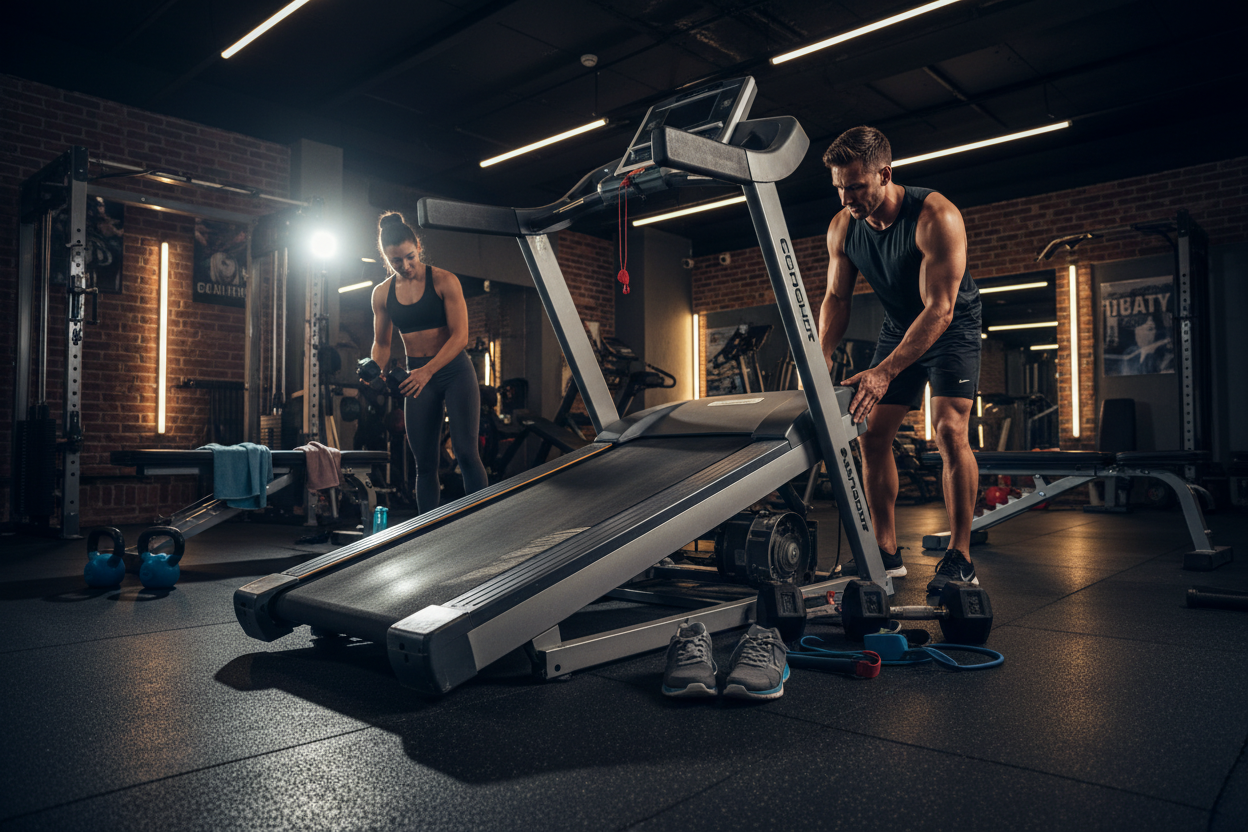
The biggest risk when buying a used treadmill with incline is a failing lift motor. Unlike the drive motor that spins the belt, the incline motor uses a worm gear to physically lift the front of the machine. When inspecting a unit, do not just press the button while standing next to it. Stand on the belt and run the incline from 0% to its absolute maximum. Listen for grinding, clicking, or struggling. A smooth, quiet transition is a strong indicator of a healthy lift system.
Checking the Belt and Deck Health
Slide your hand underneath the center of the walking belt (make sure the machine is unplugged first). The deck should feel smooth, not deeply grooved or rough. If the belt is frayed at the edges, it can be replaced relatively cheaply, but a damaged deck will create excess friction, eventually burning out your drive motor. Always factor the cost of a new belt into your negotiation if it looks worn.
Space and Power Considerations
Ceiling Height Clearances
This is the most common mistake home gym owners make. A standard treadmill requires about 8 inches of step-up height. However, a machine maxed out at a 15% to 40% incline can elevate you an additional 12 to 18 inches. Add your height to that number, plus a few inches for bounce, and you might find your head crashing into a standard 8-foot basement ceiling. Always measure your vertical space before committing.
Dedicated Power Circuits
Older or heavily used motors draw more amperage as they age. If you are plugging a commercial-grade unit into a shared garage circuit, expect tripped breakers. Plan to have a dedicated 15-amp or 20-amp circuit to keep your machine running smoothly without interrupting the rest of your home.
From Our Gym: Honest Take
Last fall, we picked up a second-hand commercial trainer for our testing facility to see how it held up against newer models. At 6 foot 2, I immediately realized that maxing out a 20% incline put my head dangerously close to our exposed basement joists—a clearance issue most product pages fail to mention.
Furthermore, the elevation motor had a slight groan when transitioning past 12%. We managed to fix it by cleaning and lubricating the worm gear with white lithium grease, but it was a stark reminder: always test the full range of motion under your own body weight before handing over the cash. The savings were absolutely worth it, but it required a weekend of deep-cleaning and belt tensioning to get it gym-ready.
Frequently Asked Questions
How long do incline treadmill motors typically last?
With regular maintenance and proper lubrication, a quality drive and incline motor can last 7 to 12 years. However, this lifespan drops significantly if the machine is kept in a dusty, un-climate-controlled environment like a damp garage.
Is a 10% incline enough for a home workout?
For most users, a 10% to 12% incline is plenty for intense cardiovascular training and glute activation. You only need the extreme 20% to 40% trainer models if you are specifically training for mountaineering or ultra-steep hiking.
Can I move a heavy-duty treadmill by myself?
Absolutely not. High-incline models have heavy-duty frames and dual motors, often weighing between 250 and 400 pounds. You will need at least two strong people and a furniture dolly to safely transport it, especially if stairs are involved.