Unlock True Fitness: The Ultimate Full Body Workout Rowing Machine Guide
Walk into any commercial gym, and you will likely see the same scene: a row of treadmills occupied by sweat-drenched runners, while the solitary rowing machine sits collecting dust in the corner. This is a massive missed opportunity. Most people view the rower as a warm-up tool or strictly an upper-body finisher, but the reality is far more potent.
If you are looking for efficiency, a full body workout rowing machine session is unrivaled. It targets 86% of the muscles in your body, combining heavy resistance training with cardiovascular endurance. But to get those results, you have to stop pulling with your arms and start driving with intent. Let’s break down how to actually use this machine for total body conditioning.
Key Takeaways: The Efficiency of Rowing
- Muscular Engagement: A proper stroke recruits 86% of body muscle mass, primarily driving through the legs (60%), followed by the core (20%) and arms (20%).
- Low Impact: Unlike running, a total body rowing machine session saves your knees and ankles from repetitive impact forces.
- Caloric Burn: Due to the high muscular demand, rowing burns significantly more calories per hour than cycling or jogging at moderate intensity.
- Posture Correction: Correct rowing mechanics strengthen the posterior chain (glutes, hamstrings, back), combating the effects of sitting at a desk all day.
Why Rowing is the King of Efficiency
The misconception that rowing is an "arm exercise" is the primary reason people fail to see results. If your biceps are burning before your quads, your form is off.
A rower full body workout works because it is a pushing movement, not just a pulling one. The power is generated from the footplates. Think of the movement like a deadlift performed horizontally. You are driving the machine away from you using the largest muscles in your body—your legs and glutes—before transferring that energy through a rigid core and finishing with the arms.
The Kinetic Chain Breakdown
To understand why we call rowing a full body workout, look at the firing sequence. It forces your body to coordinate in a precise kinetic chain. If one link is weak (usually the core), the power transfer fails. This forces your abs and lower back to work overtime to stabilize the force generated by your legs, providing a functional core workout that crunches can't replicate.
Mastering the Stroke: The "Legs-Body-Arms" Mantra
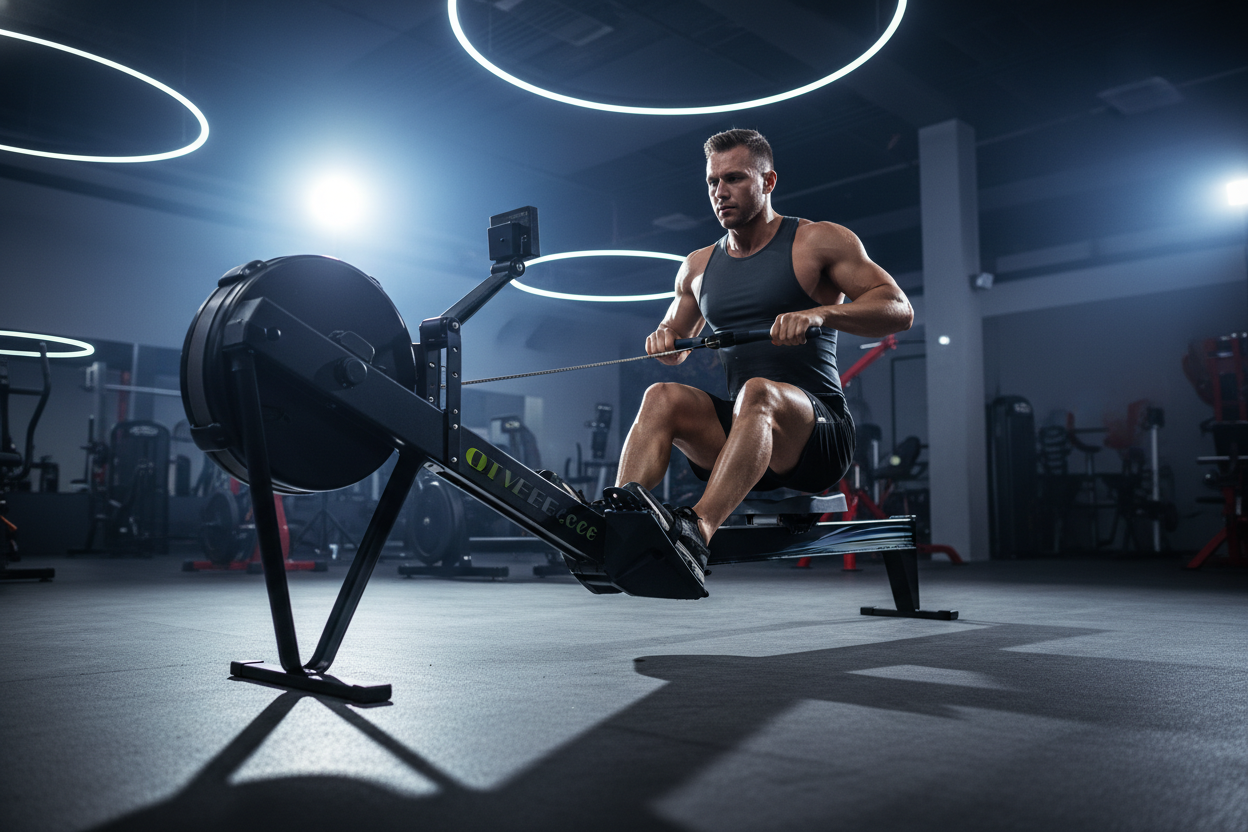
You cannot brute-force a rowing workout. You need technical proficiency. The stroke is divided into four distinct phases. Mastering these is the difference between a sore back and a shredded physique.
1. The Catch
This is the starting position. Your shins should be vertical, lats engaged, and arms straight. A common error here is rounding the back. Keep your chest up. You are a compressed spring ready to explode.
2. The Drive
This is where the magic happens. Drive your heels into the pedal. Do not pull with your arms yet. Keep your arms straight and hang off the handle using your body weight. The handle moves only because your legs are pushing the seat back.
3. The Finish
Once your legs are extended, swing your torso slightly back (to about 11 o'clock) and pull the handle to your lower chest. This engages the full body rowing machine potential by firing the rear delts and biceps.
4. The Recovery
This is the reverse: Arms extend, body swings forward, legs bend. It should be slow and controlled. A rushed recovery ruins your rhythm.
Common Mistakes Killing Your Gains
Even seasoned athletes mess this up. If you want the benefits of a total body rowing machine workout, avoid these pitfalls.
Shooting the Slide
This happens when your seat moves back, but the handle stays still because your legs pushed before your back was braced. You end up doing a heavy row with just your lower back. This is the fastest route to a herniated disc.
The Death Grip
Don't strangle the handle. Hook your fingers around it. Squeezing too tight fatigues your forearms unnecessarily and prevents the fluid transfer of power.
My Training Log: Real Talk
I want to share a specific detail about my experience with the full body workout rowing machine that usually doesn't make it into the glossy magazines. It’s about the "Concept2 Cough" and the grip.
When I first started taking rowing seriously—aiming for a sub-7-minute 2000m time—I realized that the hardest part wasn't the muscle fatigue; it was the specific dryness in the throat. The fan on an air rower circulates dry air directly toward your face. After a high-intensity interval session, I’d have this lingering, metallic cough for about 20 minutes. I learned quickly to keep a water bottle with electrolytes right next to the footplate, not just for hydration, but to coat the throat between intervals.
Also, let’s talk about the foot straps. If you rely too much on the straps to pull you back in during the recovery phase, you aren't engaging your hamstrings properly. I started rowing "strapless" (feet not buckled in) for my warm-ups. It feels terrifying at first—like you’re going to fly off the back of the machine—but it forces you to maintain tension in your core and control your momentum. That specific feeling of instability taught me more about connection than any coaching cue ever did.
Conclusion
The rower is not a backup machine; it is a primary builder of conditioning and power. By respecting the technique and understanding the power sequence, you turn a simple cardio session into a comprehensive strength builder. Stop pulling, start driving, and watch your fitness transform.
Frequently Asked Questions
Can I lose belly fat using a rowing machine?
Yes. Because a rowing machine utilizes 86% of your muscle mass, it creates a high metabolic demand. This burns significant calories during the workout and increases EPOC (Excess Post-exercise Oxygen Consumption), helping you burn fat long after the session ends.
Is it okay to row every day?
While rowing is low impact, it is high intensity. If you are doing hard intervals, your central nervous system needs recovery. For moderate, steady-state rowing (Zone 2), daily sessions are generally safe, provided you maintain strict form to protect your lower back.
Does rowing build muscle or just endurance?
It does both. If you set the damper (resistance) high and perform explosive sprints, you are effectively doing resistance training that builds muscle in the legs, back, and shoulders. However, it will not build mass as quickly as heavy barbell lifting.