
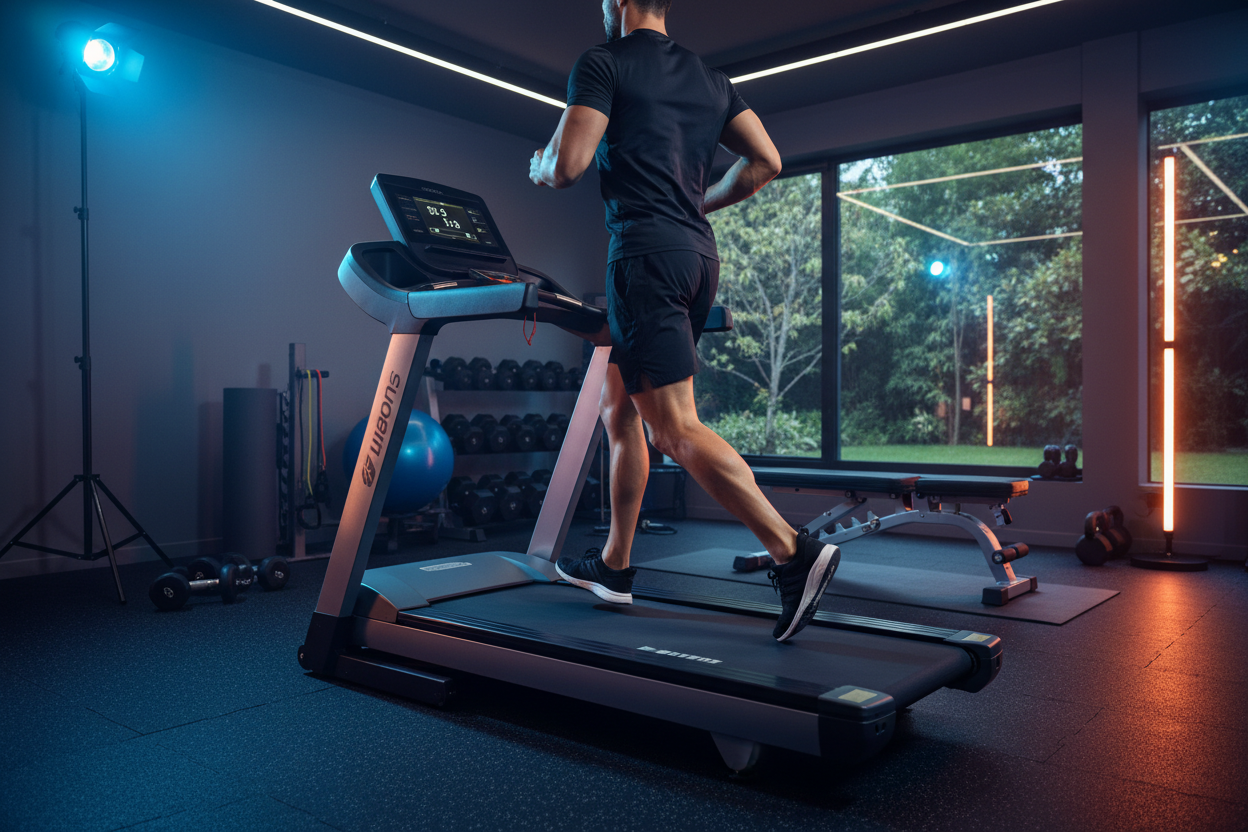
Treadmill for Home: Avoid These Costly Buying Mistakes
Whether you are battling harsh North American winters, dodging unpredictable rain, or simply tired of the 20-minute commute to a crowded commercial gym, bringing your cardio indoors is a game-changer. But investing in a treadmill for home is a major decision. It takes up significant floor space, requires a decent budget, and demands the right specifications to match your training style.
Are you training for a marathon, or do you just want a simple treadmill to hit your daily step goal while watching TV? In this guide, we will cut through the marketing noise and help you choose the exact machine that fits your space, your budget, and your fitness goals.
Key Takeaways
- Motor Power (CHP) dictates performance: Walkers need 2.0 to 2.5 CHP, while runners require 3.0 CHP or higher.
- Space is more than just footprint: Always account for ceiling height clearance and the space required behind the deck for safety.
- Belt size matters for your stride: A home running treadmill should have a belt at least 60 inches long and 20 inches wide.
- Tech isn't mandatory: A basic treadmill for home use often outlasts tech-heavy models if you primarily use your own tablet for entertainment.
Decoding the Specs: Motors, Belts, and Builds
When shopping for a home treadmill, it is easy to get distracted by flashy touchscreens and built-in fans. However, the true value of your machine lies under the hood.
Finding the Right Motor (Continuous Horsepower)
Unlike peak horsepower, Continuous Horsepower (CHP) measures the motor's ability to maintain power over an extended workout. If you are looking for a simple treadmill for home use for light jogging or walking, a 2.5 CHP motor will do the job perfectly. However, if you plan on doing high-intensity interval training (HIIT) or long-distance runs, you will want a motor pushing 3.0 to 4.0 CHP to prevent overheating and lagging belt speeds.
Deck Size for a Home Running Treadmill
Nothing ruins a good sprint like feeling boxed in. If you are taller than 5'8" or plan to run at higher speeds, a 60-inch belt is non-negotiable. Walkers can get away with a 50-inch to 55-inch deck, which is typical for a simple treadmill for home. Additionally, look for a belt width of at least 20 to 22 inches to give yourself comfortable lateral sway room.
Fitting Indoor Treadmills in Your Space
The biggest mistake buyers make is underestimating the sheer size of cardio equipment. An at home treadmill requires more than just the floor space it sits on.
Folding Mechanisms vs. Dedicated Footprints
If you are outfitting a garage gym with ample square footage, a heavy-duty, non-folding treadmill offers maximum stability. But for apartment dwellers or basement gyms, a folding mechanism is a lifesaver. Modern folding treadmills use hydraulic lift assists, meaning you won't throw your back out trying to stow the deck. Just remember: you still need at least 6 feet of clear space behind the machine for safety in case of a fall.
Smart Treadmills vs. The Simple Treadmill
The fitness industry is heavily pushing connected fitness, but you need to decide if the monthly subscription fees align with your long-term goals.
Navigating Smart Treadmill Reviews
When reading smart treadmill reviews, pay close attention to what happens if you stop paying for the app subscription. Some machines lock you out of basic functionalities. If you prefer to follow your own programming or binge Netflix while you run, an analog, basic treadmill for home use might be the smarter, more cost-effective investment. You can easily pair a basic machine with a tablet holder and a third-party app.
From Our Gym: Honest Take
Over the last year, I've logged over 400 miles on a mid-tier home treadmill in my basement gym. While testing various models, I discovered a crucial detail most product pages omit: step-up height. My basement has 7-foot ceilings. The treadmill I initially tested had an 8-inch step-up height, plus a 15% incline feature. At 6'1", my head was practically scraping the drywall during hill climbs.
I eventually swapped it for a low-profile simple treadmill. The trade-off? The shock absorption isn't as plush as commercial gym models, and the motor runs a bit louder at 8 mph. But for the convenience of rolling out of bed and knocking out a 5K before my morning coffee, the minor noise is a compromise I'd make again in a heartbeat.
Frequently Asked Questions
Is a simple treadmill for home use worth it?
Absolutely. If your primary goal is to increase your daily activity, burn calories, or maintain cardiovascular health during the off-season, a basic model without a massive touchscreen provides excellent ROI and requires less software maintenance over time.
How much space do I need for an at home treadmill?
On average, the machine itself will take up about 7 feet by 3 feet of floor space. However, safety guidelines dictate you need at least 2 feet of clearance on the sides and 6 feet of unobstructed clearance behind the deck.
Can I put a treadmill on the second floor?
Yes, but you need to consider the weight of the machine (often 200-300 lbs), your body weight, and the impact force of running. It is highly recommended to place heavy-duty indoor treadmills on the ground floor or over load-bearing walls, and always use a high-density rubber mat to dampen vibrations and protect your floors.


