Transform Your Physique With Just Exercise Machine Rowing
You walk into the gym, and the treadmills are packed. The weight rack is a chaotic mess. But sitting there, often empty, is the most efficient piece of equipment in the building. It isn't glamorous, but exercise machine rowing provides a return on investment that running or cycling simply cannot match.
Many people skip the rower because they don't know how to use it, or they think it's just for warming up. That is a massive mistake. If you want to build endurance and power simultaneously while sparing your knees from high-impact pounding, you need to master this machine. Let's break down how to stop flailing and start training.
Key Takeaways: The Rower at a Glance
If you are looking for the "too long; didn't read" version, here is why the stationary rowing machine is superior:
- Total Body Recruitment: Unlike a bike, a rower engages roughly 86% of your muscles, including quads, hamstrings, glutes, core, lats, and shoulders.
- Low Impact: It offers high-intensity training without the joint stress associated with running on concrete or treadmills.
- Variable Resistance: Whether you use an air, magnetic, or water rower, you control the intensity through your effort, not just a button.
- Calorie Torch: Because it requires both strength and cardio, the metabolic demand is significantly higher than isolation exercises.
Why the Rowing Machine Wins on Efficiency
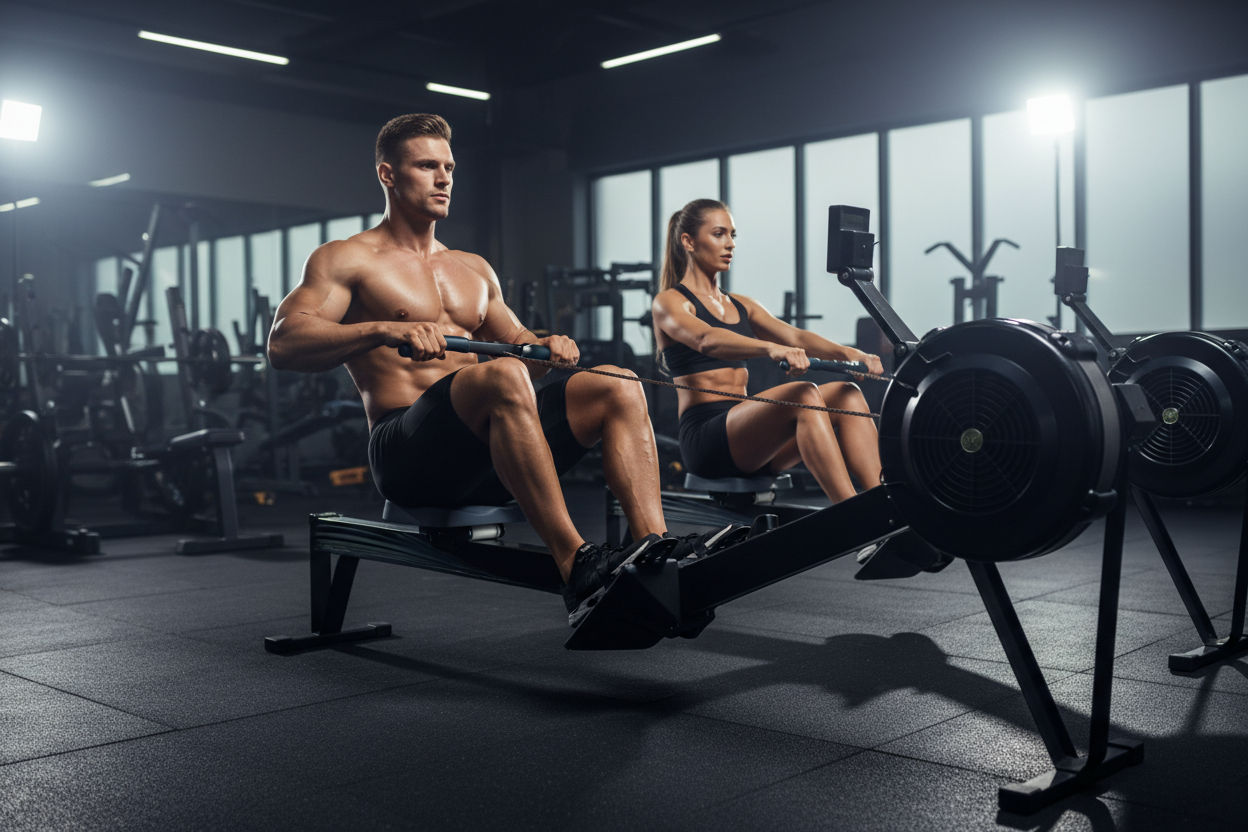
The gym rower is the great equalizer. It doesn't care how strong you are; it cares how hard you work. The concept is simple: the harder you push and pull, the more resistance the machine generates (specifically on air and water models).
When you use rowing fitness equipment, you are performing a horizontal leg press combined with a deadlift and a row. This triple-threat movement builds posterior chain strength that counteracts the "desk posture" many of us develop from sitting all day. While a treadmill forces you into a repetitive impact pattern, the row fitness machine opens up your hips and chest.
Understanding the Machine Types
Not every row gym machine feels the same. Knowing the difference helps you adjust your workout:
- Air Rowers (The Standard): Found in most CrossFit boxes and commercial gyms. The resistance comes from wind drag. It's noisy but offers the smoothest, most infinite resistance curve.
- Magnetic Rowers: These are the silent types. A gym with rowing machine setups focused on luxury often uses these. The resistance is constant and doesn't fluctuate with your speed as much as air rowers.
- Water Rowers: This boat exercise machine simulation uses a tank of water. It provides a natural feel and the sound is meditative, mimicking a real row boat workout machine experience.
The Anatomy of a Perfect Stroke
Most beginners hop on a rower exercise machine and pull with their arms immediately. This is wrong. It kills your power and hurts your back. Think of the movement as 60% legs, 20% core, and 20% arms.
1. The Catch
This is your starting position. Your shins should be vertical, arms extended, and torso leaning forward slightly (1 o'clock position). You are compressed and ready to explode.
2. The Drive
This is where the magic happens. Drive through your heels. Do not pull with your arms yet. Engage your legs until they are almost straight. Then, swing your hips open. Finally, pull the handle to your sternum.
3. The Finish
Legs are straight, core is engaged (leaning back to 11 o'clock), and the handle touches the bottom of your chest. Elbows should be tucked, not flared.
4. The Recovery
Do the reverse. Arms punch out, torso swings forward, then legs compress. It should be a rhythmic count: one count for the drive, two counts for the recovery.
Common Mistakes to Avoid
Even in a rowers gym, you will see bad form. Here is how to correct it.
The "Damper" Myth
On an air rower, there is a lever on the side numbered 1-10. Many treat this like rowing machine weights. They crank it to 10 thinking it's "heavier." It is not. It controls air flow (drag factor). Setting it to 10 is like rowing a heavy wooden barge; setting it to 4-5 mimics a sleek racing shell. Stick to 4-5 for a better workout.
The Rainbow Back
If you hunch over the paddling machine gym equipment, you disconnect your power source. Keep your spine neutral. If you feel pain in your lower back, you are likely rounding or shooting your butt back before your shoulders move.
My Personal Experience with Exercise Machine Rowing
I have spent hundreds of hours strapped into what we affectionately call the "pain cave." I want to be real about what happens when you commit to the rower machine.
The first thing nobody tells you about is the grip. You don't need gloves, but the first two weeks will be rough on your hands. I developed calluses right at the base of my fingers—specifically the middle and ring fingers. If you grip the handle too tight (the "death grip"), your forearms will blow up and burn out before your lungs do. I learned to hook my fingers loosely, almost like I'm hanging off a pull-up bar, rather than squeezing.
Another specific nuance is "rower's cough." When doing high-intensity intervals on an air rower, the dry air circulating from the fan hits the back of your throat. It leaves a metallic taste and a dryness that water doesn't immediately fix. It’s annoying, but it’s also a sign you’re actually pushing the pace. Also, check your shoelaces. I can't count how many times I've had a lace get sucked into the seat track mid-sprint, jerking me to a halt. Tuck them in.
Conclusion
Whether you call it a rover machine (a common typo, but we know what you mean) or a rowing boat exercise machine, the utility is undeniable. It is one of the few tools that can build a powerful back, strong legs, and a massive aerobic engine simultaneously.
Stop treating the rower as a warmup tool. Make it the main event. Start with 500-meter intervals, focus on your form, and respect the recovery phase. Your lungs might hate you, but your body will thank you.
Frequently Asked Questions
Can I lose belly fat using a rowing machine?
Yes. Because row machines gym workouts use nearly every muscle group, they burn calories at a higher rate than stationary cycling. Combined with a calorie deficit, the metabolic demand of rowing is excellent for fat loss.
How long should I row for a good workout?
You don't need hours. For high-intensity interval training (HIIT), 15 to 20 minutes is often enough to exhaust you. For steady-state endurance on a stationary rowing machine, aim for 30 to 45 minutes at a moderate pace.
Is the rowing machine bad for your back?
Not if your form is correct. In fact, it strengthens the posterior chain. However, if you have a raw machine gym technique—rounding the spine or over-reaching at the catch—you can strain your lumbar area. Focus on core engagement and leg drive.