Total-Body Workouts Are Most Commonly Used By Whom? The Guide
Struggling to find time to train five days a week? You aren't alone. When life gets busy, home gym owners often have to rethink their training splits to maximize efficiency. If you are analyzing different programming styles, you might naturally wonder: total-body workouts are most commonly used by which types of lifters? The answer spans from day-one beginners to elite athletes looking to maintain power.
This guide breaks down exactly who benefits most from full-body training, how to structure your sessions, and the essential equipment you need to make these workouts highly effective in a home gym setting.
Key Takeaways
- Beginners use them to build a foundational base of strength and master compound movements with high frequency.
- Busy professionals rely on them to hit all major muscle groups in just 2 to 3 efficient sessions per week.
- In-season athletes utilize them to maintain muscle mass and power without overtaxing their central nervous system.
- Home gym owners love them because they maximize the ROI of versatile equipment like power racks and adjustable dumbbells.
Who Actually Uses Full-Body Routines?
Beginners Building a Base
For someone just stepping into a home gym, muscle protein synthesis is highly responsive. Beginners don't need to destroy a single muscle group with 15 sets of isolation exercises to see growth. Instead, hitting the chest, back, and legs in a single session three times a week allows them to practice the movement patterns of squats, deadlifts, and presses frequently, leading to rapid neurological adaptations and strength gains.
Busy Professionals & Home Gym Owners
If your garage gym time is squeezed between morning meetings and evening family duties, the traditional 5-day 'bro split' is likely to fail. Total-body workouts are the ultimate time-saver. By focusing on heavy, compound movements, you can stimulate every major muscle group in 45 to 60 minutes. If you miss a workout on Wednesday, your whole week isn't ruined—you just pick it back up on Thursday.
Athletes in In-Season Training
You will frequently see collegiate and professional athletes utilizing total-body sessions during their competitive seasons. Their primary goal isn't necessarily adding bulk; it's maintaining strength and explosive power while keeping fatigue low. A quick, heavy full-body session allows them to stimulate the muscles and get out of the weight room so they can focus on their actual sport.
Best Equipment for Total-Body Home Gyms
The beauty of a full-body routine is that it doesn't require a commercial facility packed with specialized machines. You can execute world-class programming with a lean, space-efficient setup.
The Power Rack & Barbell Ecosystem
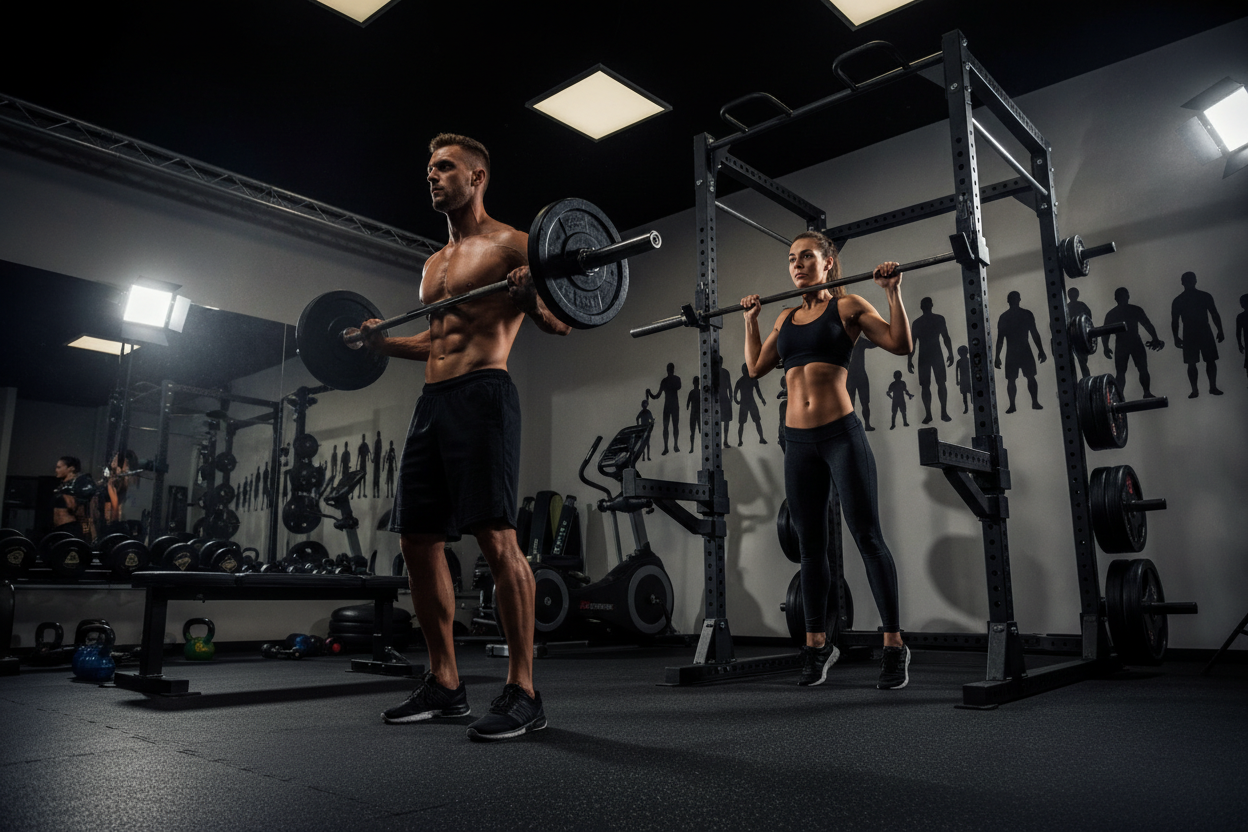
If you are committing to full-body training, a quality power rack is your centerpiece. Because you'll be transitioning from squats to bench presses to overhead presses in the same hour, having a rack with easily adjustable J-cups and reliable safety pins is crucial. Pair this with a standard 45-pound Olympic barbell and a set of bumper plates, and you have unlocked 90% of the exercises required for a complete physique.
Adjustable Dumbbells for Space Saving
For apartment dwellers or those with basement setups where ceiling height restricts overhead barbell work, adjustable dumbbells are the ultimate investment. They allow for unilateral total-body work—think Bulgarian split squats, dumbbell bench presses, and bent-over rows—while taking up the footprint of a single pair of shoes.
From Our Gym: Honest Take
I switched to a 3-day full-body split last winter when my schedule got incredibly chaotic. Working out in a freezing garage gym, I didn't want to spend six days a week out there. I found that relying heavily on my 6-post power rack and a barbell was all I needed to maintain my strength.
However, one caveat I learned the hard way: you have to manage your recovery and equipment setup. Squatting and benching in the same session three times a week requires dialing back the intensity. Also, the knurling on my aggressive power bar held solid through heavy deadlifts, but switching straight to high-rep bench presses tore my hands up. I highly recommend keeping a secondary, softer-knurled barbell or a good set of dumbbells on hand to swap out movements and save your joints (and skin) during these high-frequency routines.
Frequently Asked Questions
How often should you do a total-body workout?
For optimal recovery and muscle growth, 2 to 3 times per week is the sweet spot. You should always aim for at least one full rest day between sessions to allow your central nervous system and muscle fibers to repair.
Can you build muscle with full-body training?
Absolutely. Muscle hypertrophy is driven by mechanical tension and progressive overload. As long as you are lifting heavy enough, eating in a slight caloric surplus, and consistently adding weight or reps over time, a full-body routine is highly effective for building muscle.
What is the biggest mistake people make with full-body workouts?
Trying to do too much in one session. You cannot perform 5 sets of heavy squats, 5 sets of heavy deadlifts, and 5 sets of heavy bench presses on the same day without burning out. The key is to alternate intensities—if you squat heavy on Monday, do lighter, higher-rep leg work on Wednesday.