Top Resistance Band Chest Exercises for Strength and Tone
Building a strong and defined chest does not require heavy weights or a gym membership. Resistance bands offer a portable, versatile, and highly effective way to target your chest muscles. Whether you want to improve strength, enhance muscle tone, or create a more sculpted physique, understanding the best chest exercises with bands can help you achieve your goals.
Why Choose Resistance Bands for Chest Training
Resistance bands provide variable tension, making your muscles work throughout the entire range of motion. This increases time under tension and improves muscle activation. They are also joint-friendly, adaptable for different fitness levels, and can be used anywhere—at home, outdoors, or while traveling.
Best Chest Exercises with Resistance Bands
Chest Press with Bands
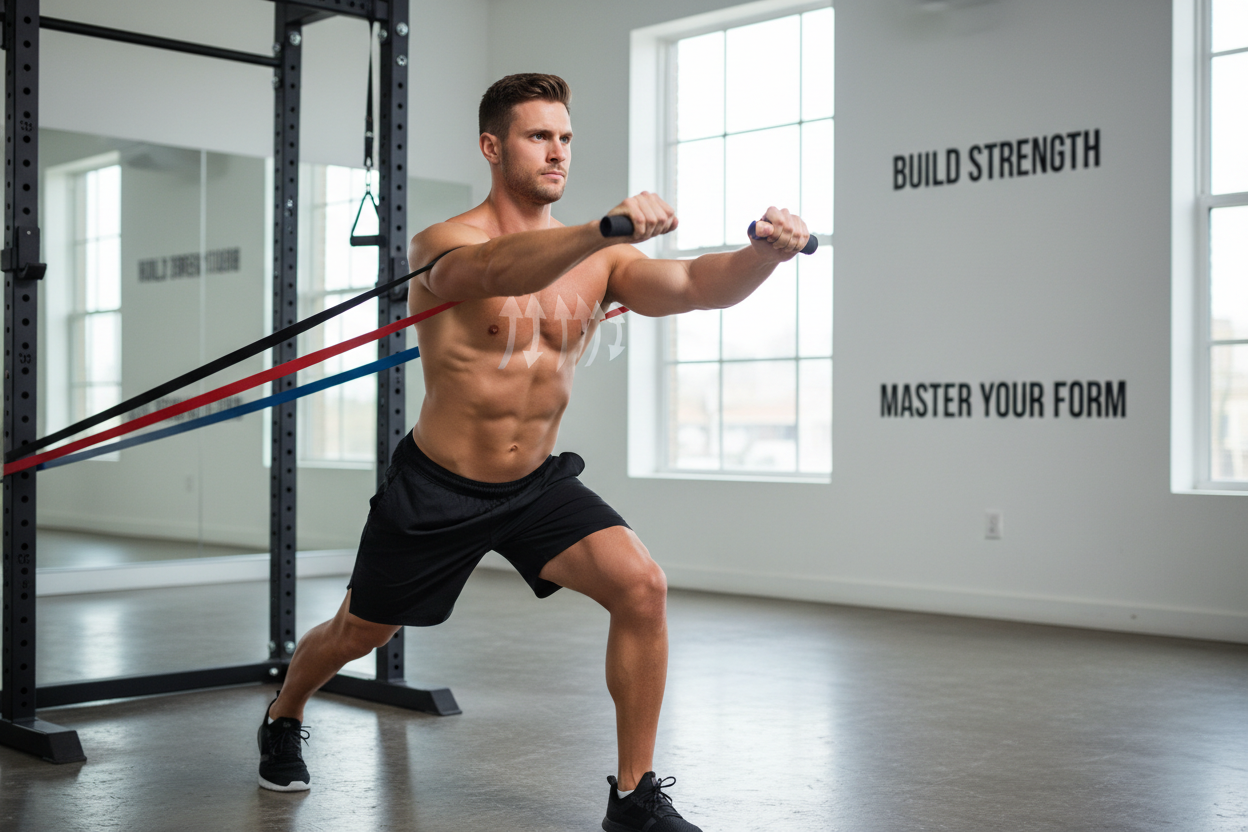
This exercise mimics the movement of a traditional bench press but uses bands instead. Anchor the band behind you, grasp the handles, and press forward until your arms are fully extended. Slowly return to the starting position to maintain constant tension. This move targets the pectoralis major and helps improve pushing strength.
Standing Chest Fly
Attach your resistance band to a sturdy anchor at chest level. Hold the handles, step forward, and stretch your arms out to your sides. Bring them together in a hugging motion, squeezing your chest at the center. This isolation exercise emphasizes the inner chest and develops definition.
Incline Chest Press with Bands
Change the angle by anchoring the bands lower, pressing upward instead of straight forward. This variation targets the upper chest region and helps develop a balanced look. The incline press with bands is especially useful for those who want to improve the upper pectoral line.
Decline Chest Press with Bands
Anchor the bands higher and press downwards. This movement focuses on the lower part of the chest. Feel free to adjust angles to match comfort and muscle engagement preferences.
Single-Arm Chest Press
Working one side at a time can uncover muscle imbalances and strengthen your core since it must stabilize during the press. Anchor the band behind you, hold one handle, and press forward slowly with full control.
Best Resistance Band Workout for Chest
An effective chest workout can be designed using these exercises together:
- Standing Chest Press – 3 sets of 12 reps
- Chest Fly – 3 sets of 12 reps
- Incline Chest Press – 3 sets of 10 reps
- Decline Chest Press – 3 sets of 10 reps
- Single-Arm Chest Press – 2 sets of 8 reps per side
Rest for 30-45 seconds between sets. Focus on slow, controlled movements to maximize muscle engagement.
Tips for Getting the Most from Your Resistance Band Chest Training
- Warm up with light stretching and band pull-aparts.
- Keep tension in the bands at all times; avoid letting them go slack.
- Adjust band thickness to match your strength level.
- Combine exercises at different angles for complete chest development.
My Personal Experience with Resistance Band Chest Workouts
When I first tried resistance bands for chest training, I was skeptical. Having been used to dumbbells and barbells, I wasn’t sure bands could deliver the same level of challenge. Over time, I realized that bands not only worked my chest thoroughly but also improved my control and muscle endurance. The constant tension forced me to use proper form and made each repetition count. Traveling became easier because I could pack my bands and still get a complete workout wherever I was.
Common Mistakes to Avoid
One frequent mistake is using improper anchoring points. Always secure the band to something sturdy for safety. Another is rushing through repetitions—fast movements reduce muscle activation. Lastly, avoid using overly thick bands for beginners; start with a moderate band, then progress to heavier tension as strength improves.
Conclusion
Resistance bands can be a powerful tool for chest development when you know the right exercises and techniques. Incorporating presses, flies, and angle variations ensures you hit all regions of the chest for balanced strength and aesthetics. With consistency and proper form, these workouts can match the effectiveness of traditional weight training while offering more portability and joint-friendly benefits.