Top-Rated Fitness Equipment: The Honest Guide to Building a Gym
You are likely staring at a browser tab with twenty different tabs open, wondering why one barbell costs $150 and another costs $800. The fitness industry is notorious for marketing fluff, making it incredibly difficult to distinguish between high-quality engineering and overpriced scrap metal. Finding genuine top-rated fitness equipment requires looking past the star ratings and understanding the mechanics of what you are buying.
This guide isn't just about brand names; it is about understanding the build quality, biomechanics, and longevity that define the best gear on the market.
Key Takeaways: What Defines the Best Gear?
If you are wondering what is the best gym equipment to invest in, look for these core characteristics rather than just a logo:
- Build Material: Look for 11-gauge steel or lower (thicker) for racks and benches.
- Weight Capacity: Top fitness equipment usually boasts a weight rating of 1,000+ lbs, indicating structural integrity.
- Biomechanics: Machines must match natural joint paths; adjustable seats and pivot points are non-negotiable.
- Warranty: Lifetime warranties on frames are the industry standard for high-end gear.
- Versatility: The best equipment serves multiple functions (e.g., a power rack with attachment capabilities).
Beyond the Stars: How to Spot Quality
Consumer ratings can be manipulated. When we talk about top fitness equipment, we are analyzing the specifications that dictate performance. You need to become a detective regarding specs.
The Steel Gauge Rule
The lower the gauge, the thicker the steel. Most commercial gyms use 7-gauge or 11-gauge steel. If you see a home gym rack listed with 14-gauge steel, it will wobble under heavy loads. For stability and safety, 3x3 inch, 11-gauge steel uprights are the gold standard for power racks.
The Importance of Tensile Strength
When selecting a barbell, ignore the finish (chrome vs. zinc) initially and look at the tensile strength. A standard "big box" bar might have 130,000 PSI tensile strength. This will bend permanently if you drop it with weight. True top-rated fitness equipment starts at 190,000 PSI. This ensures the bar has the right amount of "whip" but returns to being perfectly straight after a heavy lift.
The "Big Three" Essentials
If you are building a setup from scratch, prioritize your budget on these three items. Skimping here creates safety hazards.
1. The Power Rack
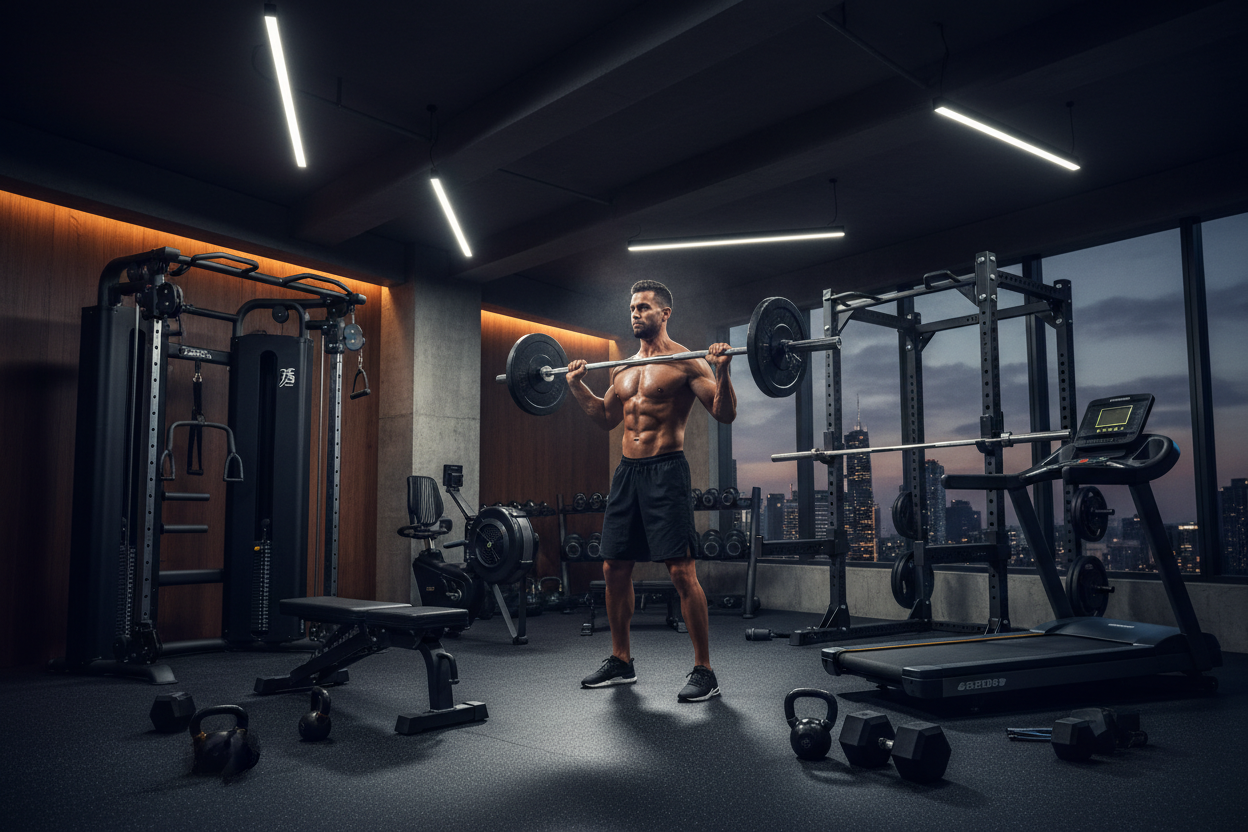
This is your safety net. The best racks offer "Westside hole spacing" (1-inch spacing) through the bench zone. This allows you to set safety pins at the exact height to save you from a failed bench press without limiting your range of motion. Standard 2-inch spacing often leaves the bar too high or too low.
2. The Adjustable Bench
A cheap bench feels unstable. You want a bench with a minimal gap between the seat and the back pad (if adjustable) to prevent lower back discomfort. Look for a tripod foot design; this allows you to tuck your feet back for a bench press arch without hitting the front support leg.
3. The Dampener-Based Cardio Machine
Whether it is a rower or an air bike, the best cardio equipment uses air resistance. Unlike magnetic resistance which can have a cap, air resistance scales infinitely with your effort. Look for metal fan blades and chain or belt drives that are easily serviceable.
My Personal Experience with top-rated fitness equipment
I want to be real about why this matters. A few years ago, I bought a budget "Amazon special" adjustable bench because I didn't want to shell out for the premium brand. In photos, it looked identical to the pro version.
The difference wasn't in the look; it was in the feel. Every time I set up for a heavy dumbbell press, I felt a slight lateral wobble in the back pad. It wasn't much—maybe half an inch—but that instability killed my confidence. I spent more energy stabilizing my body than pushing the weight. Furthermore, the vinyl was slippery. Without a shirt, I was sliding off the bench as soon as I started sweating.
When I finally upgraded to a top-rated bench with a gripper vinyl top and a 100lb frame weight, the difference was night and day. The bench didn't move. The "grip" of the pad kept my shoulder blades locked in place. I instantly added 10lbs to my press simply because I had a stable platform. Quality gear isn't just about durability; it's about the immediate feedback it gives your body during the lift.
Conclusion
Building a gym is an investment in your future health. While it is tempting to save money on cheaper alternatives, top-rated fitness equipment holds its value, keeps you safe, and actually helps you lift more weight by providing a stable environment. Buy once, buy right, and focus on your training rather than fixing broken gear.
Frequently Asked Questions
Is it worth buying commercial-grade equipment for a home gym?
Generally, yes. Commercial-grade equipment (like 11-gauge steel racks) retains its resale value much better than budget gear. More importantly, it provides a safer training environment and won't need to be replaced if your strength increases significantly.
What is the best gym equipment for small spaces?
Adjustable dumbbells and a folding wall-mounted rack are the kings of space-saving. They allow you to perform heavy compound movements and isolation work without occupying the entire footprint of a room when not in use.
How do I know if a fitness brand is actually top-rated?
Look for warranty terms first. Brands that stand behind their gear offer lifetime warranties on structural frames. Also, check independent forums (like Reddit's r/homegym) rather than on-site reviews, as community feedback is often more honest regarding shipping issues and long-term durability.