Too Much Advice? Exactly How to Strength Train Today
I remember standing in my garage three years ago, staring at a pair of rusty 25-pound dumbbells and a phone screen full of guys doing backflips between sets. It felt like I needed a PhD in biomechanics just to strength train without hurting myself or looking like an idiot. The reality is that most of the stuff you see on social media is designed to get views, not results.
You don't need a specialized 'glute-activation' routine or a vibrating platform. You need a floor, some heavy stuff, and a plan that doesn't change every time you see a new trend. I’ve wasted thousands of dollars on equipment that now gathers dust because I fell for the hype. Don’t be me.
Quick Takeaways
- Focus on four main movement patterns: Push, Pull, Squat, and Hinge.
- Progressive overload is the only rule that matters—add weight or reps every week.
- A basic home setup beats a fancy gym membership you never use.
- If you aren't struggling on the last two reps, it's not heavy enough.
The Internet Completely Ruined Lifting for Beginners
Social media has turned beginning resistance training into a circus act. You’ll see influencers standing on exercise balls or using fifteen different resistance bands for a single movement. It looks 'functional,' but it’s mostly just a waste of time for someone starting out.
The goal of strength training for fitness isn't to confuse your muscles; it’s to challenge them. When you see someone doing a 'quad-dominant reverse lunge with a rotational twist,' keep scrolling. You want the boring stuff. Boring builds the most muscle and keeps your joints from screaming at you.
What to Do for Strength Training When You Have Zero Clue
If you’re wondering how to strength train without a coach, keep the philosophy simple: Move a heavy object from Point A to Point B. If you did it for 8 reps today, try for 9 next week. If you hit 12, add five pounds and go back to 8.
This is called progressive overload. It is the engine behind all strength building. You don't need to 'shock' the body with new exercises every day. You need to get really, really good at the same five or six movements over the course of months, not days.
The Only Four Movements That Actually Build Dense Muscle
Every effective workout can be stripped down to four categories. First, the Squat (sitting down and standing up). Second, the Hinge (picking something up off the floor, like a deadlift). Third, the Push (shoving weight away from your chest or overhead). Fourth, the Pull (rowing something toward your body).
Mastering these four patterns is the foundation of what to do for strength training. Before you worry about bicep curls or calf raises, you should be able to do a clean goblet squat and a controlled push-up. If you are unsure about the load, learning how to find the right weights is your first step. Start light to nail the form, but don't stay there forever.
Gear Reality Check: You Don't Need a Commercial Facility
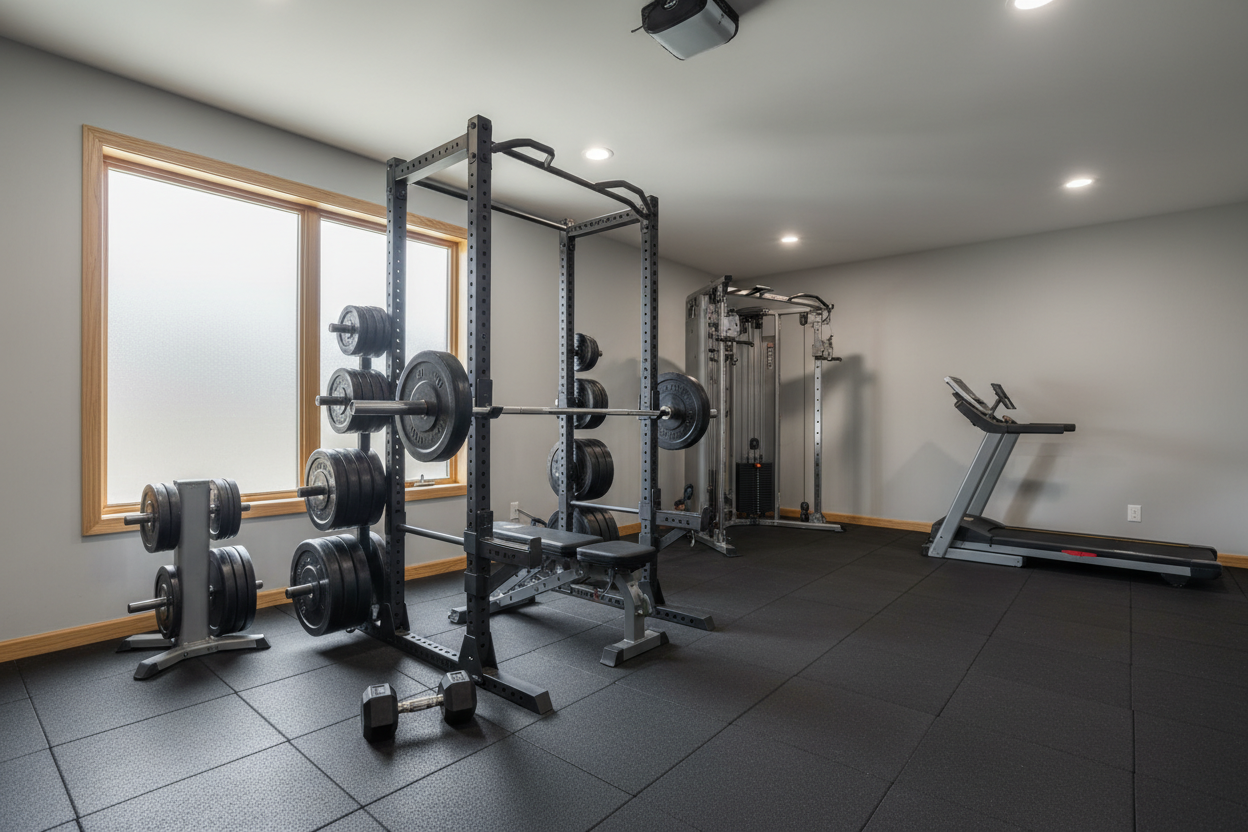
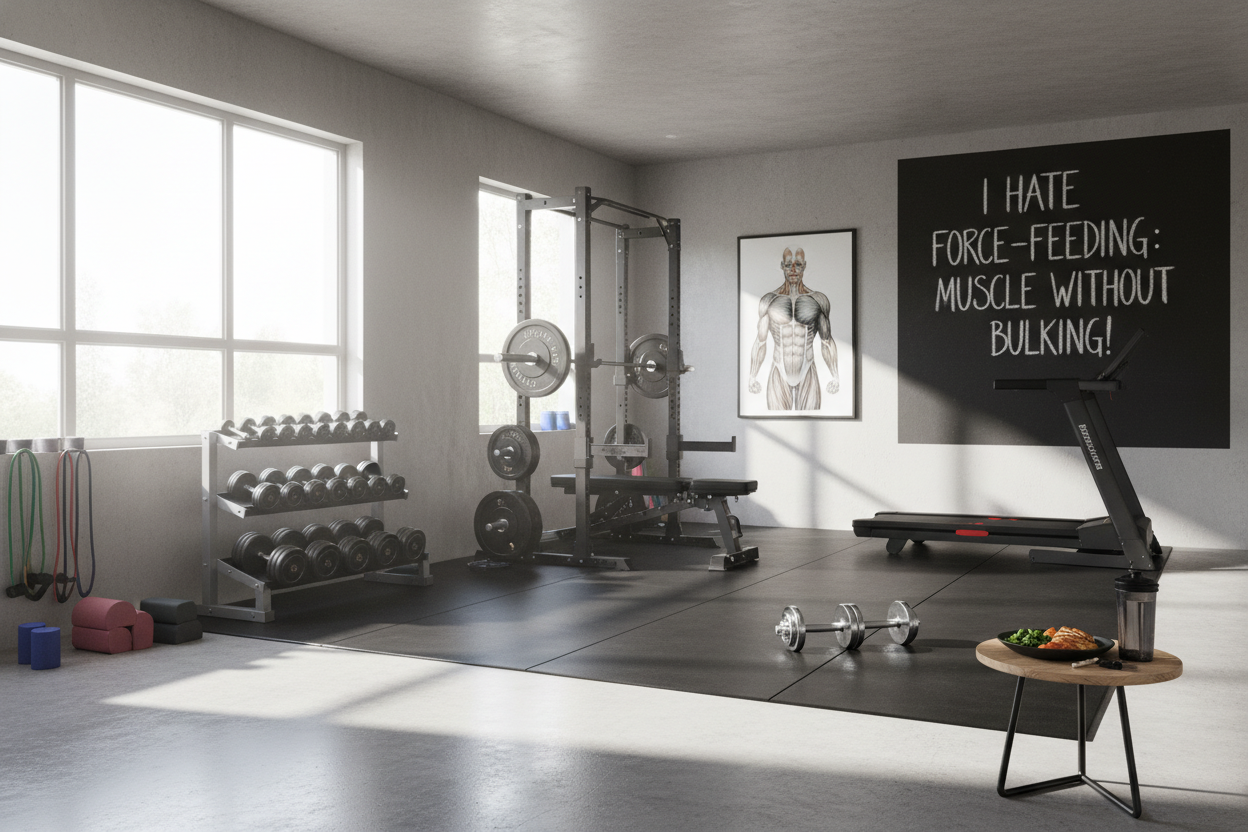
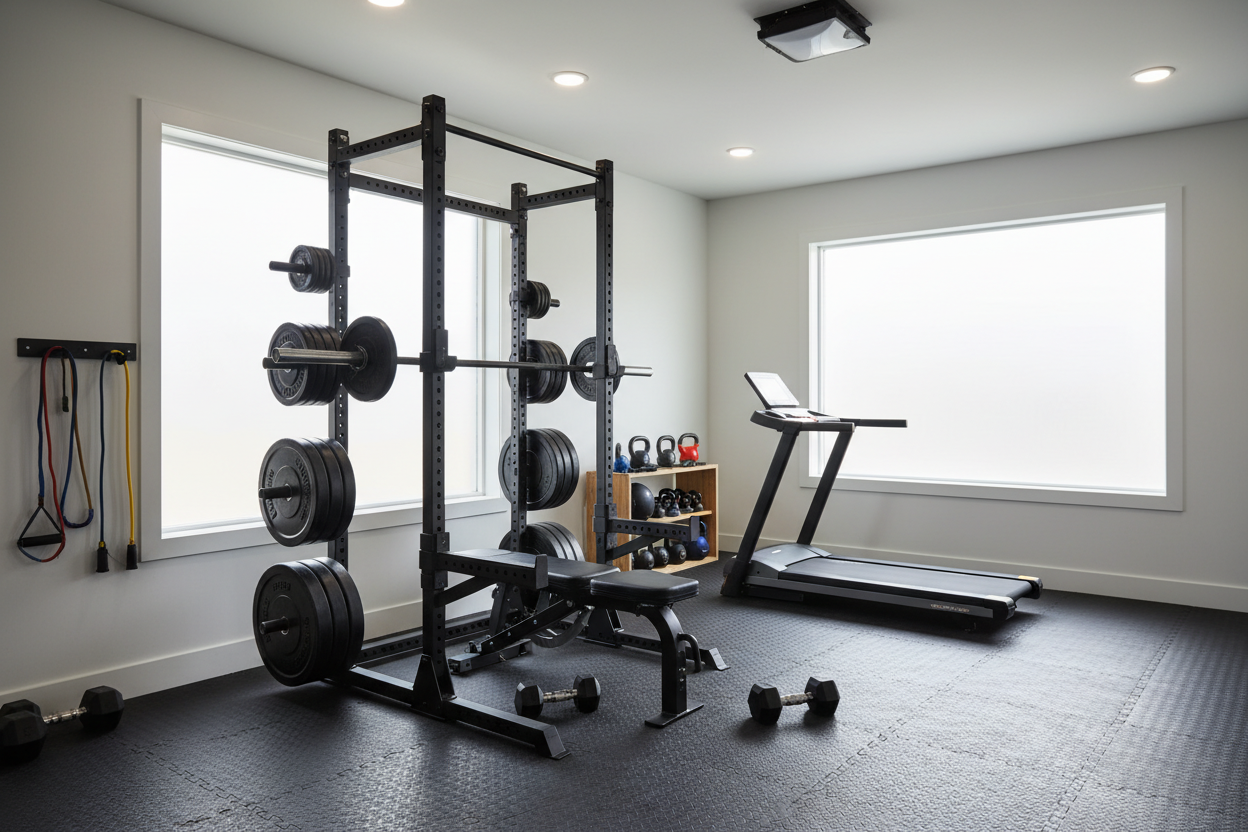
You do not need a $20,000 rig or a 1,000-square-foot dedicated room. I started in a 4x6 corner of my laundry room. To get a high-quality session of strength weight training at home, you only need a few pieces of basic strength equipment: a set of adjustable dumbbells or a barbell, and a flat surface.
If you’re going to spend money on one 'luxury' item, make it a sturdy adjustable weight bench. Trying to do chest presses off a floor or a wobbly coffee table is a recipe for a shoulder injury. Look for a bench with at least a 600-lb weight capacity so you don't outgrow it in six months.
How Heavy is 'Heavy'? (The Rep Range Truth)
When you start strength training for fitness, people will tell you to do 3 sets of 10. That’s fine, but 10 reps only count if the 11th rep would have been a struggle. I like to tell people to aim for a '2-reps-in-the-tank' rule. You should finish a set feeling like you could have done two more, but definitely not five more.
If you finish a set and you aren't breathing heavy or feeling a localized burn in the muscle, you’re just moving, not training. There is a difference. Training requires a level of intensity that forces your body to adapt and get stronger.
My Biggest Gear Mistake
I once bought a 'complete home gym' system from a big-box store for $300. It had pulleys, a butterfly press, and a leg extension. It felt like plastic, the cables snapped after two months, and the range of motion was so short it felt like I was doing half-reps. I threw it in the scrap heap and bought a used barbell and some iron plates. I’ve had that barbell for six years. Buy once, cry once.
FAQ
Do I have to lift every day?
No. Three days a week is plenty for a beginner. Your muscles grow while you rest, not while you're in the gym. If you lift every day, you'll likely burn out or get a repetitive stress injury within a month.
What if I don't have room for a rack?
Dumbbells are your best friend. You can do almost every major movement—squats, presses, and rows—with a pair of heavy adjustable dumbbells that take up less than two square feet of floor space.
Should I do cardio or weights first?
If your goal is strength, lift first. You want your central nervous system to be fresh for the heavy stuff. Save the treadmill for the end, or better yet, do it on your off days.