Titanium Strength Smith Machine: The Definitive Home Gym Guide
Building a home gym often feels like a game of Tetris. You have limited space, a finite budget, and a desire to lift heavy without compromising safety. This is where the titanium smith machine enters the conversation. It promises to be the single solution for bodybuilders and powerlifters alike who want commercial-grade versatility in a garage setting.
But is it actually worth the investment, or is it just another shiny piece of equipment that becomes a clothes rack? Let’s strip away the marketing hype and look at the mechanics, the build quality, and the reality of training with this heavy-duty unit.
Key Takeaways
- All-in-One Design: Most Titanium Strength models are hybrids, combining a functional trainer, power rack, and Smith machine into a single footprint.
- Safety First: The fixed path and adjustable safety stoppers make it ideal for solo training without a spotter.
- Linear Bearings: High-quality models use linear bearings for a smooth glide, eliminating the "sticky" friction found in cheaper machines.
- Versatility: Capable of handling everything from heavy squats to isolated cable work.
Why the Titanium Strength Total Smith Machine is Different
When we talk about this equipment, we aren't talking about a standard Smith machine found in a budget commercial gym. The titanium strength total smith machine is designed as a comprehensive ecosystem. The primary differentiator here is the integration.
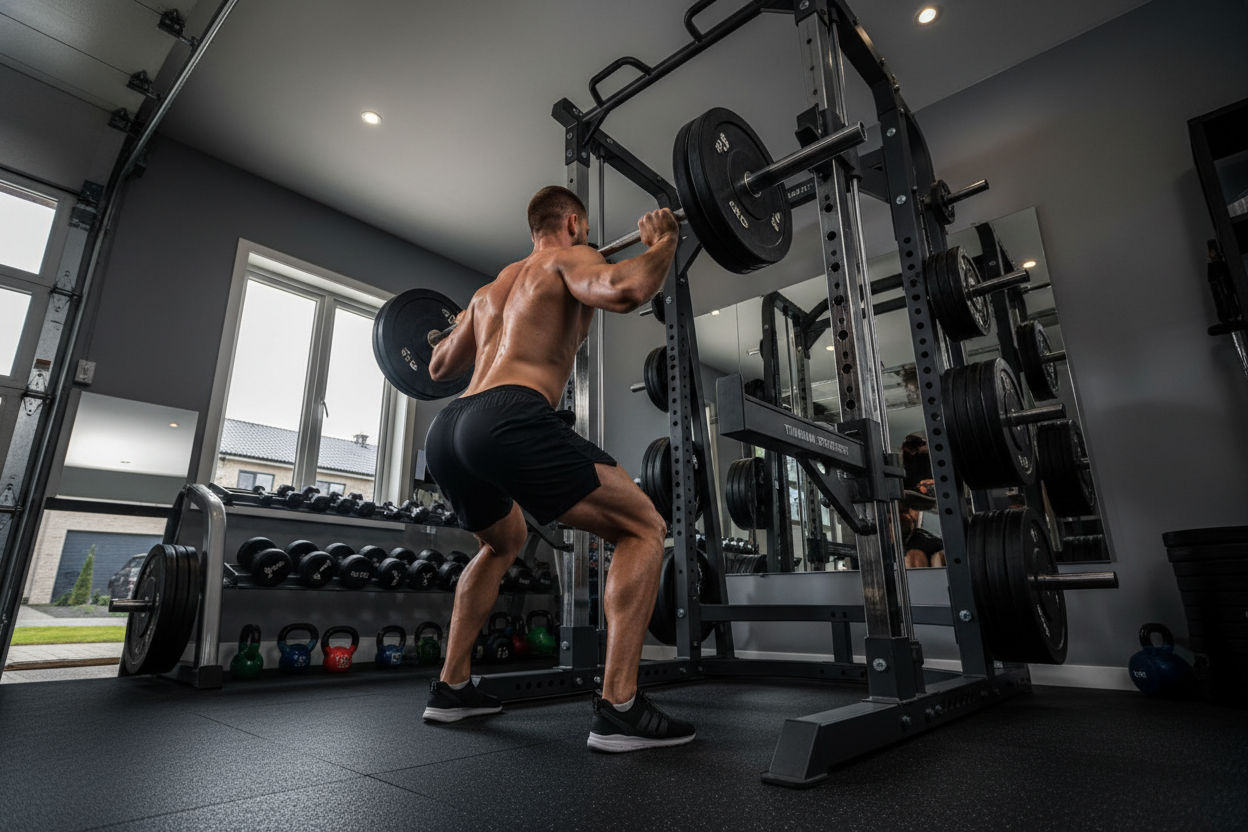
Standard machines force you to choose between free weights and the fixed Smith bar. This unit typically offers a half-rack on the front. This means you can perform free-weight barbell squats for stabilizer muscle development, then immediately switch to the Smith bar for high-volume hypertrophy work to failure. You aren't choosing one style of training; you are getting access to both.
The Engineering Behind the Glide
The biggest complaint with any Smith machine is the drag. If the guide rods aren't perfectly vertical or the bearings are cheap, the bar hitches. This creates dangerous shear force on your joints.
Titanium Strength utilizes ultra-smooth linear bearings. From a biomechanical standpoint, this ensures the resistance profile remains constant throughout the concentric and eccentric phases of the lift. You are fighting the weight, not the friction of the machine.
Analyzing the Build Quality
Despite the name, the titanium strength smith machine is not made of the metal titanium (which would cost as much as a luxury car). It is constructed from heavy-gauge steel, usually 2mm to 3mm thick. This thickness is critical.
When you are under a heavy load, stability is paramount. Cheaper machines wobble. A slight sway during a heavy squat can throw off your proprioception and lead to injury. The wide base and heavy steel frame of these machines provide a rigidity that rivals commercial club equipment. It stays planted, even when you are re-racking 300+ lbs aggressively.
Common Mistakes When Buying
Don't just look at the price tag. Pay attention to the footprint. These machines are often taller and deeper than standard power racks due to the cable crossover systems and weight stacks.
Also, check the pulley ratio if you are buying the combo unit. A 2:1 ratio is great for functional movements and cable flys because the travel is smooth and long. However, if you plan to do heavy lat pulldowns, a 2:1 ratio means you need to stack more weight to feel the resistance. Knowing this helps you manage your expectations regarding the weight stack capacity.
My Training Log: Real Talk
Let's step away from the spec sheet. I’ve spent considerable time under the bar of the Titanium Strength line, and there are things the manual won't tell you.
The first thing I noticed wasn't the smoothness—it was the knurling on the Smith bar. On many home gym machines, the Smith bar is weirdly smooth or too thick. On this unit, the knurling actually had some bite. I didn't need chalk for my warm-up sets, which is rare for a Smith bar.
However, here is the unpolished truth: the assembly is a nightmare if you do it alone. It took me a solid six hours. Also, regarding the cable system—for the first two weeks, there was a slight "drag" or squeak in the left pulley when doing tricep pushdowns. It wasn't broken; it just needed a specific silicone lubricant that didn't come in the box. Once I applied that, it was butter. But that initial friction was annoying when I was trying to hit a PR.
Another detail: the safety stops. They are solid, but they make a very distinct, loud metallic clank when you bottom out. If you are training at 5:00 AM and have family sleeping upstairs, you have to be incredibly precise with your reps to avoid waking the house.
Conclusion
The titanium smith machine represents a significant investment, but it replaces a room full of equipment. If you are serious about heavy training safely while alone, it is one of the best value propositions on the market. Just be prepared for a long assembly day, and keep some silicone lubricant handy.
Frequently Asked Questions
Does the Titanium Strength Smith Machine require bolting to the floor?
While most models are heavy enough to remain stable under normal use, bolting it down is always recommended for maximum safety, especially if you are performing dynamic movements like kipping pull-ups or heavy cable work that shifts the center of gravity.
Can I use a standard Olympic barbell with the half-rack portion?
Yes. The front uprights generally include J-hooks and spotter arms designed for a standard 7-foot Olympic barbell, allowing you to perform free-weight exercises outside of the Smith machine system.
What is the ceiling height requirement?
Most units stand between 83 and 90 inches tall. You should leave at least 2 to 4 inches of clearance above the machine for assembly purposes and to ensure the pull-up bar is usable without your head hitting the ceiling.