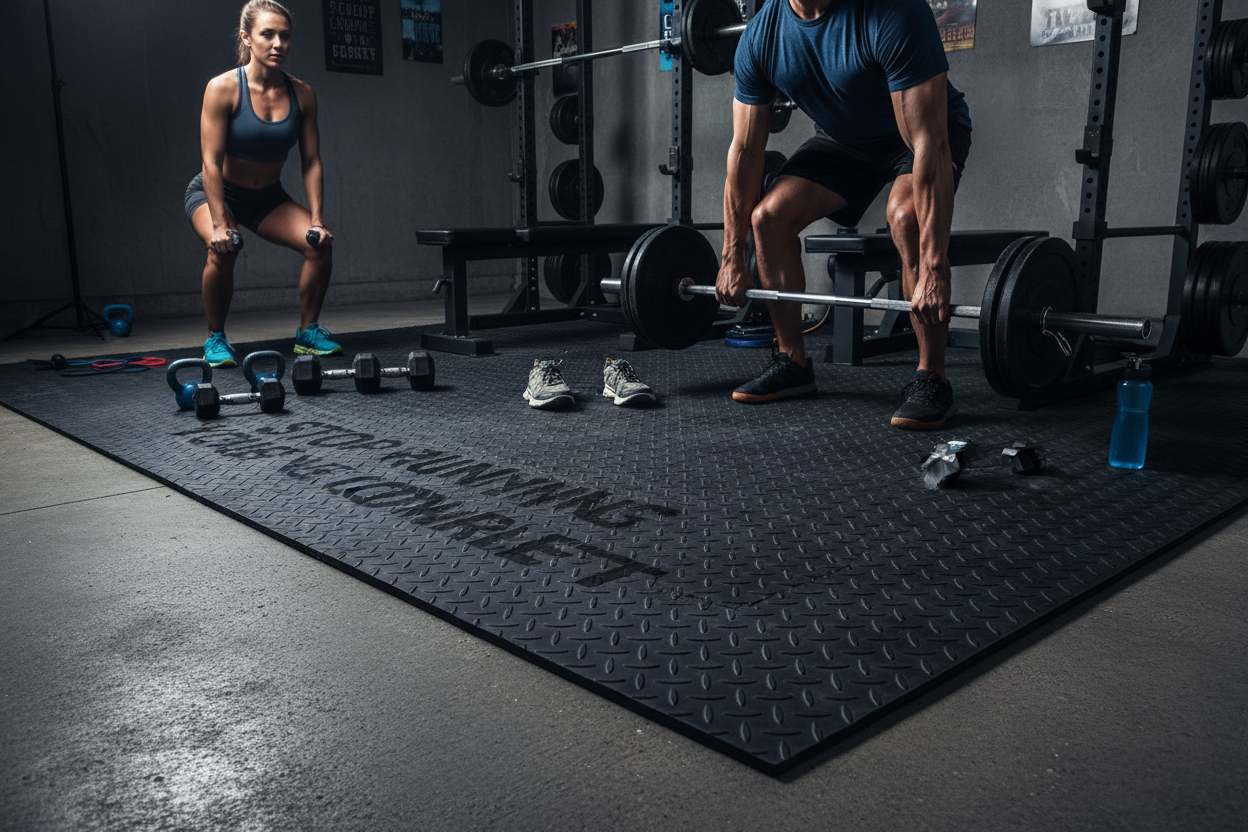
Thick Rubber Outdoor Mat: Stop Ruining Your Concrete
There is nothing quite like taking your barbell outside on a crisp morning. But if you are lifting on bare concrete, asphalt, or a wooden deck, you are one heavy deadlift away from a costly repair bill. Investing in a thick rubber outdoor mat is the ultimate insurance policy for both your joints and your property.
Whether you are building a dedicated backyard lifting platform or just want a portable shock absorber for kettlebell swings in the driveway, choosing the right flooring is critical. This guide breaks down exactly what to look for so you can train hard without destroying your foundation.
Key Takeaways
- Aim for at least 3/4-inch thickness to properly absorb the impact of heavy free weights.
- Vulcanized rubber is superior to standard crumb rubber for UV and weather resistance.
- Heavy-duty mats (weighing 70+ lbs) won't shift during explosive movements or high winds.
- Proper drainage is essential; look for textured bottoms if placing the mat on a flat patio.
Buying Guide: Specs That Actually Matter
Vulcanized vs. Recycled Crumb Rubber
Not all rubber is created equal, especially when exposed to the elements. Standard recycled crumb rubber (often found in cheap puzzle mats) is porous. It absorbs water, expands, and eventually crumbles after a few freeze-thaw cycles. Vulcanized rubber, on the other hand, is heated and compressed into a non-porous, ultra-dense sheet. It repels water, resists UV fading, and handles extreme temperature swings without warping.
The 3/4-Inch Rule
If you are moving serious iron, 1/2-inch mats simply will not cut it. A 3/4-inch mat provides the necessary decibel reduction to keep your neighbors happy and the shock absorption required to protect your concrete from cracking under a dropped 315-pound deadlift. For lighter bodyweight or yoga routines, 1/2-inch is fine, but for strength training, thicker is always better.
Space Planning for Your Backyard Gym
Driveways, Patios, and Decks
When planning your outdoor setup, consider the footprint of your equipment. A standard 4x6 foot mat is perfect for a squat stand or a dedicated deadlift zone. If you are covering an entire patio, be mindful of the underlying slope. Most patios are graded to direct water away from the house. A heavy, non-porous mat can trap moisture underneath if it doesn't have a channeled bottom, potentially leading to mildew on wooden decks or discoloration on concrete.
From Our Gym: Honest Take
When I moved my squat stand to the back patio last summer, I initially tried using standard 1/2-inch indoor puzzle mats. Big mistake. They warped in the afternoon sun and did absolutely nothing to stop a 225-pound clean-and-jerk from echoing through the neighborhood. Switching to a heavy-duty, 3/4-inch vulcanized stall mat changed the game.
My chalked grips felt secure even on humid mornings, the barbell bounce was deadened, and my concrete stayed pristine. The only caveat? For the first two weeks, baking in the July sun, the smell of off-gassing rubber was intense. If you are setting up near an open ground-floor window, be prepared for that break-in period.
Frequently Asked Questions
Can a thick rubber outdoor mat stay outside all winter?
Yes, provided it is made of high-quality, non-porous vulcanized rubber. These mats are designed to withstand freezing temperatures and snow without cracking. However, sweeping snow off rather than using a sharp metal shovel will prolong their lifespan.
How do you clean outdoor gym mats?
Maintenance is incredibly simple. Use a stiff-bristled outdoor broom to clear debris, and hose it down once a month. For sweat and chalk buildup, a mixture of warm water and a few drops of mild dish soap applied with a mop works perfectly. Avoid harsh chemical degreasers, which can break down the rubber over time.
Will rubber mats stain my concrete patio?
In some cases, prolonged contact with moisture and heavy rubber can cause a phenomenon called 'plasticizer migration,' which may leave a dark shadow on light concrete. To prevent this, periodically lift the mat to allow the concrete to dry completely, or place a thin breathable barrier underneath.