
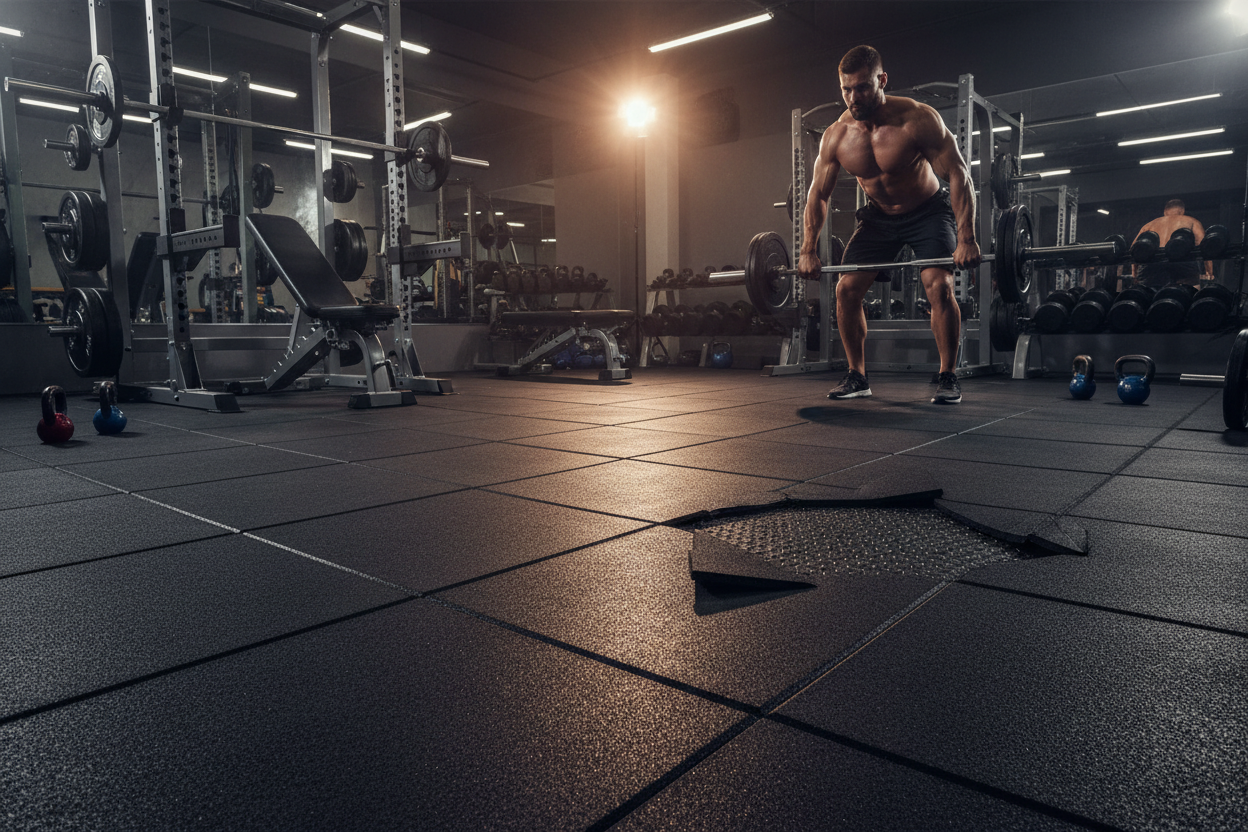
Thick Rubber Floor: What to Know Before You Build Your Gym
Building out a home gym is an exciting process, but it is easy to overlook the literal foundation of your setup. If you have ever cringed while dropping a heavy barbell or noticed your power rack sliding during pull-ups, you already know the pain of inadequate flooring. Investing in a thick rubber floor is not just about aesthetics; it is about protecting your home's concrete slab, dampening noise, and keeping your joints healthy.
In this guide, we will cover exactly what thickness you need, how to choose the right style for your space, and why skipping this step could cost you thousands in structural repairs.
Key Takeaways
- Thickness matters: 3/8-inch is the bare minimum for general fitness, while 3/4-inch is required for heavy lifting.
- Format types: Choose between horse stall mats, interlocking tiles, or rolled rubber based on your room layout and budget.
- Protection first: True rubber flooring heavy duty options prevent concrete cracking and equipment damage.
- Odor control: Virgin rubber smells less than recycled tire rubber, but costs significantly more upfront.
How Thick Is Thick Enough?
When it comes to gym flooring, the thickness dictates the level of impact absorption. Buying the wrong thickness is the most common mistake new garage gym owners make.
The 3/8-Inch Standard
For most home gyms focusing on dumbbells, kettlebells, and machine work, a 3/8-inch floor is the sweet spot. It provides enough cushion for floor exercises and protects against accidental light drops without breaking the bank.
The 3/4-Inch Heavyweight
If you are deadlifting, performing Olympic lifts, or dropping bumper plates, you need a 3/4-inch thick floor. This is where rubber flooring heavy duty options, like classic horse stall mats, shine. They absorb massive shock and prevent the kinetic energy from shattering your garage floor.
Space Planning and Installation
Your room layout dictates the type of flooring you should buy. Getting the right fit ensures you do not end up with tripping hazards or annoying gaps under your bench.
Garage Gyms vs. Basements
Garages typically have slight slopes for drainage. Heavy, thick mats (like 4x6 foot stall mats) will conform to this slope over time without separating. For basements with perfectly level floors, interlocking rubber tiles or rolled rubber are much easier to install and provide a seamless, professional look.
Managing the Rubber Smell
Most heavy-duty mats are made from recycled crumb rubber (often old tires). They will off-gas initially. If you are installing in a poorly ventilated basement, you will need to scrub them with a mild degreaser and let them bake in the sun for a few days before bringing them indoors.
From Our Gym: Honest Take
When I first built my garage gym, I tried to save money by using cheap 1/4-inch EVA foam puzzle mats. Big mistake. During a heavy deadlift session, I dropped 405 pounds from hip height. The barbell sliced right through the foam, and I chipped the concrete underneath. That weekend, I rented a truck and bought 3/4-inch vulcanized stall mats.
The difference was night and day. The knurling on my plates no longer gouged the floor, and the dense rubber completely deadened the sound of dropped weights. One caveat: these mats weigh about 100 pounds each. Moving them solo is a brutal workout in itself, so bribe a friend with pizza to help you install them.
Frequently Asked Questions
Is a thick rubber floor really necessary for a home gym?
Yes, especially if you are using free weights. It protects your home's foundation from cracking, extends the life of your iron and bumper plates, and significantly reduces noise and vibration.
Can I put heavy duty rubber flooring over carpet?
It is highly discouraged. Placing heavy rubber over plush carpet creates an unstable, squishy surface that is dangerous for lifting, especially during squats and overhead presses. You should place them directly on hard surfaces like concrete or plywood.
How do I clean thick rubber gym flooring?
Sweep or vacuum loose dirt regularly. For a deeper clean, use a damp mop with a pH-neutral cleaner or a simple mix of warm water and a few drops of dish soap. Avoid harsh chemicals like bleach, which can degrade the rubber over time.


