The 'Walking Is Optional' Leg Routine: A Guide to Massive Lower Body Growth
Most people treat leg day as a necessary evil, something to rush through so they can get back to training chest or arms. But if you are reading this, you likely aren't looking for a maintenance routine. You want to force growth in your quads and hamstrings, and you realize that standard sets of ten reps aren't cutting it anymore. To break through a plateau, you need a crazy leg day workout that shocks the central nervous system and triggers deep hypertrophy.
I learned this the hard way. For years, I stuck to the basics: three sets of squats, three sets of leg press, and some half-hearted calf raises. My strength went up, but my legs didn't look much different. It wasn't until I started training with a competitive bodybuilder that I understood what true intensity meant. We did a session that left me physically unable to drive my car for twenty minutes afterward. That session, which focused on time under tension and volume rather than just ego-lifting, is the foundation of the protocol below.
The Philosophy Behind High-Intensity Leg Training
Building mass in the lower body requires a different approach than the upper body. Your legs carry you around all day; they are accustomed to low-intensity volume. To force them to grow, you have to present them with a stimulus they cannot ignore. This usually means combining heavy compound movements with high-rep torture sets.
This isn't just about pain tolerance. It is about recruiting high-threshold motor units. When you perform an insane leg workout for mass, you are trying to exhaust the slow-twitch fibers early so the fast-twitch fibers—the ones with the most growth potential—are forced to take over. This routine utilizes pre-exhaustion and drop sets to ensure you aren't just moving weight, but actually stimulating muscle tissue.
The Warm-Up: Do Not Skip This
Going into this cold is a recipe for injury. You need blood in the knees and hips. Spend five minutes on a stationary bike at moderate resistance, followed by dynamic stretching. Leg swings, bodyweight squats, and hip openers (like the pigeon pose) are mandatory. Your hips need to be loose to hit proper depth on squats.
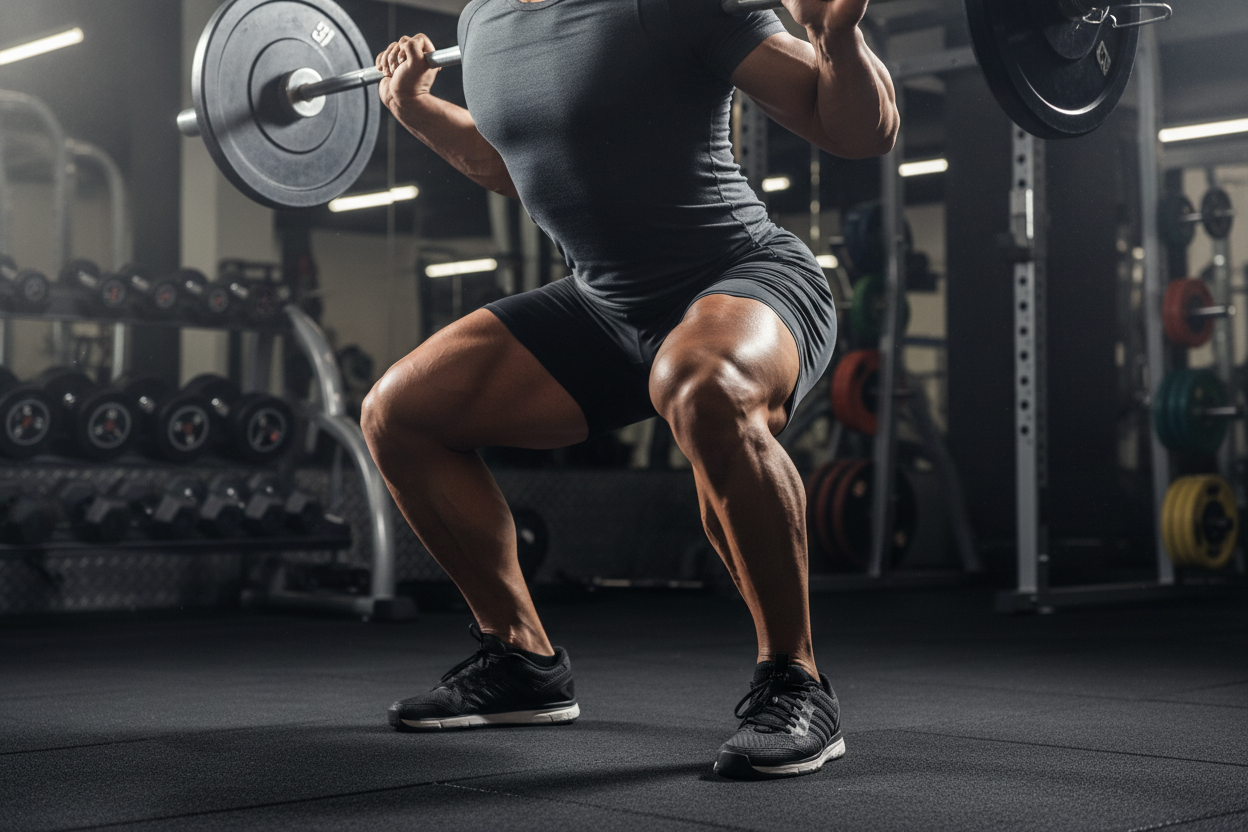
Exercise 1: The Heavy Squat Pyramid
We start with the king of leg exercises while your energy levels are highest. However, we aren't doing straight sets.
- Set 1: 15 reps (light weight, focus on tempo)
- Set 2: 12 reps (moderate weight)
- Set 3: 10 reps (heavy)
- Set 4: 8 reps (heavier)
- Set 5: 6 reps (heaviest, leave 1 rep in the tank)
Focus on controlling the eccentric (lowering) phase. Don't just drop into the hole and bounce out. Take three seconds to go down, pause for a split second, and explode up. This control is what separates a powerlifting move from a crazy leg workout for mass building.
Exercise 2: The Leg Press from Hell
This is where the workout earns its reputation. The leg press allows you to load the quads safely without the lower back fatigue that comes with squats. We are going to use a technique called "The Century Drop."
Load the machine with a weight you can lift for 10 difficult reps. Perform the 10 reps. Immediately strip off one plate from each side (or reduce the pin weight). Do 10 more reps. Strip another plate. Do 10 more. Continue this pattern without rest until you are pressing just the sled or a very light weight for the final 10 reps. By the end, your quads will be on fire, and simply bending your knees will feel impossible. This volume floods the muscle with blood and nutrients, stretching the fascia.
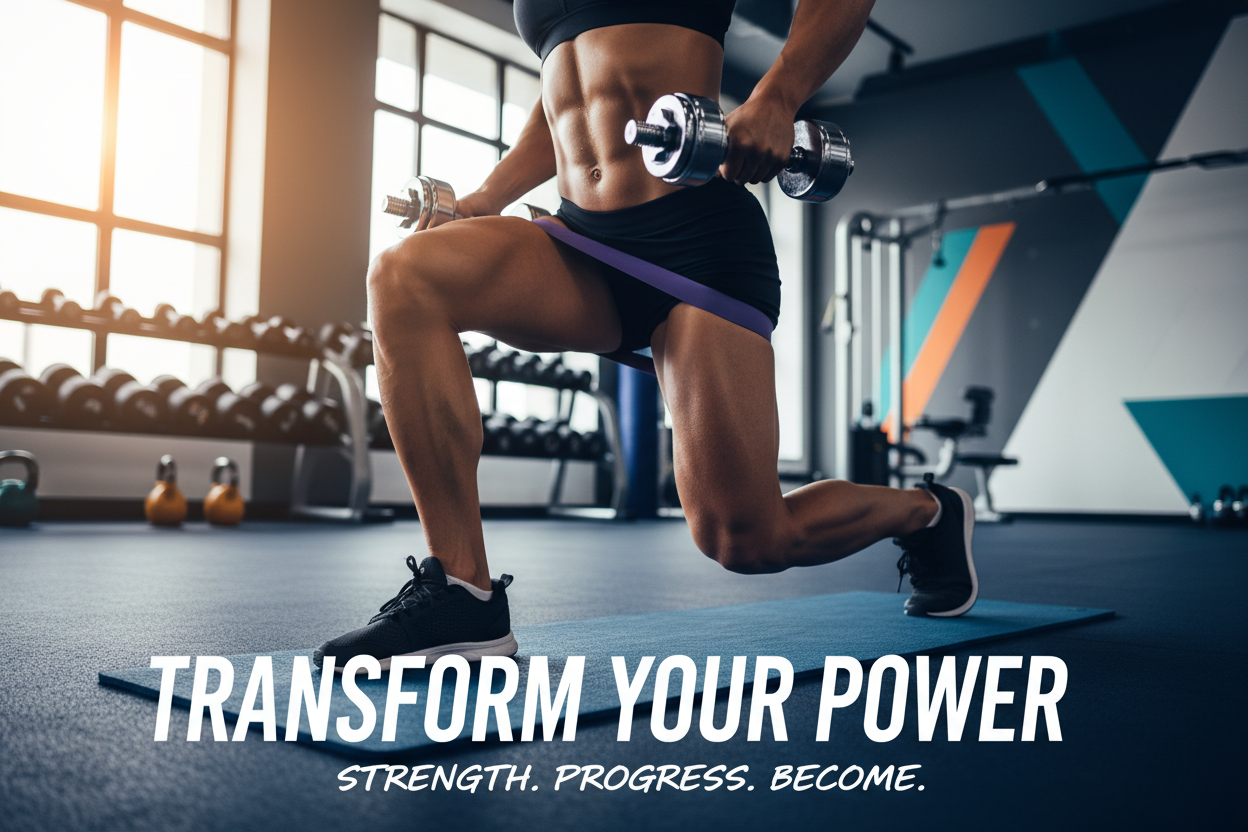
Exercise 3: Walking Dumbbell Lunges
After the leg press, your quads are fried, but we need to target the glutes and the tie-in between the hamstrings and glutes. Grab a pair of moderate dumbbells.
Perform 3 sets of 20 steps (10 per leg). The key here is stride length. A longer stride targets the glutes and hams; a shorter stride hits the quads. Since our quads are destroyed from the press, aim for longer strides. Keep your chest up and shoulders back. If your grip gives out before your legs do, use lifting straps. The goal is leg failure, not forearm fatigue.
My Experience with Lunges
I used to despise lunges. I felt off-balance and winded. But once I stopped treating them as a cooldown and started treating them as a primary mass builder, my leg development changed. The unilateral nature of the movement fixes imbalances. If your right leg is stronger than your left, the barbell squat hides it. The lunge exposes it and fixes it.
Exercise 4: Stiff-Legged Deadlifts (RDLs)
You cannot build a complete leg without massive hamstrings. Neglecting the posterior chain is a common mistake. For this crazy leg workout for mass, we focus on the stretch.
Use a barbell or dumbbells. Keep a slight bend in the knees but lock that angle in place. Hinge at the hips, pushing your glutes back as far as possible. Lower the weight until you feel a deep, painful stretch in the hamstrings. Squeeze the glutes to return to the starting position. Do not hyperextend your back at the top.
Perform 4 sets of 12 reps. Do not rush. The magic happens at the bottom of the movement where the muscle is fully elongated under load.
Exercise 5: Seated Calf Raises
We finish with calves. The soleus muscle (located under the gastrocnemius) responds best to a bent knee position and high reps.
Perform 3 sets of 20-25 reps. Hold the stretch at the bottom for two full seconds on every single rep. Most people bounce the weight, using their Achilles tendon rather than the muscle. Remove the bounce, hold the stretch, and squeeze hard at the top.
Nutrition and Recovery
You cannot survive an insane leg workout for mass without fueling the machine. Your post-workout meal needs to be substantial. Aim for a high amount of fast-digesting carbohydrates to replenish glycogen stores and a solid serving of protein to begin repair. If you are truly pushing the intensity described here, you will likely be sore for days. This is normal. Active recovery, such as light walking or foam rolling the day after, can help flush out metabolic waste products.
Sleep is non-negotiable. Growth hormone is released during deep sleep. If you are crushing your legs in the gym but sleeping five hours a night, you are wasting your effort. Prioritize rest just as much as you prioritize the weights.
Common Questions About Leg Training
How often should I perform this workout?
Due to the high volume and intensity, performing this routine once every 5 to 7 days is sufficient for most natural lifters. If you recover quickly, you can try every 4 days, but listen to your joints. If your strength drops, you need more rest.
What if I have knee pain during squats?
Check your form and mobility first; often, tight ankles or hips cause knee stress. You can also swap back squats for box squats or use a hack squat machine, which stabilizes the back and allows for better knee alignment while still allowing you to go heavy.
Can I do cardio after this leg workout?
You can, but high-impact cardio like running is not recommended immediately after heavy leg training as your stabilizing muscles are fatigued, increasing injury risk. Stick to low-impact options like the stationary bike or walking on an incline for 15-20 minutes.