The Truth About Building a Stronger, Bigger Backside (Even from Home)
Building a powerful posterior chain isn't just about aesthetics; it is the engine room of your entire body. Whether you are an athlete looking to improve speed or someone simply trying to fill out a pair of jeans, understanding the mechanics of muscle growth is non-negotiable. You want to know what works immediately, so here is the reality: heavy compound movements that prioritize hip extension are the key. Isolation work has its place, but if you aren't moving significant weight through a hinge pattern, you are leaving gains on the table.
Understanding the Mechanics of Growth
To stimulate hypertrophy in the gluteus maximus, medius, and minimus, you need to challenge the muscles under tension. Many beginners ask what are good exercises for glutes, assuming there is a secret move they haven't discovered. The answer lies in geometry and physics rather than secrets. You need exercises that load the glutes in both the lengthened position (where the muscle is stretched) and the shortened position (where the muscle is contracted). A balanced routine hits both.
Exercises that focus on glutes specifically usually involve extending the hip against resistance. While squats are fantastic for overall leg development, they are often quad-dominant depending on your anatomy. For pure posterior development, you need to shift the focus. Movements like the Romanian Deadlift (RDL) stretch the glutes under load, causing significant muscle damage—the good kind that leads to repair and growth. Conversely, movements like the hip thrust load the glutes at the peak contraction, which is essential for that dense, rounded look.
The King of Posterior Exercises
If you had to pick a single movement to prioritize, the barbell hip thrust is widely considered the most efficient glute exercise available. While the squat is the king of legs, the hip thrust isolates the gluteal muscles without being limited by lower back strength or balance to the same degree. This stability allows you to load the movement heavily. Since the glutes are the largest muscle group in the body, they require heavy loads to grow. High repetitions with low weight can build endurance, but for size, you need mechanical tension.
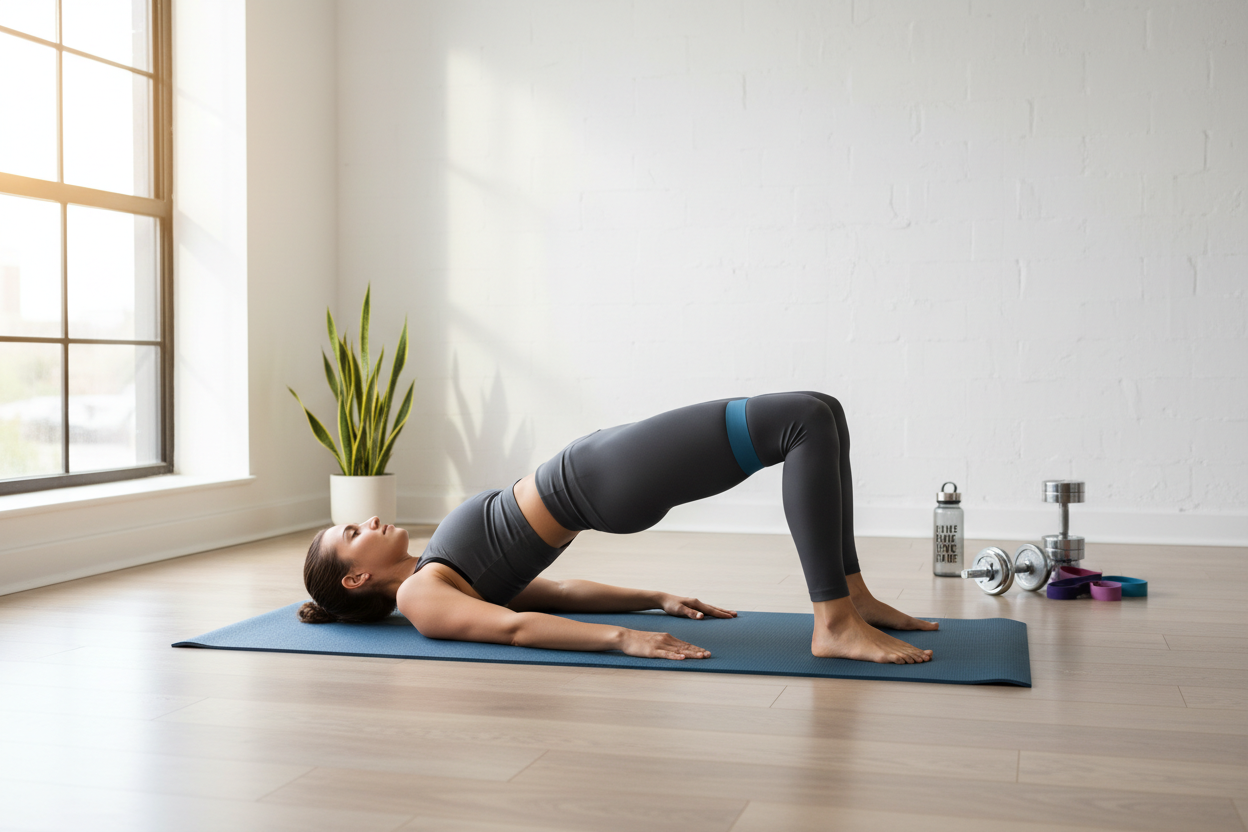
When looking for the best glute mass building exercises, you simply cannot ignore the hip thrust or its cousin, the glute bridge. These movements activate the glutes at a much higher percentage of their maximum voluntary contraction compared to standing exercises. If you have access to a gym, loading a barbell across your hips is the gold standard. However, form remains paramount. You must tuck your chin and posteriorly tilt your pelvis at the top of the movement to prevent your lower back from taking over the work.
Training Without a Gym
Not everyone has access to a squat rack or a barbell, leading many to search for the best at home glute builder. You might be surprised to learn that you don't need heavy iron to see results, though it certainly helps. The single-leg hip thrust is a humble yet brutal exercise that can be done off the edge of a couch. By removing one leg, you instantly double the load on the working glute and introduce an element of instability that recruits the smaller stabilizing muscles.
Another contender for the top spot in home training is the Bulgarian Split Squat. While technically a leg exercise, adjusting your stance can shift the bias. Leaning your torso forward and placing your front foot further away turns this into a posterior-chain destroyer. Consistency with these unilateral movements can yield amazing glutes because they fix muscle imbalances that bilateral barbell training might hide.
My Journey with Glute Training
I spent the first few years of my lifting career obsessed with heavy back squats. I thought that if I just squatted deeper and heavier, my posterior chain would catch up. It didn't. My quads became massive, but my glutes remained relatively flat, and I started developing lower back pain because my glutes weren't firing properly to support my pelvis. It was a frustrating plateau.
I decided to drop the ego lifting and restructured my entire program. I started pre-exhausting my glutes with isolation movements before touching a heavy weight and swapped my primary heavy lift from back squats to hip thrusts and RDLs. The difference was night and day. Within four months, my hip pain vanished, and my lifts went up because the prime movers were finally doing their job. It taught me that training harder isn't always the answer; sometimes you have to train smarter by selecting the right tools for the specific muscle you want to target.
Athletics and Functional Strength
Aesthetics are great, but performance matters. If you are looking for the best sport for glutes, look no further than sprinting. Sprinters possess some of the most developed posterior chains in the world because high-velocity sprinting requires explosive hip extension. The force a sprinter puts into the ground to propel themselves forward comes directly from the glutes and hamstrings.
Volleyball and speed skating also rank high on the list. These sports require explosive jumping or lateral power, both of which are driven by the hips. If you aren't a competitive athlete, you can still train like one. Incorporating hill sprints or plyometric box jumps into your routine can provide a different type of stimulus—explosive power—which complements the slow, heavy grinding reps of weightlifting.
Structuring the Ultimate Routine
So, what's the best workout for glutes? It is one that covers all movement patterns: a vertical thrust, a horizontal thrust, and a hinge, along with abduction work. A whole glute workout needs to attack the muscle from different angles. You cannot simply do 100 squats and expect complete development.
A solid structure would start with a heavy compound lift like the Hip Thrust (3-4 sets of 8-10 reps) to overload the muscle in the shortened position. Follow this with a lengthening movement like the Romanian Deadlift or a 45-degree hyperextension. This is where you focus on the stretch. Finally, finish with metabolic stress work. This could be high-repetition frog pumps, banded lateral walks, or cable kickbacks. This "pump" work drives blood into the muscle, stretching the fascia and aiding in hypertrophy.
Frequency is the final piece of the puzzle. The glutes are resilient and recover relatively quickly. Training them twice or even three times a week allows for higher volume accumulation than a single "leg day" ever could. By varying the intensity—one heavy day, one lighter, higher-rep day—you can keep progressing without burning out your central nervous system.
Frequently Asked Questions
How often should I train my glutes for maximum growth?
For most people, training glutes 2 to 3 times per week is optimal. This frequency allows you to accumulate enough volume to stimulate growth while giving the muscles 48 hours of rest to repair and recover between sessions.
Why do I feel my lower back taking over during hip thrusts?
This usually happens due to hyperextending the spine rather than extending the hips. Focus on keeping your chin tucked to your chest and your ribs down, and visualize scooping your pelvis under you at the top of the movement to keep the tension on the glutes.
Can cardio help build glutes?
Steady-state cardio generally does not build muscle mass, but high-intensity intervals like hill sprints or high-resistance stair climbing can contribute to glute development. However, these should be supplemental to resistance training, not a replacement for it.