
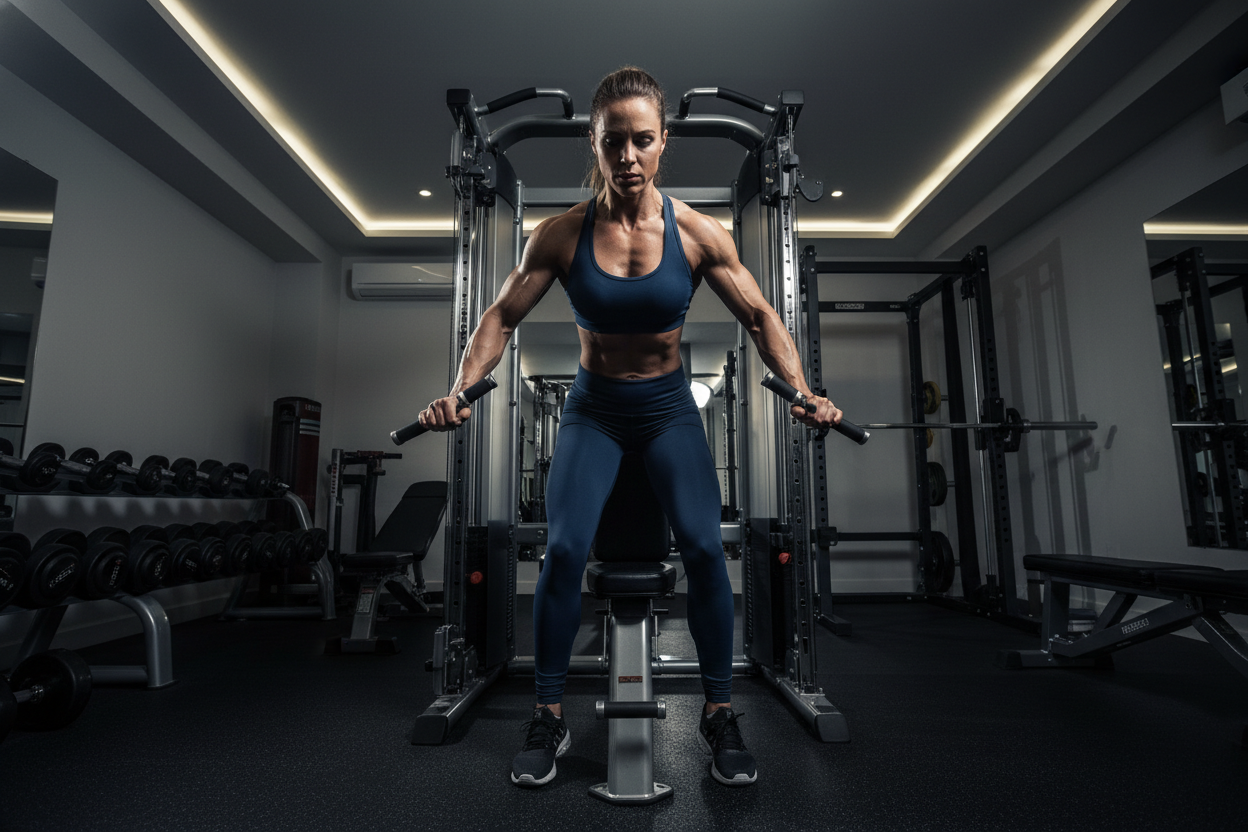
Tricep Machine Guide: Is It Worth Your Gym Floor?
When lifters plan their personal strength layouts, upper-arm isolation often creates a debate between free weights and dedicated units. A specialized tricep machine provides guided resistance along a fixed path, taking stabilizing balance out of the equation so target muscle groups absorb steady tension. Whether you train in a commercial facility or want to upgrade a home workout room, understanding how these stations operate helps you decide if dedicating floor area to one makes sense for your goals.
Understanding the Tricep Extension Machine
In most strength settings, a dedicated seated tricep extension machine isolates the back of the arms through a guided hinge mechanism. Unlike standard barbells that rely on wrist and shoulder stabilization, this setup braces the upper body against a chest or arm pad. That support locks the torso into place, ensuring the intended muscle takes the entire load throughout each repetition.
For lifters who compare specialized upper-body gear with lower-body investments, foot-traffic and movement paths matter. Just as someone evaluating a machine collection looks at footplates and seat adjustments, assessing an arm station requires checking pivot alignment. If the machine's mechanical axis lines up with your elbows, each press feels smooth and natural from start to finish.
How to Use an Extension Machine Correctly
Proper form on an extension machine depends heavily on your setup before initiating resistance. When you take the starting position, adjust the seat height so your elbows align directly with the cam pivot point. Resting your chest firmly against the front pad prevents the upper torso from leaning forward to generate artificial momentum.
Grip the handles lightly and push downward or outward depending on the frame orientation, keeping tension constant through the entire arc of motion. When the arms reach full extension, pause under complete control rather than letting the weight stack slam. Controlling the return phase back toward the starting position ensures both sides work symmetrically without resting tension between reps.
Tricep Station Types and Versatility
Depending on your budget and available square footage, different options deliver distinct mechanical advantages:
- Plate-loaded units: These frames use standard or Olympic plates. They are mechanically simple, durable, and allow lifters to add micro-increments easily.
- Selectorized stack units: Common in commercial training rooms, weight-stack stations allow quick pin adjustments, making them ideal for rapid drop sets or quick transitions between users.
- Cable columns: Multi-functional pulleys allow standing pushdown variations, overhead work, and single-arm angles from multiple heights.
If you already own versatile options like our tricep machine guide details, you know how multi-grip dip bars deliver great compound push volume. However, a dedicated triceps extension station isolates the long head and lateral head without demanding shoulder stability.
Is a Dedicated Station Worth Your Floor Area?
Most people building a compact garage setup find that multi-purpose frames take priority. If your floor plan must accommodate a machine collection or extensive rack setups, single-joint upper-body pieces might feel like a luxury. Yet for lifters seeking to improve arm thickness or isolate elbow extension without aggravating connective tissue, dedicated arm stations bring distinct advantages.
When an arm is trained through a rigid plane, cheating becomes difficult. An ill-fitting bench setup often encourages excessive shoulder rolling, but chest-supported arm pads hold the torso steady. The resulting stability allows lifters to train close to muscular failure in safe conditions without needing a spotter standing nearby.
Programming Machine Work for Balanced Arms
To view real improvements in pressing performance, incorporate machine isolation after your primary compound lifts. Beginning a session with close-grip presses or dips taxes the central nervous system and large pushing structures. Moving to an isolation station later allows you to accumulate volume directly on the triceps without taxing the chest and shoulders further.
Using moderate resistance for sets of ten to fifteen repetitions allows trained lifters to focus on contraction quality. Maintain smooth cadence, avoid jerky reversals at the bottom of the stroke, and emphasize complete elbow lockout under active control. This methodical approach delivers reliable training results across every weekly session.
Frequently Asked Questions
What machine is best for triceps?
A dual-pulley cable column offers the widest variety of movement angles, while a seated chest-supported unit provides the strictest isolation by bracing the upper body.
Are tricep machines worth it?
For dedicated home facilities with ample floor area, they provide joint-friendly isolation that is difficult to replicate with free weights alone. In tight spaces, multi-use cable stations often deliver better overall utility.
How do you use the tricep machine properly?
Adjust the seat so your elbows line up with the pivot axle, brace your chest against the support pad, and press through a full range of motion while maintaining steady control on the return.


