The Triangle of Leg Growth: Mastering Your Quads, Hamstrings, and Calves
Walking out of the gym with wobbly legs is often seen as a badge of honor, but true lower body development goes beyond just surviving a heavy squat session. Building a set of legs that look impressive and perform athletically requires a balanced approach. You need to target the entire thigh and lower leg complex, ensuring that no muscle group lags behind. If you are looking for a comprehensive hamstring quads and calves workout, the secret lies in understanding how these muscles oppose and support one another during movement.
Many lifters fall into the trap of becoming "quad-dominant." They love the leg press and the squat rack because those movements allow for heavy loading and ego-boosting numbers. However, neglecting the posterior chain (the back of the legs) and the lower legs leads to aesthetic imbalances and, eventually, injury. A complete physique requires equal attention to the hamstrings, quads, and calves.
The Anatomy of a Complete Leg Day
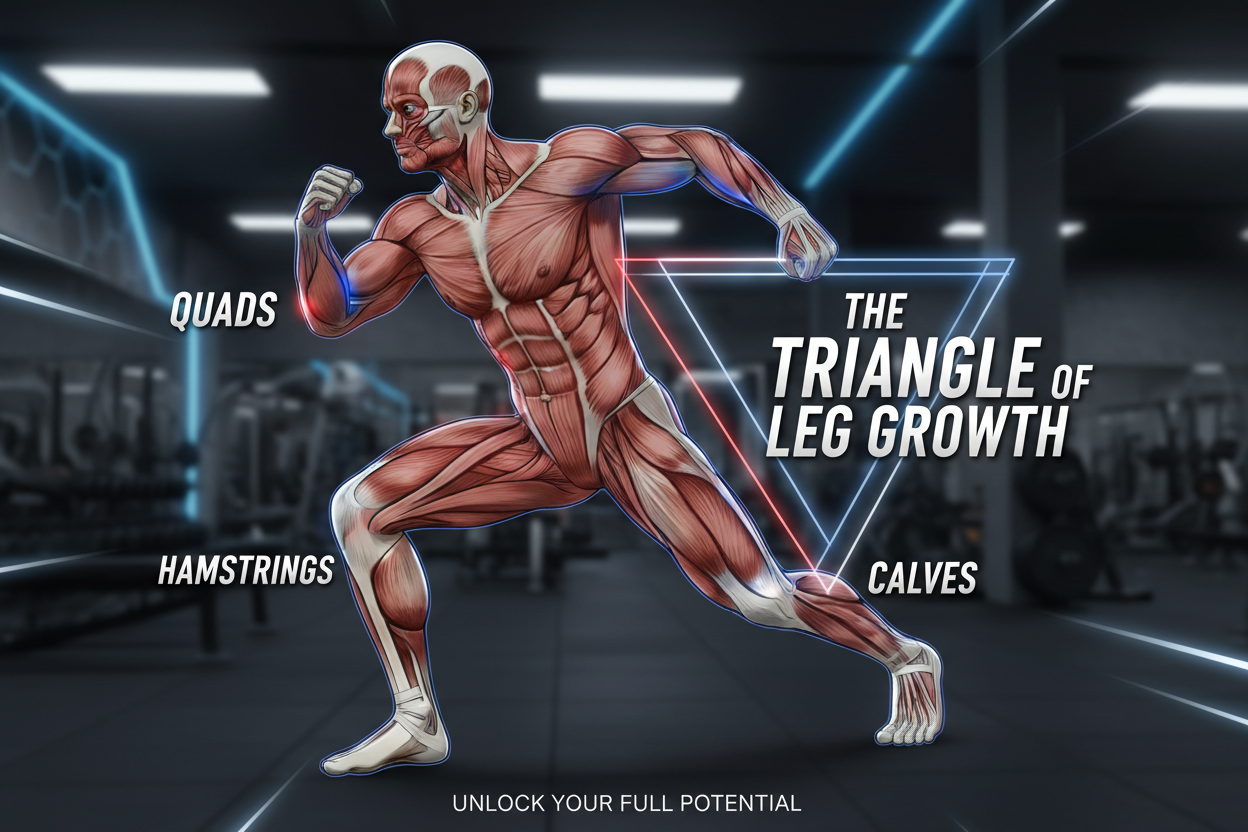
Before jumping into the specific exercises, you have to understand the machinery you are operating. The quadriceps are the large muscles on the front of your thigh responsible for extending the knee. They give your legs that sweeping size. The hamstrings, located on the back, are responsible for knee flexion and hip extension. They provide the "hang" or thickness when viewed from the side. Finally, the calves (comprising the gastrocnemius and soleus) handle ankle flexion and are crucial for stability.
Training these three groups in a single session is often the most efficient way to stimulate growth. This approach creates a high systemic fatigue response, which can be beneficial for hormone release and calorie burning. By alternating between anterior (front) and posterior (back) movements, you can maintain a higher intensity throughout the session since one muscle group rests while the other works.
Structuring Your Hamstring Quads and Calves Workout
A balanced routine should start with compound movements and finish with isolation work. This ensures you have the most energy available for the lifts that recruit the most muscle mass. Here is a structure designed to hit every angle of the lower body.
1. The Primary Compound: Squats or Leg Press
Start with a heavy compound lift. High-bar back squats are the gold standard for overall leg development, but the leg press is a fantastic alternative if you have lower back issues. The goal here is mechanical tension. Perform 3 to 4 sets in the 6-10 rep range. Focus on controlling the descent. Do not just drop into the hole; control the weight down, pause briefly, and drive up explosively.
2. The Posterior Hinge: Romanian Deadlifts (RDLs)
Immediately shift focus to the back of the legs. RDLs are non-negotiable for thick hamstrings. Unlike a conventional deadlift, the RDL keeps tension on the hamstrings by limiting knee flexion. Push your hips back as far as possible while keeping the bar close to your shins. You should feel a deep stretch in the belly of the muscle. This movement bridges the gap between back strength and leg size.
3. Unilateral Stability: Bulgarian Split Squats
This is where the workout gets difficult. Unilateral training (one leg at a time) fixes imbalances between your left and right sides. While this primarily targets the quads and glutes, the stabilizing leg requires significant hamstring and calf recruitment to keep you upright. Keep your torso upright to bias the quads, or lean forward slightly to engage more glute and hamstring.
My Experience with Imbalanced Training
I learned the importance of this balance the hard way. For the first few years of my lifting journey, I was obsessed with my squat numbers. I treated leg day as "quad day," throwing in maybe three lazy sets of leg curls at the end if I felt like it. My thighs grew, but my knees started to ache constantly. I developed patellar tendonitis because my quads were overpowering my hamstrings, creating uneven tension on the knee joint. It wasn't until I started prioritizing my posterior chain—sometimes even training hamstrings before quads—that the knee pain vanished. Seeing my legs fill out from the side profile was just a bonus. It taught me that aesthetics and joint health are usually achieved through the same method: balance.
Isolation Work: The Finishing Touches
Once the heavy lifting is done, it is time to isolate the specific muscles to induce metabolic stress (the pump).
Leg Extensions and Leg Curls
Supersetting these two exercises is a great way to save time and increase intensity. For leg extensions, focus on the squeeze at the top. Do not kick the weight up; extend deliberately. For lying or seated leg curls, ensure your hips stay glued to the pad. If your hips rise, you are using your lower back to move the weight, not your hamstrings. Aim for higher reps here, somewhere in the 12-15 range.
Calf Raises: The Forgotten Variable
Calves are stubborn, but they are not impossible to grow. The mistake most people make is bouncing the weight. The Achilles tendon is like a rubber band; if you bounce, the tendon does the work, not the muscle. Perform standing calf raises for the gastrocnemius (the upper, heart-shaped muscle) and seated calf raises for the soleus (the muscle underneath). Hold the stretch at the bottom for a full two seconds, and hold the contraction at the top for a full second. This eliminates the elastic energy and forces the muscle fibers to fire.
Frequency and Progressive Overload
You cannot perform this routine once a month and expect results. For natural lifters, hitting legs twice a week is usually the sweet spot. This frequency allows you to stimulate the muscle protein synthesis needed for growth without overwhelming your central nervous system. You might do a heavy session earlier in the week and a higher-repetition, volume-focused session later in the week.
Progressive overload remains the key driver of growth. This does not always mean adding weight to the bar. You can progress by adding a rep, slowing down your tempo, decreasing rest times, or improving your form. Keep a logbook. If you are doing the same weight for the same reps on your hamstrings quads and calves exercises for three months straight, you are not building muscle; you are just burning calories.
Recovery and Mobility
Leg training is taxing. The largest muscles in the body require significant resources to repair. Ensure you are consuming adequate protein and, arguably more importantly, enough carbohydrates to fuel these grueling sessions. Sleep is when the actual growth happens.
Do not ignore mobility. Tight ankles will prevent you from hitting depth on squats, and tight hip flexors will inhibit your glutes and hamstrings from firing correctly. A five-minute mobility routine before you touch a weight can significantly improve the quality of your reps.
Common Questions About Leg Training
Should I train calves before or after quads and hamstrings?
If calves are a major weak point for you, train them first when you are fresh. Most people leave them for last when they are exhausted, leading to lackluster effort. Prioritizing them at the start of the workout ensures they get the intensity required for growth.
How do I know if I am quad or hamstring dominant?
Look at your posture and lift mechanics. If your knees cave in excessively during squats or you have chronic knee pain, you might be quad-dominant with weak glutes and hams. Conversely, if you struggle to keep your torso upright in a squat and fold forward, your quads might be the limiting factor relative to your posterior chain.
Can I train legs if I have lower back pain?
Yes, but you must select the right exercises. Avoid heavy spinal loading like back squats and conventional deadlifts. Opt for belt squats, leg presses, lunges, and isolation machines like extensions and curls, which allow you to train the legs hard without compressing the spine.