
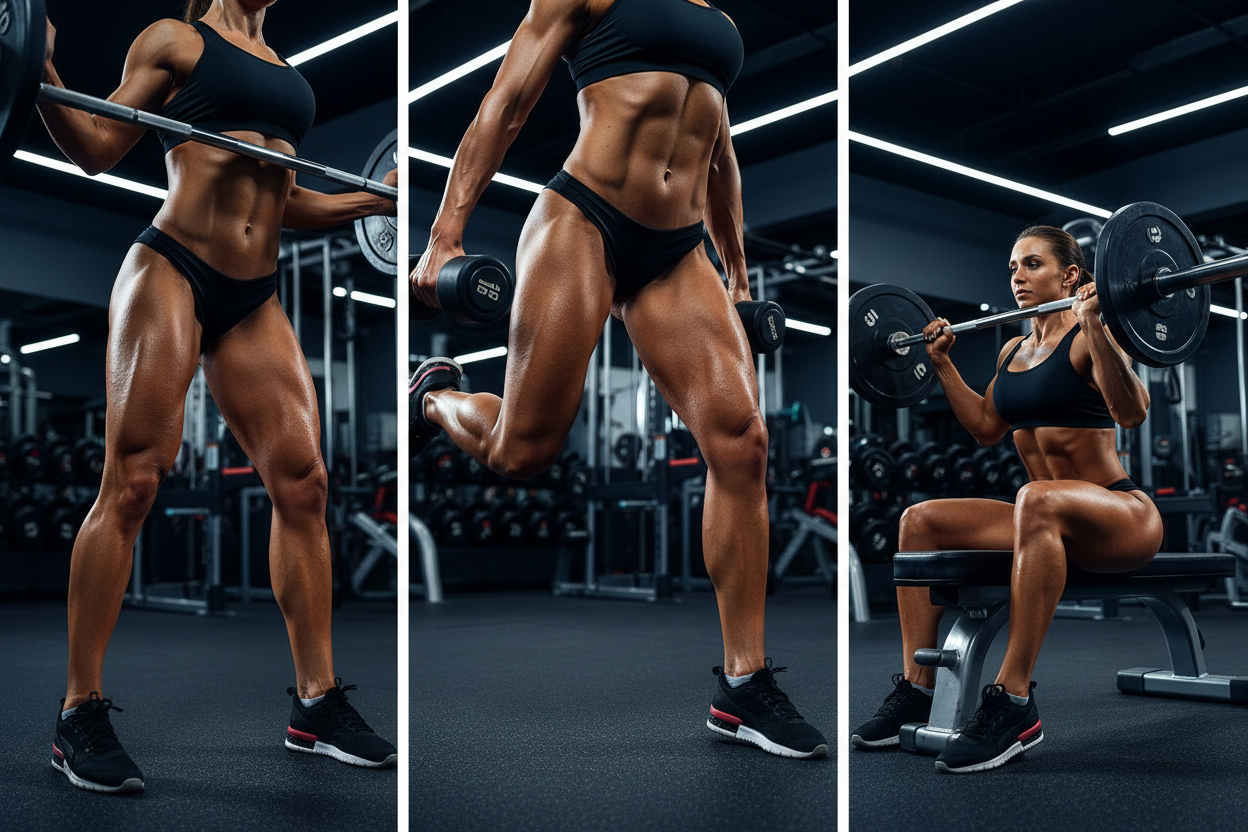
The Science of Exercising Thighs for Strength and Definition
Let's be honest: leg day is often the most dreaded day of the week. Yet, it is arguably the most critical component of a balanced physique and functional strength. Exercising thighs isn't just about fitting into a specific pair of jeans; it's about building the engine that powers your entire body. Whether you are an athlete looking for explosive power or someone wanting to tone up, the principles remain the same.
Many people spin their wheels doing endless high-rep movements with zero resistance, wondering why the shape of their legs never changes. Others overload the bar but compromise their knees with poor mechanics. We are going to strip away the bro-science and look at what actually drives muscle growth and strength in the lower body.
Key Takeaways: The Thigh Training Blueprint
- Compound is King: Isolation moves have their place, but multi-joint movements like squats drive the most growth.
- Don't Ignore the Posterior: A balanced thigh workout must include hamstring work to prevent knee injuries.
- Inner Thigh Attention: Specific adductor work is crucial for leg stability and aesthetic width.
- Progressive Overload: You must increase weight or intensity over time; high reps alone won't suffice forever.
- Range of Motion: Partial reps yield partial results. Full depth engages more muscle fibers.
The Anatomy of a Complete Thigh Workout
To understand what is the best thigh workout, you have to understand the machinery. Your thigh isn't one muscle; it's a complex system. You have the quadriceps (front), the hamstrings (back), and the adductors (inner thigh).
Most generic routines overemphasize the quads. While quads provide that sweep and size, neglecting the hamstrings creates a muscular imbalance that often leads to ACL tears or chronic knee pain. A proper thigh exercise routine targets all three areas evenly.
The Foundation: Why Squats Reign Supreme
If you ask any strength coach what is the best exercise for thighs, the answer is almost universally the squat. Mechanically, it allows for the heaviest load and the greatest hormonal response.
However, the variation matters. A front squat will hammer your quads, while a low-bar back squat engages more of the posterior chain (glutes and hams). If you have back issues, a Goblet Squat is a fantastic alternative that still provides intense stimulus without the spinal compression.
Integrating Thigh Weight Exercises
Bodyweight squats are fine for beginners, but muscles respond to tension. To change the shape and strength of the muscle, you need thigh weight exercises. This doesn't mean you need to powerlift.
Holding dumbbells during lunges or using a kettlebell for step-ups increases the mechanical tension. This tension causes micro-tears in the muscle fibers, which then repair stronger and denser. Don't fear the iron; it is the catalyst for results.
The Missing Link: In Thigh Exercises
The adductors (inner thigh muscles) are often the most neglected muscle group. People assume squats cover them. While squats do activate them to a degree, specific in thigh exercises are necessary for complete development and hip stability.
The "Copenhagen Plank" is vastly superior to the seated adductor machine found in most gyms. It forces your inner thigh to stabilize your entire bodyweight against gravity. Incorporating this into your in thigh workout creates functional strength that transfers to running and jumping, rather than just aesthetic isolation.
Structuring Your Routine
A haphazard collection of thigh workout exercises won't get you far. You need structure. Here is a framework for an effective session:
- Warm-up: 5 minutes of dynamic stretching (leg swings, bodyweight lunges).
- Primary Compound Movement: Barbell or Goblet Squats (3-4 sets, heavy).
- Unilateral Movement: Bulgarian Split Squats or Lunges (3 sets per leg).
- Posterior Chain: Romanian Deadlifts (3 sets, focus on the stretch).
- Isolation/Finisher: Leg Extensions superset with Copenhagen Planks.
My Training Log: Real Talk
I have a love-hate relationship with Bulgarian Split Squats. On paper, they are the perfect unilateral exercise. In reality, they are a test of mental fortitude. I recall a specific training block last winter where I decided to prioritize them over heavy back squats.
The first few weeks were humbling. It wasn't just the burning in the quads; it was the balance. I remember the specific wobble in my ankle and the feeling of my arch collapsing when I hit the bottom of the rep with 50lb dumbbells. The "burn" isn't a sharp pain; it's a nauseating, deep ache in the tear-drop muscle (VMO) that lingers for minutes after you drop the weights. But I stuck with it. Six weeks later, my knee pain vanished, and the definition in my lower quad was visible for the first time in years. It sucks while you're doing it, but the payoff is undeniable.
Conclusion
Building strong, defined legs requires patience and a willingness to embrace discomfort. By focusing on compound movements, ensuring you hit the inner and posterior thigh, and progressively adding weight, you will see changes. Stop looking for shortcuts and start putting in the work under the bar.
Frequently Asked Questions
How often should I perform a thigh exercise routine?
For most natural trainees, hitting legs twice a week is the sweet spot. This allows for sufficient volume to stimulate growth while providing enough recovery time (48-72 hours) for the muscles to repair.
Can in thigh exercises spot-reduce fat?
No. You cannot spot-reduce fat. Doing endless inner thigh lifts will strengthen the muscle underneath, but it will not burn the fat on top. Fat loss comes from a caloric deficit, while exercise builds the shape.
What if I don't have access to heavy weights?
If you lack heavy iron, you must increase the intensity through other means. Slow down your tempo (3 seconds down, 1 second up), decrease rest times, or use unilateral exercises like pistol squats to double the load on a single leg.


