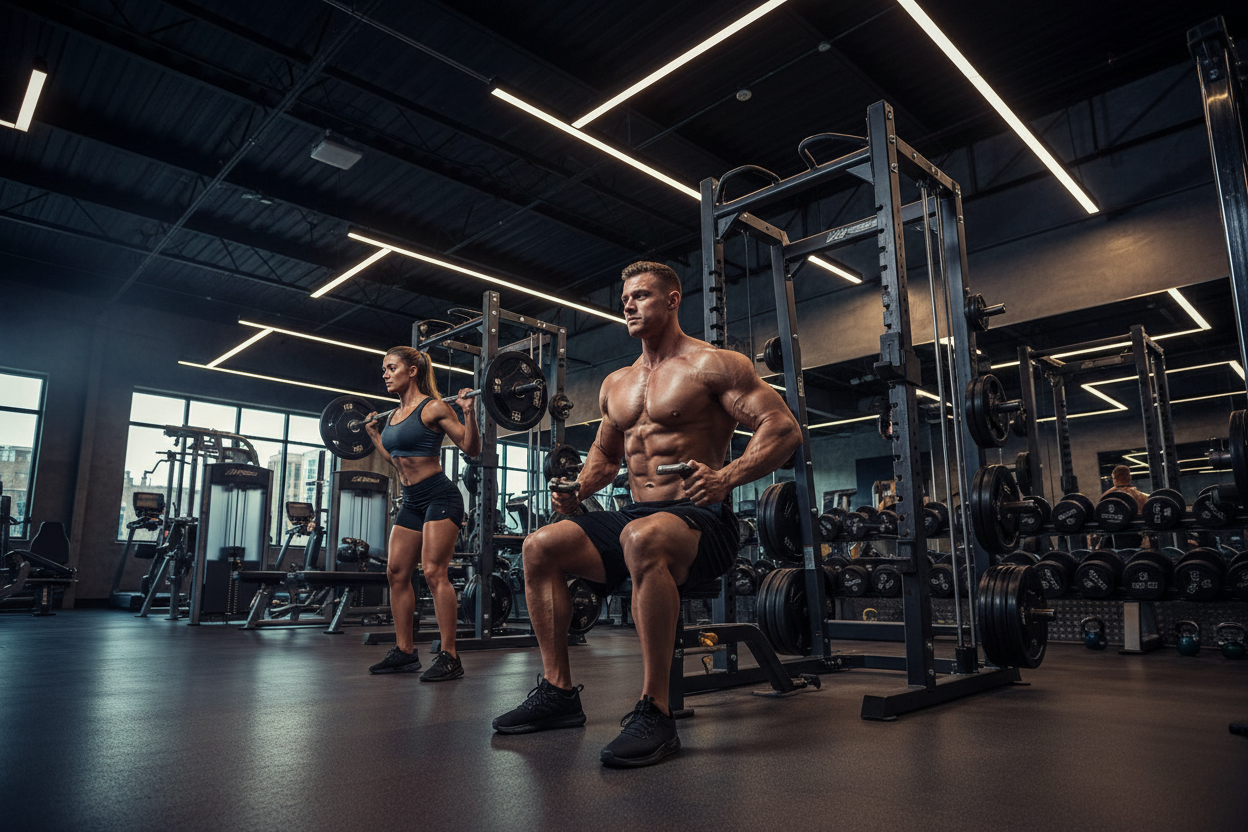
The Science Behind a Booty Focus Workout That Actually Grows
Let's be honest: most generic leg days turn into accidental quad days. You go in wanting to build your posterior chain, but you leave with burning thighs and a sore lower back, while your glutes remain frustratingly dormant. If you want specific hypertrophy in that area, you cannot rely on general compound movements alone. You need a dedicated booty focus workout that prioritizes activation and mechanical tension over ego lifting.
Key Takeaways
- Pre-Activation is Non-Negotiable: You must wake up the glutes with isolation movements before loading heavy weights to prevent the quads from taking over.
- The "Sandwich" Method: Structure your session with isolation, followed by heavy compounds, and finishing with metabolic burnout.
- Volume Management: A specialized glute only gym workout allows for higher frequency (2-3 times a week) because recovery demands differ from heavy CNS-draining leg days.
- Mind-Muscle Connection: If you cannot feel the squeeze at the top of the movement, the repetition effectively doesn't count for hypertrophy.
Why Your Current Leg Day Isn't Working
The gluteus maximus is the largest muscle in the body, but it is also one of the laziest. In a standard squat or leg press, your body will naturally recruit the strongest muscles to move the load. For most people, that means the quadriceps and erectors (lower back) do the heavy lifting.
To fix this, we have to shift the intent. We aren't just moving weight from point A to point B; we are placing tension specifically on the glute fibers. This requires a shift in foot placement, torso angle, and exercise selection.
Structuring a Glute Only Gym Workout
A successful glute day at the gym shouldn't look like a powerlifting meet. It needs a specific architectural flow to ensure the right muscles fire.
1. The Activation Phase
Start with low-load, high-repetition movements. Think banded clam shells or bodyweight glute bridges. The goal here isn't fatigue; it's neurological connection. You are trying to establish a signal between your brain and your glutes so they are "online" when you touch the heavy iron.
2. The Compound Lift (The Meat and Potatoes)
Once activated, move to your heavy hitter. This is usually the Hip Thrust or a Kas Glute Bridge. Unlike squats, where the load is vertical (compressing the spine), hip thrusts provide horizontal loading. This matches the glutes' primary function: hip extension. Keep the rep range moderate (8-12) and control the eccentric (lowering) phase.
3. Unilateral Stability
After the heavy bilateral lift, strip it back to single-leg movements. Bulgarian Split Squats or B-Stance RDLs are superior here. Unilateral work fixes imbalances and forces the glute medius (the upper/side shelf) to work overtime to stabilize the pelvis.
The Mechanics of Tension
It’s not enough to just do the exercises; you have to do them with specific cues. During a glute day at the gym, your shin angle matters. A vertical shin usually biases the glutes, whereas a knee that travels forward over the toe biases the quads.
Furthermore, consider the "hinge." In an RDL (Romanian Deadlift), imagine closing a car door with your butt. If your knees bend too much, you lose tension on the hamstrings and glutes. If they don't bend enough, it's all lower back.
My Personal Experience with Booty Focus Workouts
I’ve cycled through plenty of training splits, but switching to a specialized hypertrophy block for glutes was a humbling experience. The biggest reality check wasn't the weight—it was the setup.
There is a very specific, unglamorous pain associated with heavy hip thrusts that nobody mentions on social media. I remember vividly the first time I pushed past 300lbs on the thrust. Even with the thick foam pad, the bar manages to find that one sensitive spot on your hip bones. I spent weeks walking around with deep, horizontal bruises across my lap that looked concerning to anyone who didn't know I lifted.
And then there's the "bench slide." I used to waste so much energy bracing my back against a bench that would slowly scoot backward across the gym floor with every rep. It wasn't until I started wedging the bench against a wall or a heavy dumbbell rack that I could actually focus 100% on the lift. That stability made a bigger difference in my growth than adding another 10lbs to the bar ever did.
Conclusion
Building glutes takes patience and a willingness to drop the ego. You might have to use lighter weights to ensure your quads aren't stealing the show. But if you stick to the mechanics, prioritize the squeeze, and tolerate the setup struggles, the results will come. Treat your training like a skill practice, not just a sweat session.
Frequently Asked Questions
How often should I do a booty focus workout?
Because the glutes are a large muscle group with high endurance capabilities, they recover relatively quickly. Most lifters see the best results training them 2 to 3 times per week, with at least 48 hours of rest between sessions.
Can I build glutes without heavy squats?
Absolutely. In fact, for many people with long femurs, squats are mechanically poor for glute development. Hip thrusts, glute bridges, and 45-degree hyperextensions isolate the glutes far better without the lower back fatigue associated with heavy squatting.
Why don't I feel my glutes working during exercises?
This is usually due to "glute amnesia" or tight hip flexors. If your hip flexors are tight, you cannot fully extend your hips, which prevents the glutes from fully contracting. Spend time stretching your hips and doing activation drills before your main workout.