The Right Brand of Exercise Bike: What Specs Actually Matter
Building a home gym is an investment, and nothing derails a workout faster than a loud, wobbly ride that feels like it might snap mid-sprint. If you are tired of guessing which cardio equipment will actually survive daily use, you are not alone. Choosing the right brand of exercise bike can be the difference between hitting your fitness goals and buying a very expensive clothes hanger.
In this guide, we will cut through the marketing jargon to help you identify which manufacturers actually deliver on performance, durability, and value for your specific home setup.
Key Takeaways
- Drive Systems Matter: Magnetic resistance offers a quieter, smoother ride compared to friction-based models.
- Check the Q-Factor: A narrower distance between pedals mimics a real road bike and protects your knees.
- Weight Capacity Indicates Build Quality: High-quality stationary bicycle brands usually offer a 300+ lb capacity.
- App Compatibility: Decide if you want a locked-in ecosystem (built-in screen) or a BYOD (Bring Your Own Device) setup.
Decoding Specs: What to Look For
When evaluating any stationary bike company, looking past the flashy screen to the core mechanics is crucial.
Magnetic vs. Friction Resistance
Most premium exercise cycle brands have shifted entirely to magnetic resistance. Unlike friction pads that wear down and require replacement, magnetic flywheels use eddy currents to create drag. This means near-silent operation—perfect for early morning basement sessions while the family sleeps—and zero physical wear and tear on the flywheel.
Flywheel Weight and Q-Factor
A heavier flywheel (typically 30-40 lbs) used to be the gold standard for a smooth pedal stroke. However, modern indoor bike brands with advanced magnetic tech can achieve the same inertia with lighter rear-mounted flywheels. Do not forget the Q-Factor (the distance between the pedals). Look for a stationary bike brand that offers a Q-Factor between 150mm and 170mm to prevent knee strain during long rides.
Fitting It In: Space & Layout Tips
North American home gyms come in all shapes and sizes, from spacious two-car garages to tight apartment corners.
Measuring Your Clearances
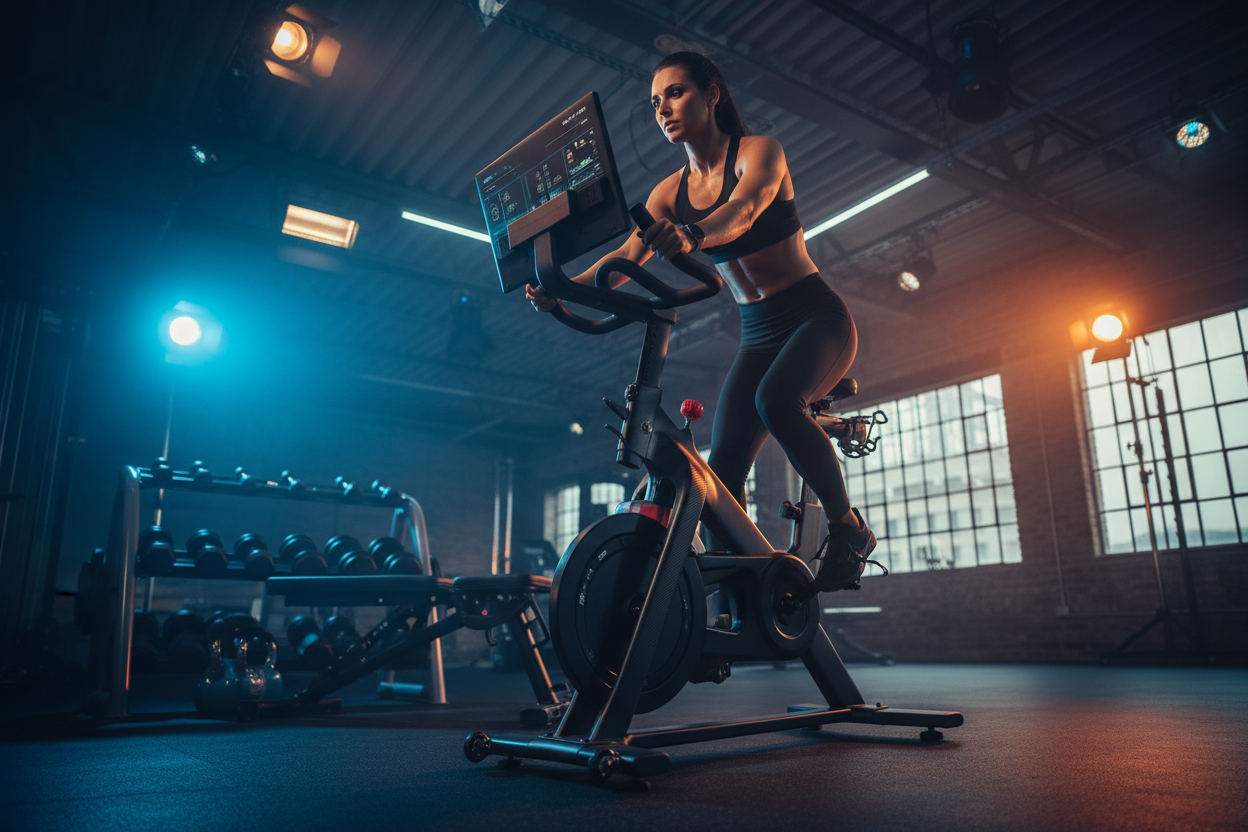
An average spin bike requires a footprint of about 4 feet by 2 feet. But you also need to account for your body. If you plan on standing climbs, ensure you have at least 7 to 8 feet of ceiling clearance. If you are looking into various spin bikes brands, check whether they include built-in transport wheels. A heavy 120-pound bike is much easier to tuck into a closet if the transport wheels are high-quality polyurethane rather than cheap plastic.
From Our Gym: Honest Take
Over the last year, I have put dozens of models from nearly every major exercise bike company through the wringer in our unheated garage gym. One thing that stands out immediately is the difference in frame powder coating.
While testing a popular mid-tier model, I noticed that the sweat guard did not fully cover the resistance magnets. After six months of heavy, sweaty interval sessions, light surface rust started forming near the flywheel. Conversely, the commercial-grade bikes we tested used aluminum posts and thicker powder coats that looked brand new after a year. My advice? If you are a heavy sweater or train in a humid garage, spend the extra $200 on a brand that uses aluminum seat and handlebar posts. It saves you from a seized seat post down the road.
Frequently Asked Questions
Is a premium brand of exercise bike worth the investment for a home gym?
Yes, if you plan to ride more than twice a week. Premium models offer better ergonomics, magnetic resistance, and longer warranties, which drastically reduces maintenance costs over time.
How much space do I actually need?
Plan for a minimum 2-foot by 4-foot footprint for the bike itself, plus an additional 2 feet of clearance on all sides for safe mounting, dismounting, and maintenance.
What is a good weight limit for a stationary bike?
A reliable indicator of frame strength is a maximum user weight capacity of 300 lbs or more. Even if you weigh significantly less, this rating ensures the bike will not wobble during intense out-of-the-saddle sprints.