The Real Reason Your 30 Day Hip Thrust Challenge Results Suck
I see it every time I open TikTok: another influencer promising a total physique overhaul by doing 30 day hip thrust challenge results. They're usually in a living room, doing rapid-fire air-thrusts while a timer counts down. It looks productive because they're sweating and their glutes are 'on fire,' but as someone who has spent a decade loading barbells, I can tell you most of these people are selling you a lie.
If you've been grinding through 100 reps every morning and your jeans still fit the exact same way, you aren't failing—the protocol is. Glutes are the largest muscle group in your body. They don't grow because you annoyed them with high reps; they grow because you forced them to adapt to a load they weren't prepared for. Chasing a 'burn' is easy; building a shelf is hard work that requires more than just a 30-day calendar.
Quick Takeaways
- Doing 100 reps a day creates metabolic stress (the burn) but lacks the mechanical tension needed for actual muscle growth.
- Most 'before and after' photos are the result of lighting, posing, and a temporary muscle pump, not new muscle tissue.
- Daily training often leads to hip flexor tendonitis and 'junk volume' rather than glute hypertrophy.
- Real growth requires progressive overload, meaning you need to add weight to the bar over time.
The Problem With Viral Glute Challenges
The fitness industry loves a challenge because it's easy to market. It sounds achievable. But doing 100 hip thrusts a day for a month is a recipe for burnout, not a better backside. When you do the same movement every single day with the same bodyweight resistance, your body becomes efficient at it. Efficiency is the enemy of hypertrophy.
Most people I talk to who try these challenges end up with cranky hip flexors and lower back tightness. Why? Because as you fatigue during those high-rep sets, your form breaks down. You start arching your back or using your quads to finish the set. You're no longer training your glutes; you're just moving your hips through space to hit an arbitrary number.
What Actually Happens When You Do 100 Hip Thrusts a Day?
Physiologically, 100 reps of bodyweight thrusts mostly tap into your Type I (slow-twitch) muscle fibers. These are great for endurance, but they don't have much potential for growth. To get that 'pop,' you need to recruit Type II (fast-twitch) fibers, which only happens when you move heavy loads or move explosively. This is the core of "How Many Hip Thrust Should I Do a Day?" The Real Answer—the quality of the rep always beats the quantity.
When you do 100 reps, you get a massive 'pump.' Blood rushes to the muscle, making it feel tight and look slightly larger for about 30 minutes. This isn't muscle growth; it's inflammation and blood flow. Once that subsides, you're right back where you started. You need mechanical tension—the kind that comes from a heavy barbell—to create the micro-tears that lead to actual tissue repair and growth.
The Junk Volume Trap
In the lifting world, we call this 'junk volume.' It's work that makes you tired but doesn't actually trigger a growth response. If you can do 100 reps of something without stopping, the resistance is too low. It's like trying to build bigger biceps by lifting a pencil 1,000 times. Your central nervous system will get tired, sure, but your muscles won't see a reason to get bigger because the 'threat' (the weight) isn't heavy enough to justify it.
The Reality of 100 Hip Thrusts a Day Before and After Photos
Don't let the 100 hip thrusts a day before and after photos fool you. I've been in this industry long enough to know how to fake a transformation in five minutes. You tilt the pelvis forward (anterior pelvic tilt), step one foot closer to the camera, and turn on some overhead lighting. Boom—instant glutes. In reality, it is biologically impossible to build significant muscle mass in 30 days, especially on a caloric deficit or with bodyweight-only movements.
I’ve read countless accounts, including My 30-Day Before and After Hip Thrust Results (And Why I Stopped), where lifters admit they felt 'firmer' but didn't actually see a change in measurements. The scale might move because of water loss, but the tape measure rarely lies. If you want a different shape, you need to change the muscle-to-fat ratio, and that takes months, not weeks.
How to Actually Build Your Glutes (Without Doing Daily Reps)
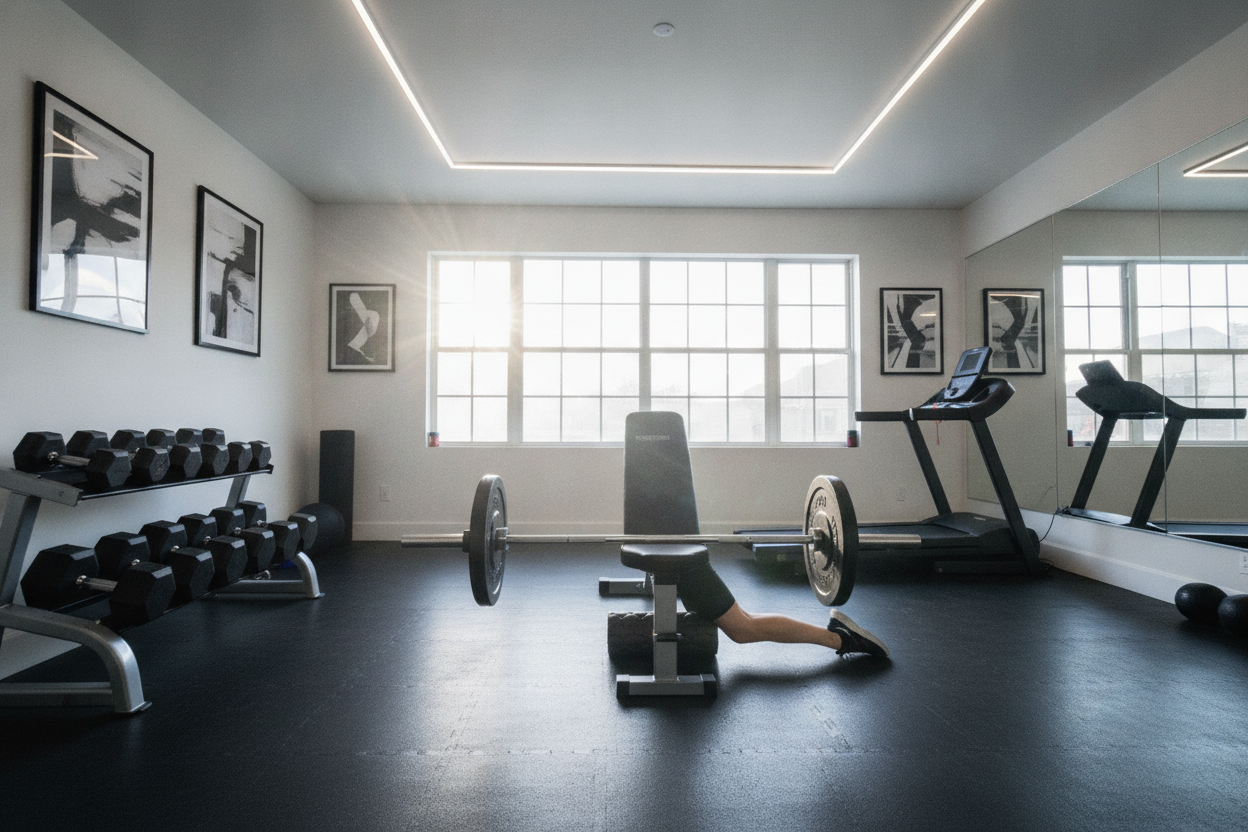
If you want results that actually last past the 30-day mark, stop thrusting every day. Give your muscles 48 to 72 hours to recover between sessions. Pick up a real Weight Set And Bench and start adding 5 or 10 pounds to the bar every week. That is the only 'secret' to growth.
Stop using your couch as a backrest. It slides, it’s too high, and it kills your leverage. I personally use a dedicated Gxmmat Hip Thrust Bench because it’s at the correct height (usually around 12-16 inches) to allow for a full range of motion. When you have a stable pivot point, you can actually drive through your heels and lock out your hips at the top, which is where the glute contraction is strongest. Aim for 3 sets of 8-12 reps with a weight that makes those last two reps feel like a struggle. That will do more for you than 500 air-thrusts ever will.
The Verdict: Should You Skip the 30-Day Craze?
Yes. Skip the daily challenges. They are designed for social media engagement, not for human physiology. If you want a better physique, commit to a boring, effective program. Lift heavy two or three times a week, eat enough protein to actually build muscle, and stop looking for shortcuts. Your glutes—and your hip flexors—will thank you for it.
FAQ
Is doing 100 hip thrusts a day too much?
Yes, for most people. It's too much frequency and not enough intensity. Training the same muscle every day prevents the recovery phase where muscle growth actually happens. You're better off doing 3-4 heavy sets three times a week.
Can I grow my glutes in 30 days?
You can improve muscle activation and get a temporary pump, but you won't build significant new muscle tissue in 30 days. Real hypertrophy takes 8-12 weeks of consistent, heavy lifting and proper nutrition.
What equipment do I need for hip thrusts at home?
At a minimum, you need a stable bench or platform and a way to add resistance. A dedicated hip thrust bench is safer than a couch, and a barbell or heavy dumbbell is essential once bodyweight reps become easy.