The Real Reason You Hate Trying to Lift Weights at Home
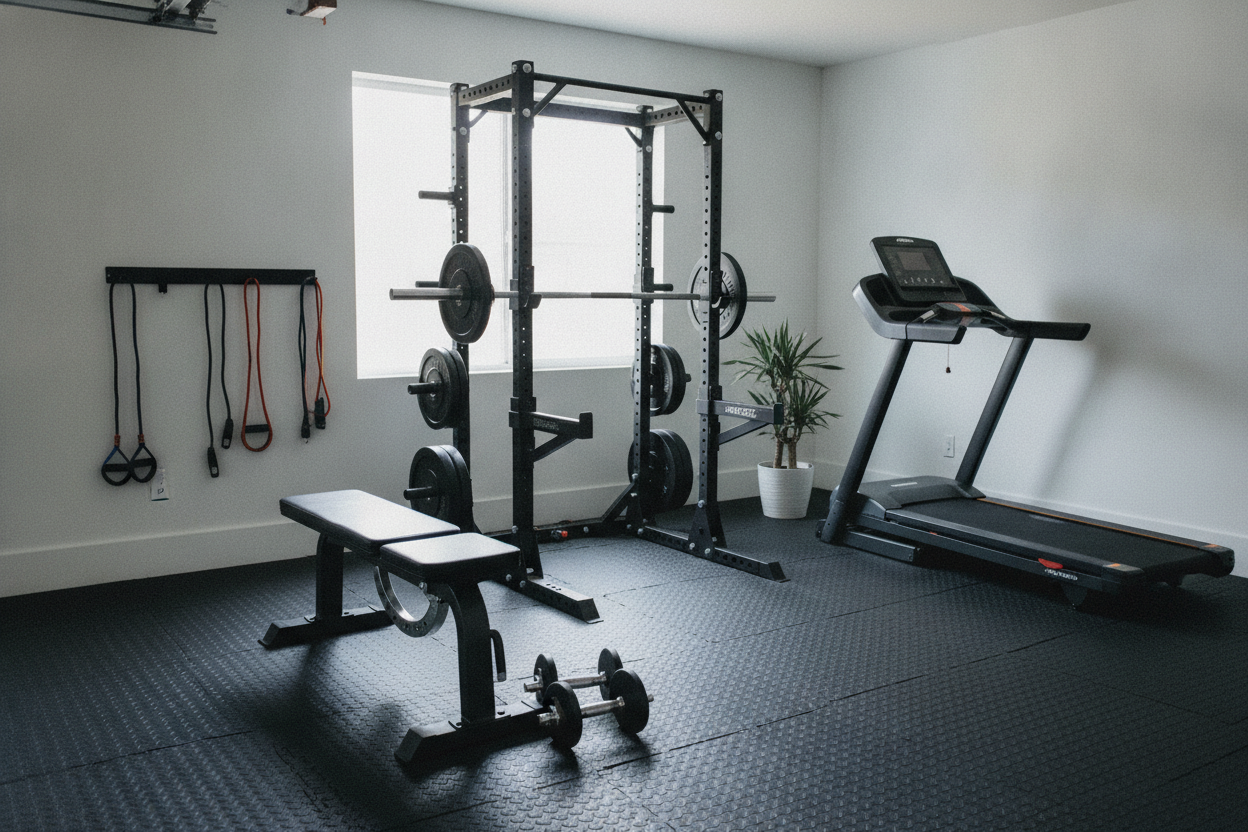
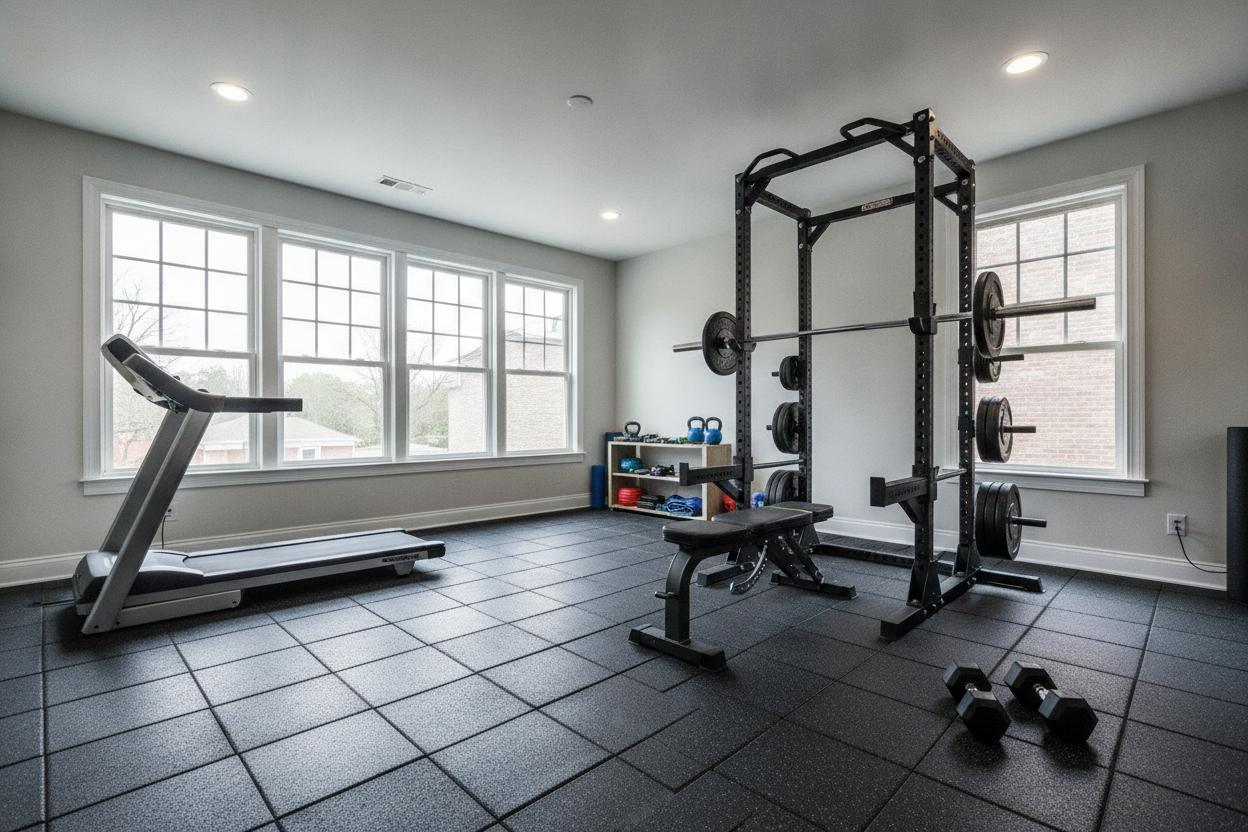
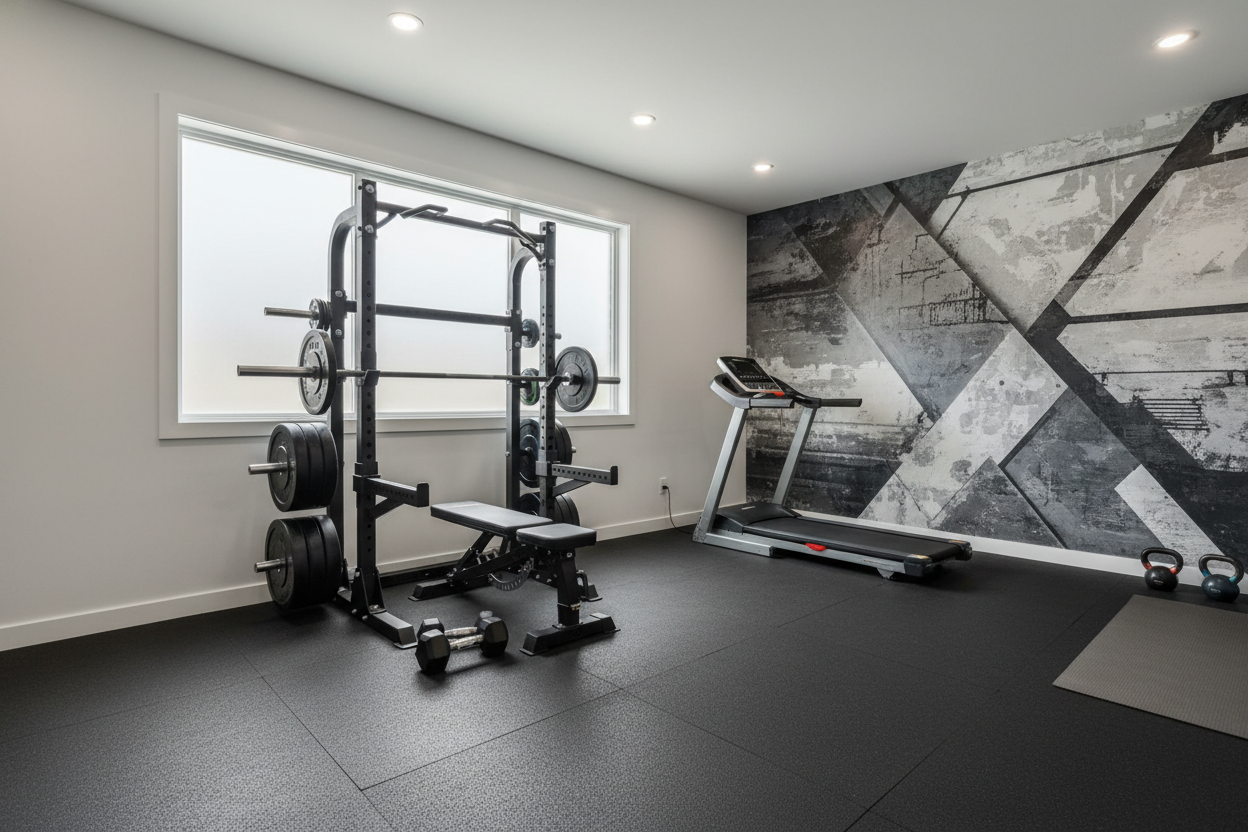
Ever tried to hit a heavy set of squats while your heels are slowly drifting apart on a dusty laminate floor? It is not just annoying; it is a mental block that stops you from actually getting stronger. If you want to lift weights at home, you have to stop treating your living room like a temporary yoga space and start treating it like a lifting platform. The 'clink' of cheap dumbbells and the fear of a cracked floorboard are the two biggest killers of home gym progress.
Quick Takeaways
- Environment dictates intensity: if you are scared of your floor, you will never reach true failure.
- Traction is non-negotiable for joint safety and power transfer.
- A dedicated 6x8 space is the minimum footprint for real, dynamic movement.
- Stop buying 'all-in-one' machines and stick to space-efficient basics.
The Unspoken Problem With Living Room Workouts
The biggest hurdle in a weight lift home setup isn't the cost of the plates; it is the subconscious 'governor' you put on your own effort. When you are in a commercial gym, you don't care if a 50-lb dumbbell rolls across the rubber floor or if you grunt during a hard rep. At home, if you are dodging a glass coffee table or worried about the 'thud' waking up the neighbors, you will never push to RPE 9. You end up doing high-rep, low-effort sets that don't build real muscle because you are too busy being polite to your architecture.
Intensity requires a sense of safety. If your brain perceives the environment as fragile, it will not allow your central nervous system to recruit maximum motor units. You need a 'drop zone'—a place where you can safely miss a rep without it costing you a security deposit. Without that physical foundation, your home workouts will always feel like a diet version of the real thing. I spent years holding back on my overhead presses because I was terrified of the bar clipping the ceiling fan or the weights rattling the floorboards. Once I cleared the space, my strength jumped almost immediately.
Stop Lifting on Hardwood and Slippery Rugs
Lifting is about force transfer. When you push against the ground, you want that ground to push back, not slide away. Hardwood, tile, and thin area rugs are the enemies of leg drive. If your feet are not anchored, your stabilizers have to work overtime just to keep you upright, leaving less energy for the actual lift. This is particularly dangerous for your knees and ankles; a small slip during a heavy goblet squat can turn a routine set into a month of physical therapy.
Biomechanically, you need a surface that allows for 'rooting.' This is the process of grabbing the floor with your feet to create torque in the hips. You cannot do that on a slick surface. Upgrading to a Large Exercise Mat For Home Gym isn't about comfort or aesthetics; it is about creating a high-friction surface that allows you to drive through your midfoot without your heels hunting for grip. I have seen too many people try to lift in socks on laminate. It is a recipe for a groin strain and a guaranteed way to kill your power output.
Think about the last time you tried to push a car. You wouldn't do it on ice. Lifting heavy weights follows the same logic. You need a high-density material that doesn't compress under load. Cheap foam tiles might feel good for yoga, but they will squish and shift when you're holding 50-lb dumbbells. You want something that feels like a commercial gym floor—firm, grippy, and stable enough to support your entire body weight plus the iron you're moving.
Choosing the Right Footprint for Heavy Lifts
A standard yoga mat is about 24 inches wide. That is barely enough space for a narrow-stance squat, let alone a lateral lunge or a heavy row where you need a wide base. If you are constantly stepping off the mat and onto the cold floor, you are breaking your focus and risking a slip. You need enough 'runway' to move. Putting down a 6X8Ft Exercise Mat Yoga Mat Gym Flooring For Home Workout over your living room floor immediately designates a serious, safe training zone.
This 48-square-foot footprint is the sweet spot. It is large enough to handle a full range of lunges, burpees, and even some light plyometrics, but small enough that it doesn't require you to remodel your entire house. When you have that much real estate, you stop thinking about where your feet are and start thinking about the weight in your hands. It creates a mental boundary: inside the mat is the gym, outside the mat is the house.
Overcoming the Cramped 'Weight Lift Home' Mindset
Most people fail because they try to recreate a 5,000-square-foot commercial gym in a spare bedroom. You don't need a leg extension machine or a cable crossover. If you are struggling with how to lift weight at home, the answer is usually to simplify. Ditch the complex circuits and high-tech gadgets that promise to work every muscle at once. Those machines usually have terrible leverage and take up way too much space.
Focus on the 'Big Five' movements: push, pull, squat, hinge, and carry. You can do all of these with a pair of adjustable dumbbells and a solid floor. If you feel overwhelmed by all the fitness influencers telling you that you need a $3,000 smart mirror, you should Let's Stop Overcomplicating How to Weight Train at Home and get back to basic progressive overload. Add five pounds, do one more rep, or shorten your rest. That is how you actually change your physique in a 10x10 room.
Why You Should Master the Basics in Your Own Space
There is a specific kind of focus you get when training alone. No one is asking 'how many sets you have left,' and there's no ego-lifting to impress the person on the next rack. You can dial in your form, film your sets to check your back angle, and listen to your body without distraction. The home environment is the ultimate laboratory for strength.
Why Your Introduction to Weight Lifting Should Happen at Home is simple: it builds a foundation of consistency that commercial gyms actually hinder. Between the commute, the crowds, and the monthly fees, the 'friction' of going to a gym is often why people quit. When your gym is twenty feet from your bed, that friction disappears. Once you have a stable floor and a few heavy weights, you have no more excuses left.
Personal Experience: The Cracked Tile Incident
I once tried to deadlift 315 lbs in a rental kitchen because I thought a 'thick rug' was enough protection. It wasn't. I lost my balance slightly, the bar tilted, and the edge of the plate sent a spiderweb crack through a ceramic tile. That $250 repair bill cost more than a proper high-density mat would have. Now, I don't move a single pound unless I'm on a 7mm high-density surface. Don't learn the hard way—protect your floors and your joints before you start loading the bar.
FAQ
Do I need lifting shoes at home?
Barefoot is actually better if you have a high-density mat. It allows you to feel the floor and build foot strength. However, if you are lifting on hardwood or tile, you need shoes for the traction alone.
How thick should home gym flooring be?
For dumbbells up to 50 lbs, a 7mm to 8mm high-density mat is the sweet spot. If you are planning to drop heavy barbells, you will need at least 3/4-inch rubber stall mats to prevent foundation damage.
Will a mat ruin my carpet?
Actually, a heavy mat protects carpet from getting crushed by weights and prevents sweat from soaking into the fibers. Just make sure you get a non-bleeding rubber so it doesn't stain the carpet underneath.