The Powerhouse Behind You: Understanding Your Glutes for Strength and Health
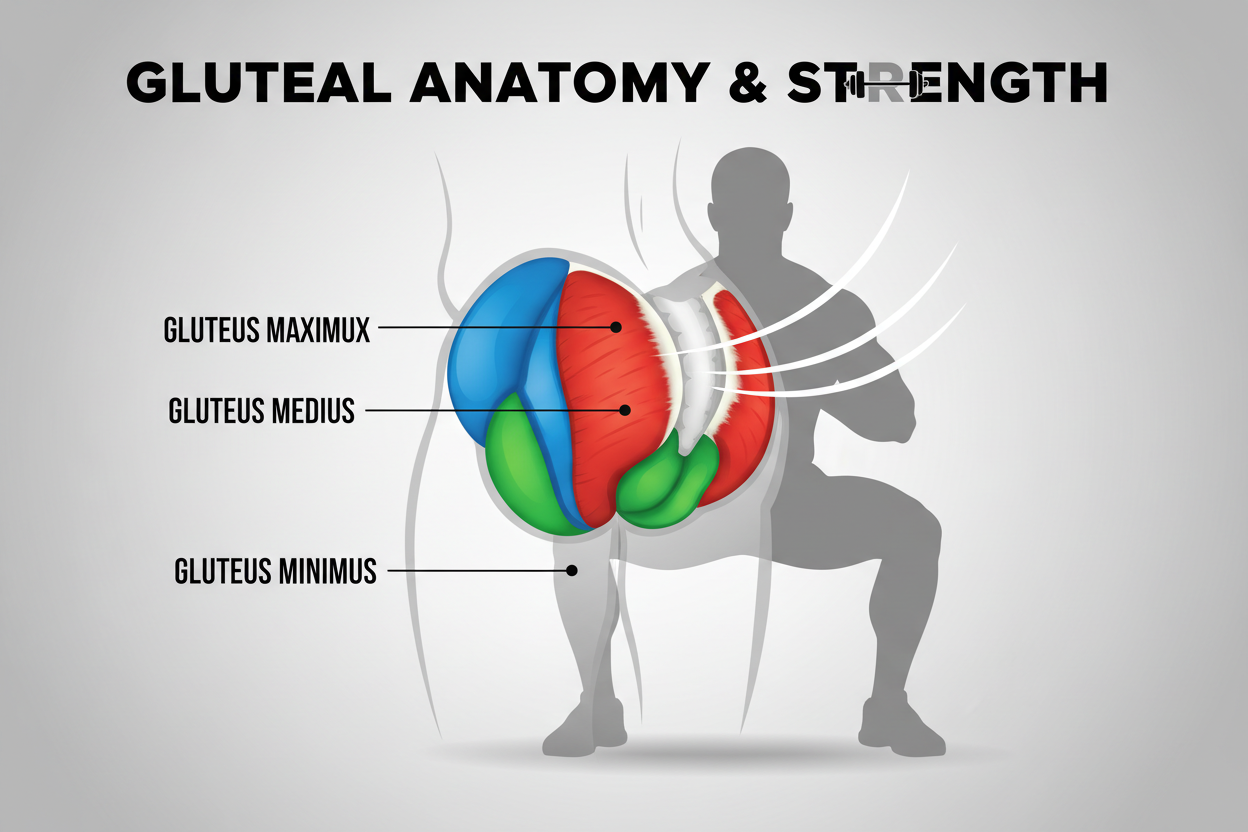
Most people think of the glutes strictly in terms of aesthetics. We see endless social media posts about building a better backside, but this muscle group is responsible for so much more than filling out a pair of jeans. To put it simply, the glutes are a group of three muscles located in the buttocks: the gluteus maximus, gluteus medius, and gluteus minimus. They function as the primary extensors and rotators of the hip, meaning they are the engine that allows you to walk, run, jump, and stand upright.
Understanding what are glutes in the body goes beyond anatomy charts; it is about recognizing the link between your hips and your overall athletic performance. When these muscles are weak or inactive, the burden shifts to the lower back and knees, often leading to chronic pain. If you have ever wondered why your lower back hurts after a long day of standing, the answer often lies in how your glutes are—or aren't—supporting your pelvis.
Mapping the Anatomy: Where Are the Glutes on Your Body?
Locating these muscles is straightforward, but understanding their distinct layers is key to training them effectively. If you are asking exactly where are the glutes on your body, they are situated at the posterior (back) of the pelvic girdle, connecting the torso to the lower limbs. They wrap around the hip bone and attach to the femur (thigh bone).
The glutes on body composition are divided into three distinct players, each with a specific job:
The Gluteus Maximus
This is the largest and most superficial muscle of the group. It creates the shape of the buttocks. Its primary role is hip extension—moving your thigh backward. Think of the movement you make when you stand up from a chair or push off the ground while sprinting. That is the Maximus at work.
The Gluteus Medius
Located on the side of the hip, partially covered by the Maximus, this muscle is crucial for stability. When you lift one leg off the ground to take a step, the Medius on the standing leg fires to keep your pelvis level. Without it, your hip would drop to the side, causing a waddling gait.
The Gluteus Minimus
The smallest and deepest of the three, the Minimus sits beneath the Medius. It works in tandem with the Medius to stabilize the hip and rotate the thigh. Neglecting these smaller stabilizers is a common mistake that leads to injury.
My Battle with "Glute Amnesia"
I spent the early years of my fitness journey obsessed with heavy lifting, specifically squats and deadlifts. I assumed that because I was moving big weights, my glutes were strong. I was wrong. I developed nagging lower back pain that wouldn't go away, regardless of how much I stretched. It wasn't until I saw a physical therapist that I learned about "glute amnesia." Despite my heavy lifting, my body had learned to rely on my lower back and hamstrings to move the weight because my glutes were dormant from sitting at a desk all day.
I had to regress my training significantly. I stopped back squatting for a month and focused entirely on activation exercises like clamshells and glute bridges. It was humbling to struggle with bodyweight movements, but the difference was night and day. Once I learned how to actually fire the muscle, my back pain vanished, and my main lifts skyrocketed. It taught me that having glutes in body mechanics is useless if your nervous system doesn't know how to recruit them.
The Role of Glutes in Body Mechanics
When analyzing what is glutes in body functionality, you have to look at the concept of the "posterior chain." This is the series of muscles running down the back of your body. The glutes are the centerpiece of this chain. They generate the force that is transferred through your core to your upper body and down through your legs to the ground.
Athletes with strong glutes are generally faster and more explosive. This is because the hip extension is the primary driver of forward propulsion. However, for the general population, the glutes body connection is vital for posture. Weak glutes often lead to an anterior pelvic tilt, where the pelvis tips forward, causing the stomach to protrude and the lower back to arch excessively. Strengthening the glutes pulls the pelvis back into a neutral alignment, instantly improving posture.
Why Modern Life is the Enemy of Your Glutes
You might wonder what are glutes on the body doing when you sit down. The answer is: absolutely nothing. And that is the problem. Prolonged sitting places the glutes in a stretched, inactive state while simultaneously tightening the hip flexors in the front of the body. This creates a tug-of-war that the glutes usually lose. Over time, the brain reduces the neural drive to the glutes, leading to the dormancy I experienced.
To combat this, you cannot simply rely on walking. You must intentionally perform exercises that force hip extension and abduction. This doesn't mean you need a gym membership. Simple movements performed daily can wake these muscles up.
Effective Activation and Training
Knowing what are glutes in the body capable of helps in selecting exercises. Since the muscles perform extension, abduction, and rotation, a well-rounded routine hits all these patterns.
The Hip Thrust
This is arguably the king of glute exercises. By placing your upper back on a bench and thrusting your hips upward with weight, you achieve maximum contraction at the top of the movement. Unlike squats, where tension on the glutes varies, the hip thrust keeps the tension high where the glutes are strongest.
Lateral Band Walks
To target the glutes on body lateral planes (the Medius and Minimus), place a resistance band around your ankles or knees. Step side-to-side while maintaining a quarter-squat position. This burns quickly and is excellent for waking up the hips before a run or heavy lift.
Bulgarian Split Squats
Unilateral (single-leg) training is essential. This exercise stretches the glutes deeply at the bottom and forces the stabilizers to work overtime to keep you from falling over. It corrects imbalances between the left and right sides effectively.
Integrating Glute Health into Daily Life
You don't need to be a powerlifter to benefit from strong glutes. Simple awareness makes a difference. When you walk, try to push off the ground using your hip rather than just falling forward. When you climb stairs, drive through your heel to engage the posterior chain. Recognizing where are the glutes on your body during these daily tasks can turn mundane movement into mild conditioning.
The glutes are the powerhouse of the human physique. They protect your back, power your movement, and stabilize your entire structure. Treating them as a functional necessity rather than just a cosmetic asset is the key to long-term mobility and pain-free living.
Frequently Asked Questions
How often should I train my glutes?
The glutes are large, resilient muscles that can handle a high frequency of training. For most people, training them 2 to 3 times per week allows for sufficient volume while giving the muscles enough time to recover and grow. If you are doing lower-intensity activation exercises, you can do those daily.
Why do I feel squats in my legs but not my glutes?
This is usually due to being "quad-dominant," where your body naturally recruits the thigh muscles over the hips. To fix this, try widening your stance, pointing your toes out slightly, and focusing on sitting back into the squat rather than just bending your knees. Pre-exhausting the glutes with bridges before squatting can also help establish a better mind-muscle connection.
Can walking build my glutes?
Walking maintains baseline health, but it generally doesn't provide enough stimulus to build significant muscle mass or strength in the glutes. Walking up steep inclines or stairs is much more effective, as the increased range of motion requires more forceful hip extension.