
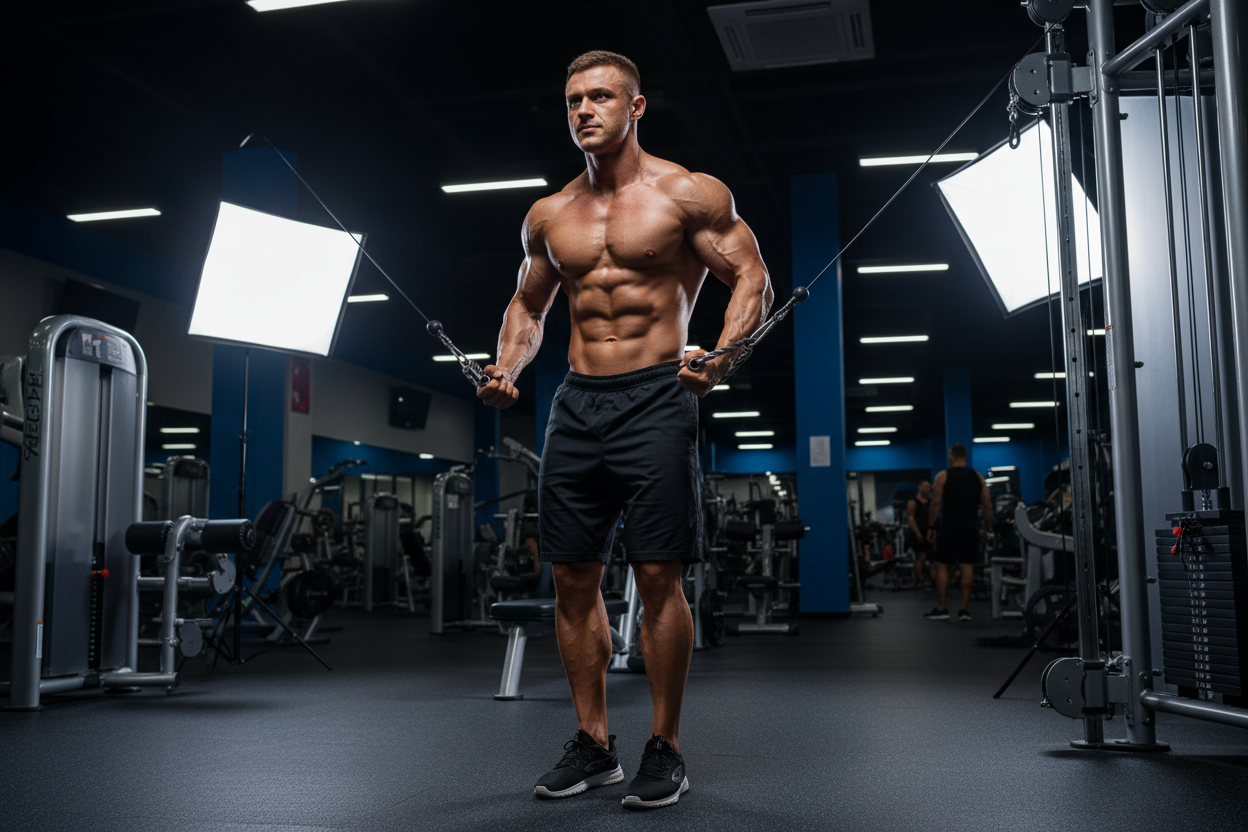
The Only Shoulder and Abs Workout You Need for a V-Taper
Most lifters treat their midsection as an afterthought, throwing in a few half-hearted crunches after a heavy chest day. This is a mistake. If you want a physique that screams power—specifically that coveted V-taper look—combining your deltoids and core into a single, high-intensity session is the most efficient path. A dedicated shoulder and abs workout doesn't just save time; it reinforces the biomechanical link between overhead stability and core stiffness.
Key Takeaways: The Core-Delt Connection
- Stability is Strength: You cannot press heavy weight overhead without a rigid core. Training them together reinforces this stability.
- Time Efficiency: Shoulders and abs are smaller muscle groups that recover relatively quickly, making them perfect candidates for supersets.
- Injury Prevention: Most shoulder injuries stem from poor posture or lack of core control during lifts. This routine fixes the root cause.
- Aesthetic Balance: Broad shoulders and a tight waist create the optical illusion of a larger frame.
Why Pair Shoulders and Abs?
Many training splits separate these groups, but functionally, they belong together. Think about the standing overhead press. It is technically a shoulder and core workout. Your deltoids move the load, but your abdominals and obliques act as the anchor.
If your core is soft, energy leaks from your kinetic chain. You lose power, and your lower back takes the brunt of the load. By explicitly pairing shoulder and core exercises, you fatigue the stabilizers in a controlled environment, leading to better hypertrophy and functional strength.
The Protocol: Supersetting for Density
We aren't just doing shoulders followed by abs. We are weaving them together. This increases the metabolic demand of the session (burning more calories) and keeps your heart rate elevated. This approach turns a standard lift into a conditioning session.
1. The Compound Foundation: Standing Military Press
Start here. Do not superset this movement. This is your heavy hitter. The standing variation forces maximum core shoulder workout engagement. Brace your abs as if you are about to be punched in the stomach before every rep.
The Science: Standing requires isometric contraction of the rectus abdominis to prevent lumbar hyperextension (arching your back). If you sit down, you rob your core of this stimulus.
2. The Width Superset: Lateral Raises & Hanging Leg Raises
Here is where we build the width. Perform a set of dumbbell lateral raises to target the medial delt. Immediately drop the weights and move to a pull-up bar for hanging leg raises.
This combination is brutal but effective. The lateral raises isolate the cap of the shoulder, while the hanging raises decompress the spine (which often gets compressed during pressing movements) while thrashing the lower abs. It is the ultimate shoulders and abs workout pairing.
3. The Posterior Chain: Face Pulls & Cable Crunches
Neglecting the rear delts leads to slumped shoulders. Pair heavy face pulls with kneeling cable crunches. This works the posterior deltoids and the upper abs simultaneously.
Focus on the mind-muscle connection here. On the face pull, imagine pulling the rope apart. On the crunch, imagine rolling your ribcage down to your pelvis. This is how you develop deep separation in the shoulder abs region.
4. The Finisher: Plank-to-Pushup
We end with a movement that is arguably one of the best shoulder and core exercises available. Start in a forearm plank, push up to a hand plank, and return to forearms. This burns out the anterior delts while forcing the core to resist rotation.
My Training Log: Real Talk
I want to be transparent about the first time I switched to a high-volume shoulders and abs split. I used to treat the overhead press as purely a shoulder move. I remember loading up 135 lbs—a weight I could easily bench—and getting it halfway up before my lower back started screaming.
It wasn't that my shoulders were weak; it was the "wobble." I felt my ribcage flaring open, and the belt I was wearing dug sharply into my oblique, leaving a bruise that lasted a week. That specific pain was a wake-up call. My core was failing long before my delts were.
Once I started super-setting hanging leg raises with my presses, the wobble vanished. Now, when I press, I feel that intra-abdominal pressure lock in tight against my waistband. It feels like I'm pressing from a concrete base rather than a canoe. If you feel your lower back taking over during shoulder day, your core is the weak link.
Conclusion
Building a V-taper isn't magic; it's geometry. You need to widen the top (shoulders) and narrow the middle (abs). By combining these into one focused session, you maximize your gym time and build a physique that is as strong as it looks. Stop skipping core, and stop isolating your shoulders from the rest of your body.
Frequently Asked Questions
Can I train shoulders and abs every day?
No. Shoulders are involved in almost every upper body movement (chest and back days included). Training them directly every day will lead to rotator cuff overuse. A dedicated shoulders and core workout is best done once or twice a week.
Is it better to do abs before or after shoulders?
Generally, train abs after your heavy compound shoulder lifts. If you fatigue your core first, you compromise your stability for the heavy overhead press, increasing injury risk. However, you can superset them with isolation movements (like lateral raises) safely.
What if my lower back hurts during overhead presses?
This usually indicates a weak core or poor mobility. Your body compensates for a lack of shoulder flexion by arching the lower back. Tighten your glutes and abs aggressively during the lift. If the pain persists, switch to seated variations while you strengthen your shoulders and abs separately.

