The Only Run Machine Gym Rats Actually Need for Their Home
I remember the first time I tried to fit a commercial-grade run machine gym owners swear by into my 10x12 spare room. It was like trying to park a Suburban in a studio apartment. I spent three hours wrestling a 400-pound beast through a doorway only to realize it required a dedicated 20-amp circuit my house didn't have. Most people think 'commercial' means better, but in a home gym, it usually just means a headache.
Quick Takeaways
- Commercial units often require NEMA 5-20R outlets—most homes use NEMA 5-15R.
- Prioritize Continuous Horsepower (CHP) over 'Peak' Horsepower every single time.
- A 60-inch deck is the gold standard for anyone over 5'10' who actually wants to sprint.
- Manual curved treadmills are the most durable running fitness equipment for unheated garages.
Why Commercial Treadmills Don't Belong in Your House
The running workout machine you use at the local health club is designed to run for 12 hours a day without stopping. That sounds great until you realize that durability comes with massive bulk. These machines often weigh between 350 and 500 pounds. Unless you have a professional moving crew or a walk-out basement, getting one inside is a nightmare.
Then there is the power issue. High-end gym running equipment often draws more current than a standard household outlet can safely provide. I have seen guys trip their breakers every time they hit 8.0 MPH because their treadmill was sharing a circuit with a space heater or a PC. For a home setup, you want a machine optimized for residential power draws that still packs a punch.
The 3 Specs That Actually Matter for Indoor Miles
Ignore the 22-inch touchscreens and the built-in fans that barely blow a breeze. When you are shopping for a machine for running, you need to look at the guts of the machine. If the motor is weak or the rollers are small, the belt will stutter every time your foot strikes the deck.
First, look at the rollers. You want at least 2.5-inch rollers. Larger rollers provide more surface area for the belt, which means less tension and a longer life for the motor. Second, check the deck length. If you are doing intervals on running workout machines, a 55-inch deck is the bare minimum, but 60 inches is where you can actually open up your stride without fear of falling off the back.
Stop Ignoring the Continuous Horsepower
Marketing teams love to brag about 'Peak Horsepower.' It is a useless stat. It represents what the motor can hit for a split second before it melts. You need to look for Continuous Horsepower (CHP). For serious runners, a 3.0 CHP motor is the baseline. If you weigh over 200 pounds or plan on doing heavy incline work, look for 3.5 or 4.0 CHP to ensure the belt doesn't lag under load.
Protecting Your Floors from a 300-Pound Beast
Even a 'small' running exercise machine is going to vibrate. If you place it directly on a hardwood floor or thin carpet, you are going to destroy your subfloor and annoy everyone in the house. The impact of a 180-pound runner hitting a 300-pound machine creates a massive amount of kinetic energy that has to go somewhere.
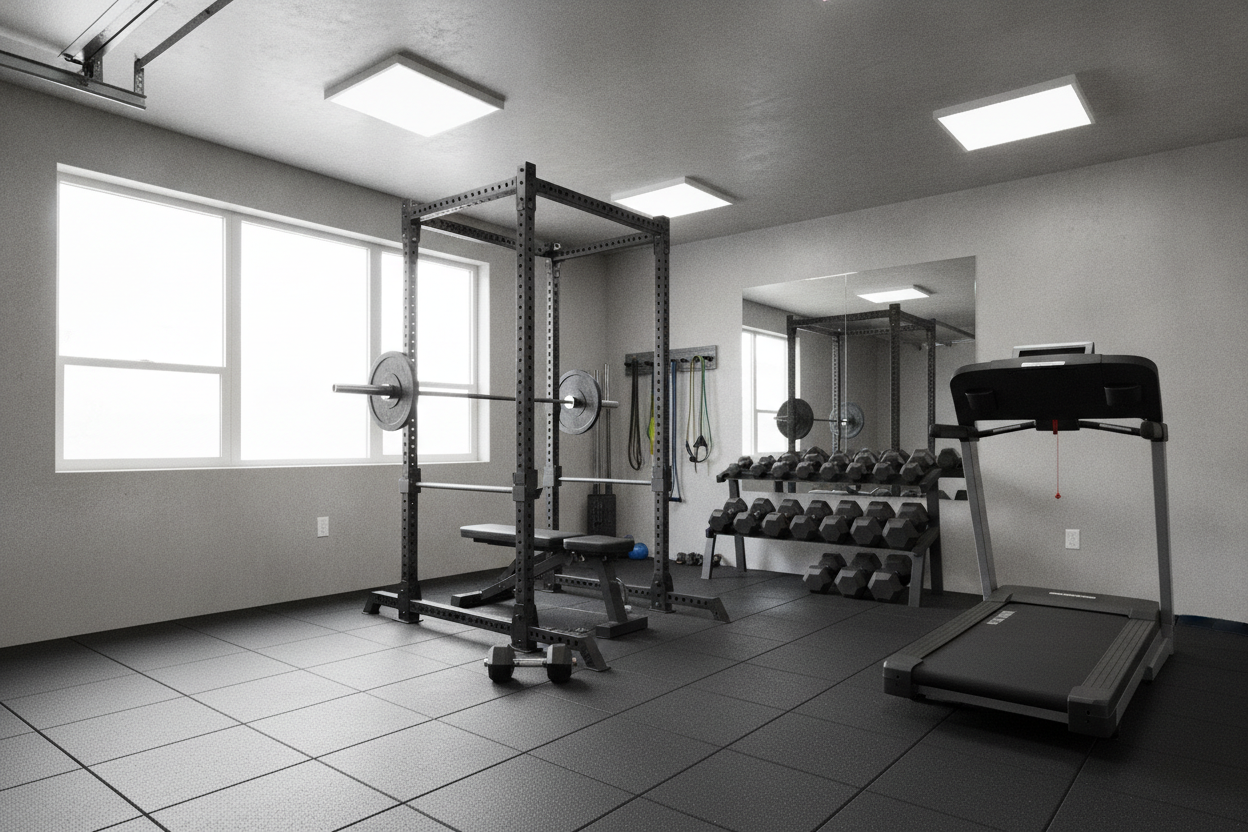
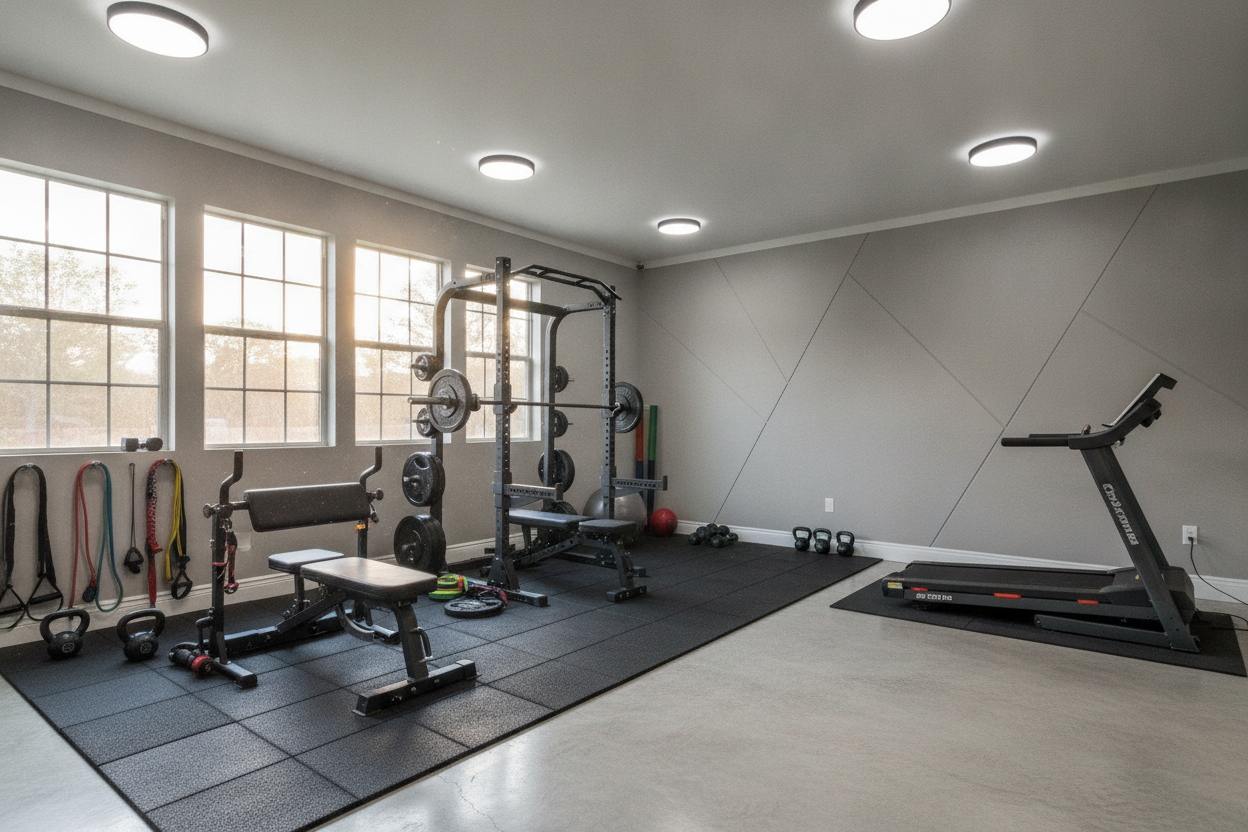
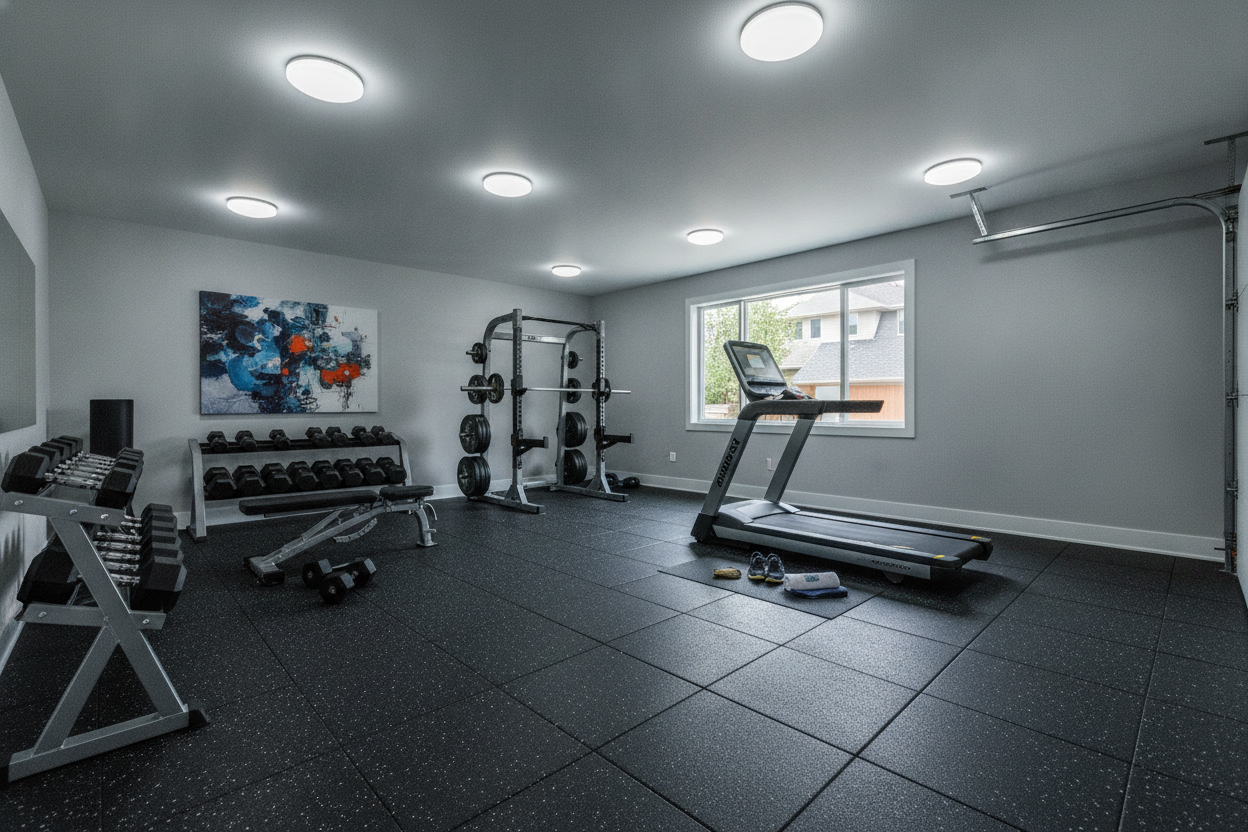
I always recommend building a solid base using high-density gym flooring for home workout. This isn't just about scratches; it is about dampening the noise. A large exercise mat for home gym use will also catch the inevitable pool of sweat that commercial-grade gym equipment for running seems to collect, preventing it from soaking into your carpet and smelling like a locker room after a month.
Manual vs. Motorized: Which Should You Choose?
If you want the most 'hardcore' runner gym machine, look at manual curved treadmills like the AssaultRunner or the Woodway. These have no motor. You are the motor. They are incredible for sprint intervals and require almost zero electrical maintenance. Plus, they don't care if your garage is freezing cold or boiling hot.
However, if you are training for a marathon and need to lock in a specific pace for 90 minutes, a motorized runner gym equipment setup is better. It forces you to keep up. Just make sure the exercise equipment for running you choose has a sturdy frame that doesn't wobble when you exceed 7.0 MPH. If the console is shaking while you run, the build quality is subpar.
My Personal Experience with Home Treadmills
I once found a 'steal' on a used commercial runner gym machine from a closing gym. I thought I won the lottery until I realized it weighed 450 pounds and wouldn't fit through my basement door. I ended up stripping the side rails just to get it into the garage. Two months later, the drive motor burned out because it was designed for 220V power and I was trying to run it on a 110V converter. I eventually swapped it for a high-end residential unit with a 3.5 CHP motor, and it has been flawless for three years. Don't overbuy for the sake of 'commercial' labels.
FAQ
Do I really need a special outlet for a treadmill?
Most residential running exercise equipment works on a standard 15-amp outlet. However, it is best to keep it on its own circuit so it doesn't compete with other high-draw appliances.
How often should I lubricate the belt?
If it is a motorized gym equipment for running, check it every 3 months or 150 miles. If the underside of the belt feels bone dry, it needs 100% silicone oil.
Are curved treadmills harder than flat ones?
Yes. Research shows you burn about 30% more calories on a manual runner gym machine because you have to physically pull the belt back with every stride.