The Only Must Have Equipment for Home Gym Spaces That Actually Gets Used
I remember walking into a buddy's garage and seeing a $2,500 treadmill acting as a very expensive coat rack for his winter parkas. It is the classic trap. We buy gear based on a version of ourselves that doesn't exist yet, usually influenced by a 30-second social media clip. Finding the actual must have equipment for home gym setups isn't about recreating a commercial health club; it's about selecting the few pieces of steel that won't let you down when you're grinding out a heavy set at 6 AM.
- Prioritize 11-gauge steel for any structural rack.
- The barbell is your most important interface; do not cheap out here.
- Adjustable dumbbells are the ultimate space-savers for small footprints.
- Analogue conditioning tools outlast anything with a motherboard.
The 'Laundry Rack' Phenomenon (And How to Avoid It)
The biggest mistake I see is 'aspirational buying.' You think you need a dedicated leg extension machine because you used one once three years ago. In a home environment, that machine takes up 15 square feet and does exactly one thing. If a piece of equipment doesn't allow you to perform at least five different movements, it’s probably going to end up covered in laundry.
A true essential must pass two tests: versatility and durability. I look for gear that handles a 500-lb load without flinching and fits within a standard 8-foot ceiling height. If it feels flimsy in the box, it will feel dangerous under a heavy squat. Stick to the basics that allow for infinite scaling as you get stronger.
The Big Three: True Must Have Equipment for Home Gym Setups
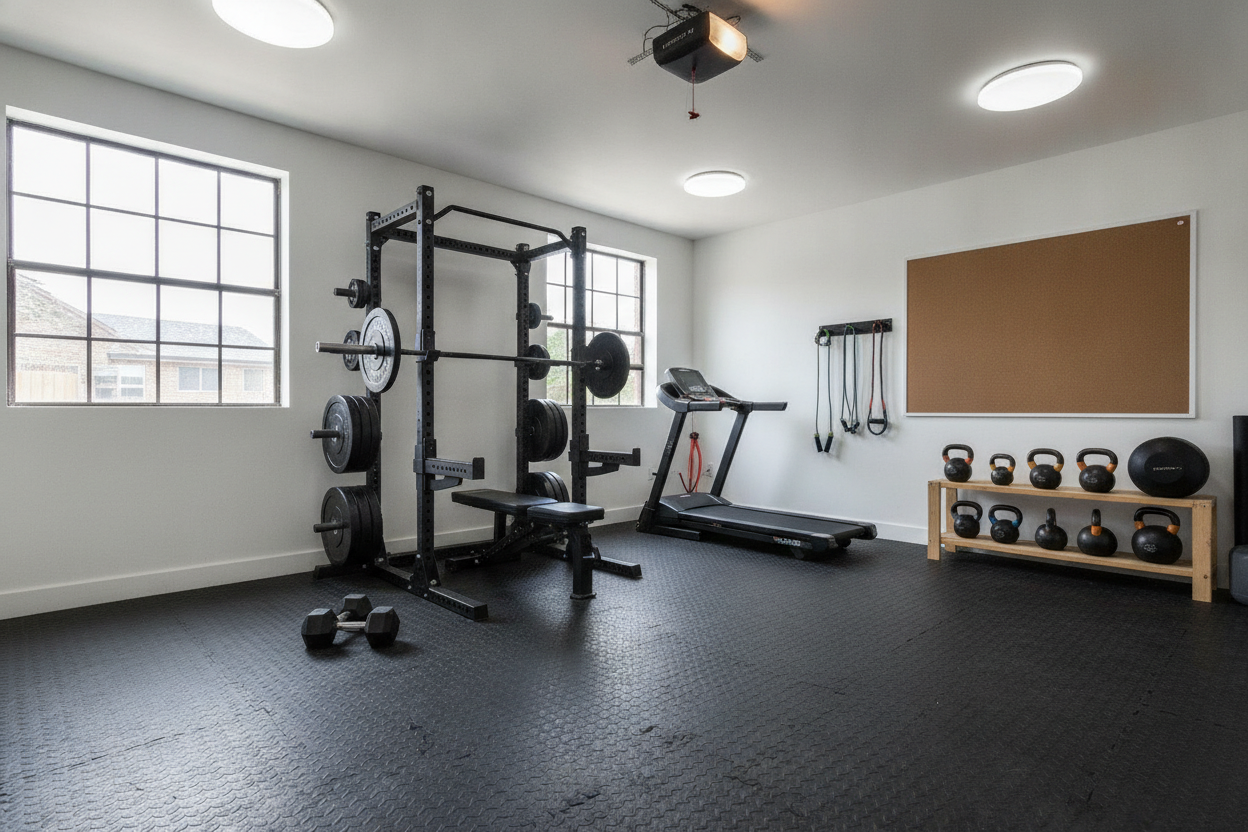
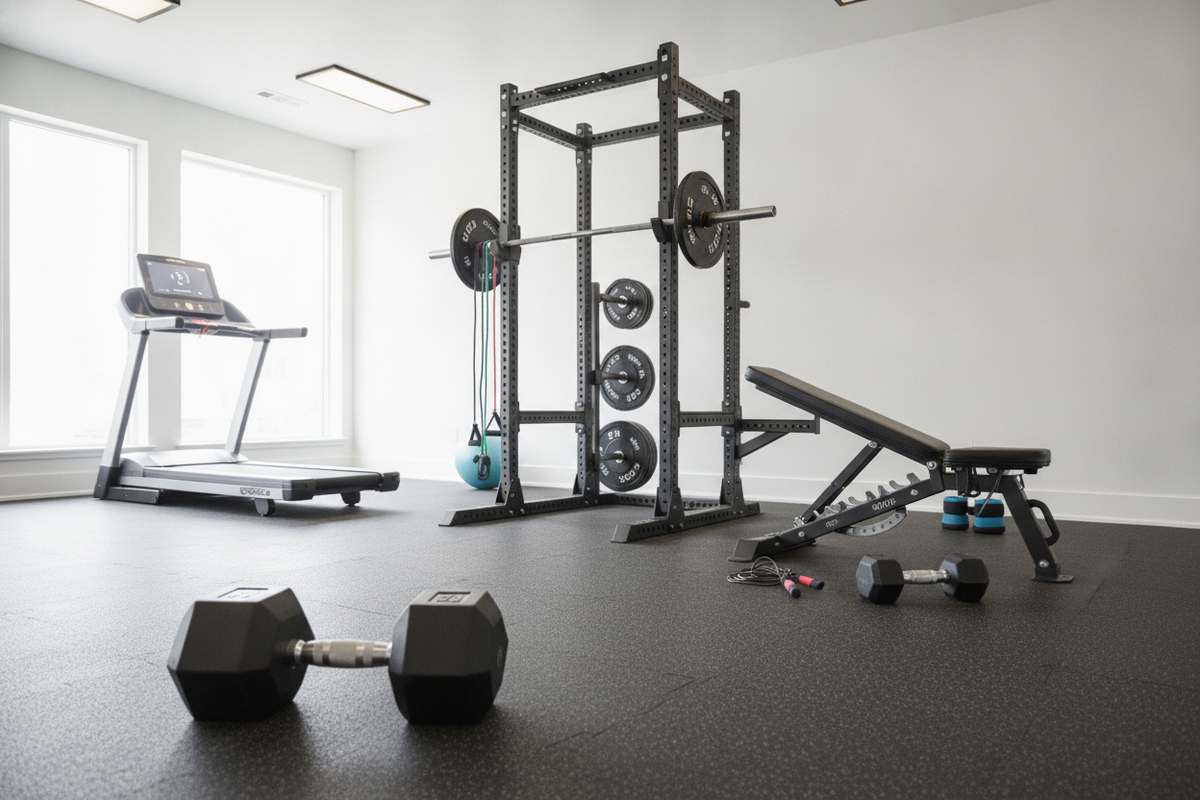
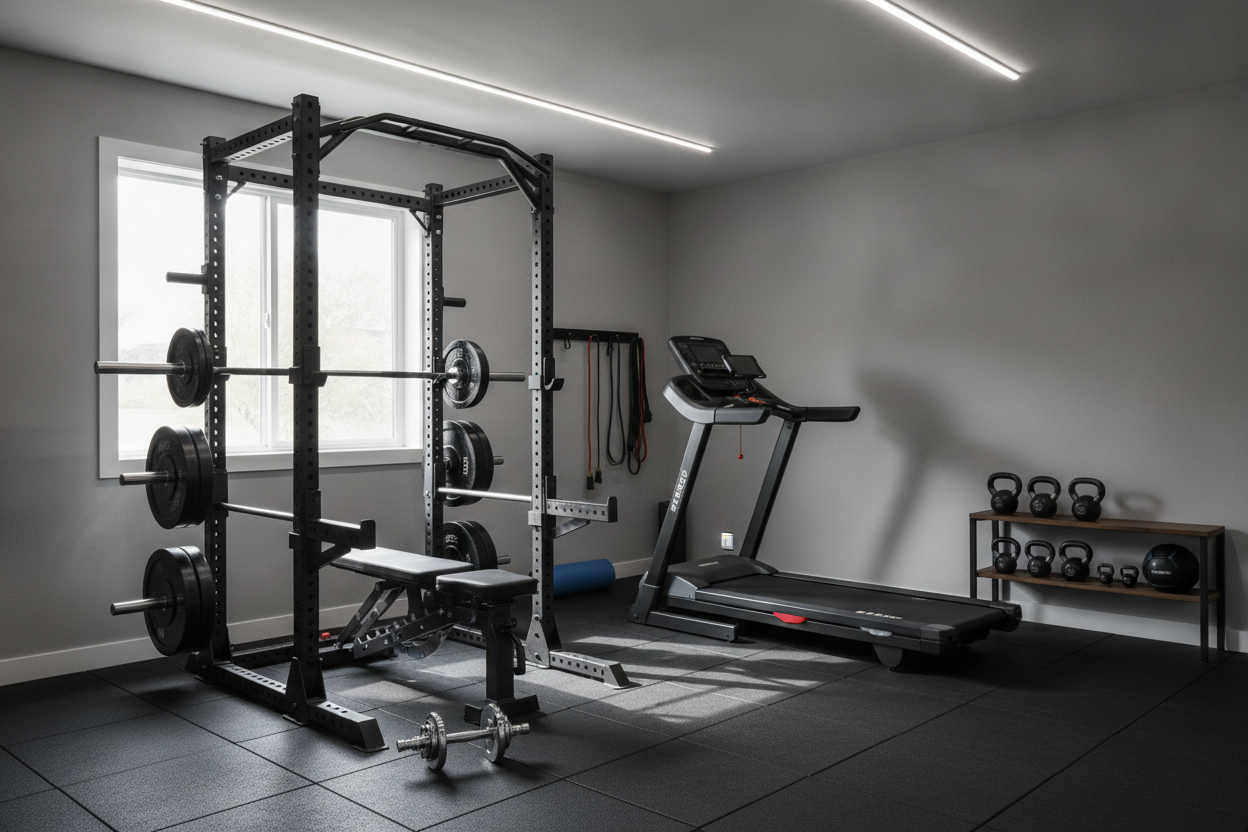
If you have a power rack, a barbell, and a bench, you have a gym. Everything else is just seasoning. I recommend a 3x3-inch, 11-gauge steel rack. It’s overkill until it isn't. When you miss a squat and those safety pins catch the weight, you'll be glad you didn't buy the thin-walled stuff from a big-box retailer.
Your barbell is where your hands meet the weight. A bar with poor knurling or a permanent bend is a workout killer. I Tested the Best Weight Equipment for Home Gym Setups (Most Failed) and the consistent theme was that cheap bars have terrible sleeves that don't spin, which wreaks havoc on your wrists. Pair a quality 20kg shaft with a rock-solid adjustable bench that doesn't wobble when you're trying to drive your shoulders into the pad.
The Best Items for Home Gym Versatility (That Won't Break the Bank)
Once the big iron is settled, you need to fill the gaps. Some of the best items for home gym setups are the ones that disappear when you aren't using them. Adjustable dumbbells are the king of this category. A pair of Loadable Olympic dumbbells or a set of PowerBlocks can replace an entire rack of fixed weights, saving you thousands of dollars and a massive amount of floor space.
I also keep a few heavy kettlebells—specifically a 24kg and a 32kg—for high-intensity finishers. They take up less than a square foot of space but offer a level of conditioning that a standard barbell can't quite match. Add a set of heavy-duty resistance bands for face pulls and tricep work, and you've effectively replaced 90% of the cable machines at a commercial gym.
Why I Tell Lifters to Skip the Fancy Cardio Machines
I get a lot of heat for this, but stop buying treadmills with built-in iPads. Those screens are obsolete in two years, and the motors are usually the first thing to fail. When you're training in a garage or basement, dust and temperature swings are the enemies of electronics. The Best Equipment for Home Gym Training Doesn't Plug Into a Wall because mechanical tools are simply more reliable.
If you want to get your heart rate up, grab a heavy sandbag or a weighted jump rope. A 100-lb sandbag carry will do more for your 'real world' fitness than thirty minutes of mindless pedaling on a plastic bike. Plus, you can drop a sandbag. Try dropping a Peloton and see what happens to your floor and your bank account.
The Spending Hierarchy: Where to Splurge vs. Where to Scrape By
You don't need a ten-thousand-dollar budget to build a world-class training space. You just need to know where the engineering matters. Splurge on the barbell and the rack. These are your safety points. If the rack collapses or the bar snaps, you're headed to the ER. Buy these new from reputable brands that use real North American or high-grade steel.
Scrape by on the plates and the storage. Iron is iron. A 45-lb plate from 1984 weighs the same as a brand-new calibrated plate for most of us. Scour local marketplaces for used cast iron. As for flooring, skip the 'fitness' tiles and go to a farm supply store for 3/4-inch horse stall mats. They are denser, cheaper, and will survive a nuclear blast.
FAQ
Is 11-gauge steel really necessary?
For a solo lifter, yes. It provides the mass needed to keep the rack from sliding or tipping when you re-rack a heavy bar. It’s about peace of mind.
Can I build a gym in a 10x10 space?
Easily. A standard power rack is roughly 4x4 feet. With a 7-foot barbell, you need about 9 feet of width to load plates. A 10x10 room is the perfect size for a dedicated lifting sanctuary.
Are bumper plates better than iron?
Only if you are doing Olympic lifts (cleans, snatches) where you drop the bar from overhead. For squats and deadlifts, iron plates are thinner, allowing you to fit more weight on the bar.