The Only Home Gym Equipment You Actually Need (From Someone Who Wasted Money on the Rest)
Setting up a home gym can save you thousands in membership fees over the years, but only if you don't blow your entire budget on equipment that'll gather dust in the corner. After helping dozens of friends build their home gyms and making plenty of expensive mistakes myself, I've learned that you don't need a warehouse full of machines to get an incredible workout at home.
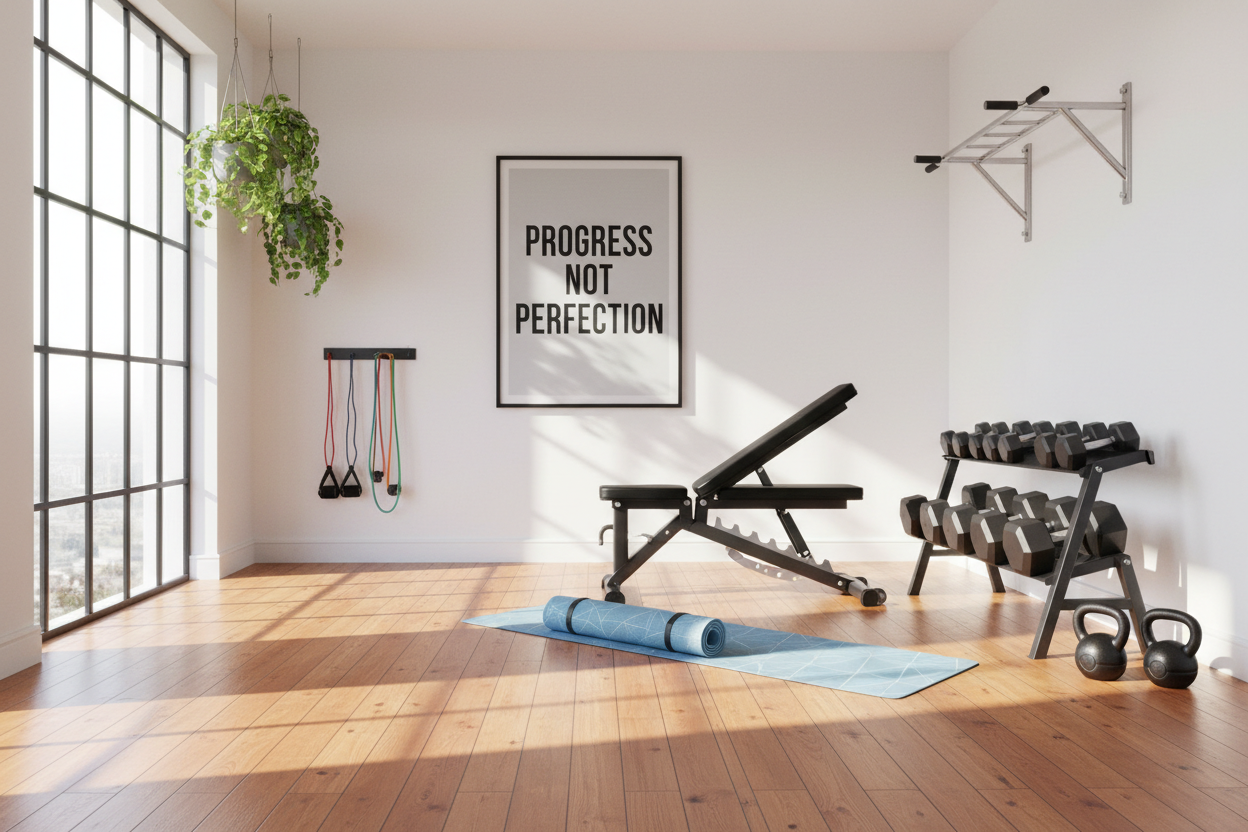
The most essential home gym equipment comes down to just a handful of versatile pieces: adjustable dumbbells, a quality barbell with weight plates, a sturdy bench, a pull-up bar, and resistance bands. These five items cover nearly every major muscle group and movement pattern your body needs. Everything else is either redundant or nice-to-have, not necessary.
The Foundation: What Equipment Do You Need for a Home Gym
When people ask me what home gym equipment do I need, I always start with the same advice: think about movements, not muscles. Your body moves in fundamental patterns—pushing, pulling, squatting, hinging, and carrying. The gym essentials equipment you choose should support these patterns rather than isolate individual muscles like commercial gym machines do.
A pair of adjustable dumbbells ranks as the single best investment for most people. They replace an entire rack of fixed-weight dumbbells, saving both money and space. I use mine for everything from goblet squats to shoulder presses, and they've been worth every penny of the initial investment. Look for sets that adjust from 5 to 50 pounds at minimum—this range covers beginners through intermediate lifters for most exercises.
The second tier of must have home gym accessories includes a barbell with bumper plates. Yes, it's a bigger investment, but barbells allow you to progressively overload compound movements like deadlifts, squats, and bench presses in ways that dumbbells simply can't match once you get stronger. I resisted buying one for months, thinking dumbbells would be enough, but my strength gains accelerated dramatically once I added barbell training.
Weight Room Essentials That Earn Their Space
An adjustable weight bench transforms your workout possibilities. Flat, incline, and decline positions open up dozens of exercise variations. Mine gets used almost daily for everything from dumbbell presses to step-ups to Bulgarian split squats. The key is finding one that's stable and doesn't wobble—cheap benches are dangerous and frustrating.
Pull-up bars deserve a spot on any list of things every home gym needs. Whether you mount one in a doorway or invest in a standalone rig, pull-ups and chin-ups build back strength that's hard to replicate with other equipment. I started with a simple doorway bar for thirty dollars, and it's still going strong years later. If pull-ups are too challenging initially, resistance bands can assist you until you build the necessary strength.
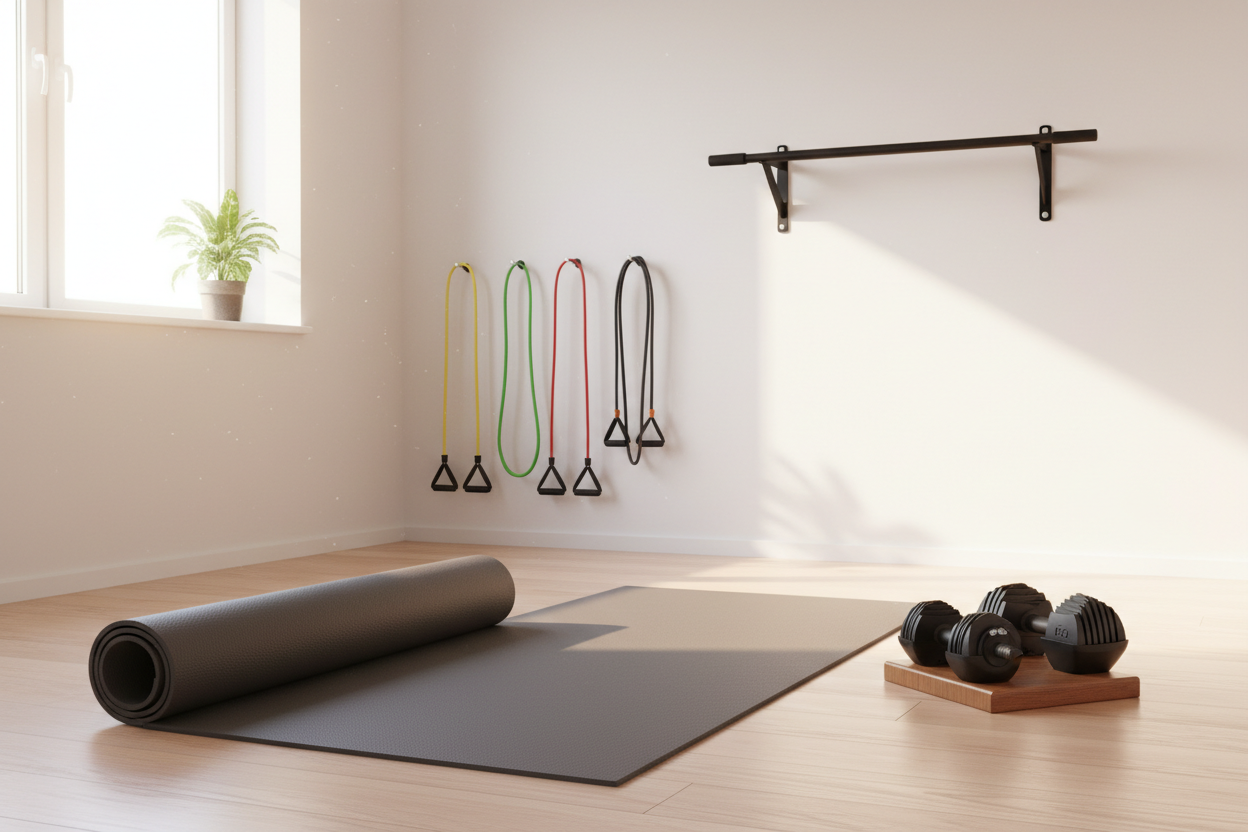
Speaking of resistance bands, these stretchy loops are among the best home gym essentials for their versatility and portability. They're perfect for warm-ups, assistance work, and exercises that require constant tension. I keep a set in my gym bag for travel and use them at home for face pulls, band pull-aparts, and adding resistance to bodyweight exercises. Get a variety pack with different resistance levels—you'll use them all.
Items in a Gym You Might Actually Skip
Here's where I save you some money: you probably don't need a treadmill, elliptical, or stationary bike unless you genuinely enjoy that type of cardio. These machines are expensive, take up massive amounts of space, and often become glorified clothing racks. Running outside is free, and if weather is an issue, a jump rope costs ten dollars and provides brutal cardio in a tiny footprint.
Specialty machines that only do one exercise are another trap. That ab roller, leg extension machine, or cable crossover system might seem appealing, but they're rarely worth the investment for home gyms. The necessary gym equipment should be versatile—each piece earning its place by serving multiple functions.
Building Your Setup Gradually
One mistake I made early on was trying to buy everything at once. My advice? Start with adjustable dumbbells and a pull-up bar. These two items alone can provide months of progressive training. Once you've established a consistent routine and understand your preferences, add the barbell and bench. Resistance bands can come anytime—they're inexpensive enough to grab whenever.
This gradual approach to acquiring things to buy for a home gym has several advantages. You'll learn what you actually use versus what seemed cool in theory. Your budget gets spread out over time instead of one massive hit. And you'll have space to store new equipment properly rather than crambling everything into a corner.
The Flooring Question Nobody Asks (But Should)
Before you buy your first weight plate, think about flooring. Dropping weights on carpet, hardwood, or tile can damage both the floor and your equipment. I learned this the hard way with a cracked plate and a dent in my floor. Rubber gym mats are inexpensive insurance that protect your investment and reduce noise. They're not glamorous, but they're absolutely among the best accessories for home gym setups.
Horse stall mats from farm supply stores offer the best value—they're thick, durable, and cost a fraction of branded gym flooring. Just be prepared for a rubber smell that takes a few weeks to dissipate. I bought six mats for under two hundred dollars, and they've handled years of dropped barbells without a complaint.
Storage Solutions Matter More Than You Think
Even a minimal home gym needs organization. Weight plate trees, dumbbell racks, or simple wall-mounted hooks keep your space functional and safe. I used to just stack plates on the floor until I nearly tripped over them during a workout. Now everything has a designated spot, making my training sessions smoother and my garage less chaotic.
A simple storage rack doesn't need to be fancy or expensive. I built mine from lumber for about forty dollars, and it holds all my plates, bars, and accessories. The point is having a system so you're not wasting workout time hunting for equipment or risking injury from clutter.
What About Cardio and Conditioning?
The best conditioning equipment for home gyms is whatever you'll actually use consistently. For me, that's a jump rope, a kettlebell, and occasionally a rowing machine I found used. Kettlebells bridge the gap between strength and cardio beautifully—swings, snatches, and Turkish get-ups provide brutal full-body conditioning in minimal space.
If you have the budget and space, a rowing machine or assault bike offers low-impact cardio that's easier on joints than running. But these are luxuries, not necessities. Bodyweight circuits, jumping rope, or even burpees (as much as we all hate them) provide excellent conditioning without equipment.
Making It All Work in Your Space
The reality of home gyms is that most of us aren't working with dedicated rooms. I train in a one-car garage that also stores tools, bikes, and seasonal decorations. The key is choosing equipment that's either compact or easy to move. My adjustable dumbbells live on a small rack, the barbell leans in a corner, and the bench folds up when not in use.
Measure your space before buying anything large. I almost purchased a power rack that wouldn't have fit through my garage door—that would have been an expensive mistake. Know your ceiling height too, especially if you're planning overhead exercises or pull-ups.
The beauty of a well-planned home gym is the freedom it provides. No commute, no waiting for equipment, no gym hours to work around. You can train in your pajamas at midnight if that's when motivation strikes. But that freedom only comes if you set up your space thoughtfully with equipment you'll genuinely use.