The Only Formula for Muscle Gain That Actually Works
I remember sitting in my garage at midnight three years ago, surrounded by half-assembled 11-gauge steel and a stack of expensive iron plates, staring at a spreadsheet that looked more like a NASA flight manifest than a lifting program. I was tracking micronutrients down to the milligram, timing my rest periods with a precision stopwatch, and obsessing over the 'anabolic window' like it was a closing stock market. I was doing everything the internet told me to do, yet my reflection in the rack’s mirror wasn't changing.
The fitness industry loves to sell you complexity because complexity is profitable. They want you to believe the formula for muscle gain is a secret guarded by PhDs and influencers with high-end lighting. It isn’t. After years of testing racks, breaking bars, and actually putting in the work, I realized that my best gains came when I deleted the spreadsheets and focused on a brutally simple equation. If you’re tired of spinning your wheels, it’s time to strip away the noise.
Quick Takeaways
- Mechanical tension is the primary driver of growth—not just moving heavy weight, but controlling it.
- Recovery is where the actual tissue is built; you cannot out-train a lack of sleep and a calorie deficit.
- A stable environment prevents 'energy leaks' that rob you of potential force production.
- Consistency over months beats intensity over weeks every single time.
Why You're Drowning in Fitness Math
Most lifters I talk to are paralyzed by over-optimization. They spend forty minutes researching the 'optimal' degree of incline for a chest fly but haven't added five pounds to their bench press in six months. They worry about whether they should take 5 grams or 10 grams of BCAAs while they’re only sleeping five hours a night. This is major-league procrastination disguised as 'science.'
The truth is that your body is a biological machine, not a calculator. It doesn't care about your rest timer if the set itself didn't provide a reason to adapt. The true formula to gain muscle mass isn't about finding a magic rep range; it’s about creating a physiological necessity for growth. When you stop treating your workout like a math exam and start treating it like a physical ultimatum, things start to happen. You don't need a PhD; you need a high-effort, low-nonsense approach that respects the basics of hypertrophy.
Variable 1: Mechanical Tension (Without the Ego)
If you want to grow, you need tension. But here is where most garage gym warriors get it wrong: they confuse 'tension' with 'absolute load.' I see guys loading up four plates on a squat rack just to move the bar three inches with a rounded back. That’s not tension; that’s a recipe for a herniated disc and a very expensive physical therapy bill. Mechanical tension is about the force applied to the muscle fibers throughout a full range of motion.
To maximize this variable, you have to take your sets close to technical failure. This means the point where you can’t do another rep with perfect form. If you’re leaving five reps in the tank every set because you’re scared of the grind, you’re leaving gains on the table. However, you don't always need to buy more plates for your workouts to increase this tension. You can slow down the eccentric (the lowering phase), add a pause at the bottom, or improve your mind-muscle connection. Loading the bar is great, but only if the target muscle is the thing actually moving the weight.
I’ve tested enough cheap bars to know that a bad knurling or a sleeve with too much friction can actually distract you from this tension. When you’re fighting the equipment, you aren't fighting the weight. Focus on quality reps where you feel the muscle stretching under load. That is the first and most important part of any muscle gain formula.
Variable 2: A Ruthlessly Efficient Routine and Recovery
The second variable is often the hardest for gear-heads like us: doing less, but doing it better. I used to think I needed to be in the gym six days a week for two hours a pop. I was living under the barbell, and I was perpetually exhausted. My central nervous system was fried, and my joints felt like they were filled with sand. I was over-training and under-recovering.
Your muscles don't grow while you're lifting; they grow while you're sleeping and eating. If you aren't in a calorie surplus and getting at least seven hours of shut-eye, the best program in the world won't save you. When I finally got smart, I realized that a condensed workout plan for muscle gain actually worked better because it allowed me to bring 100% intensity to a few key movements rather than 60% intensity to a dozen 'fluff' exercises. Stop doing four different types of lateral raises. Pick one, get strong as hell at it, and then go home and eat a steak.
Don't Let Your Setup Bleed Your Energy
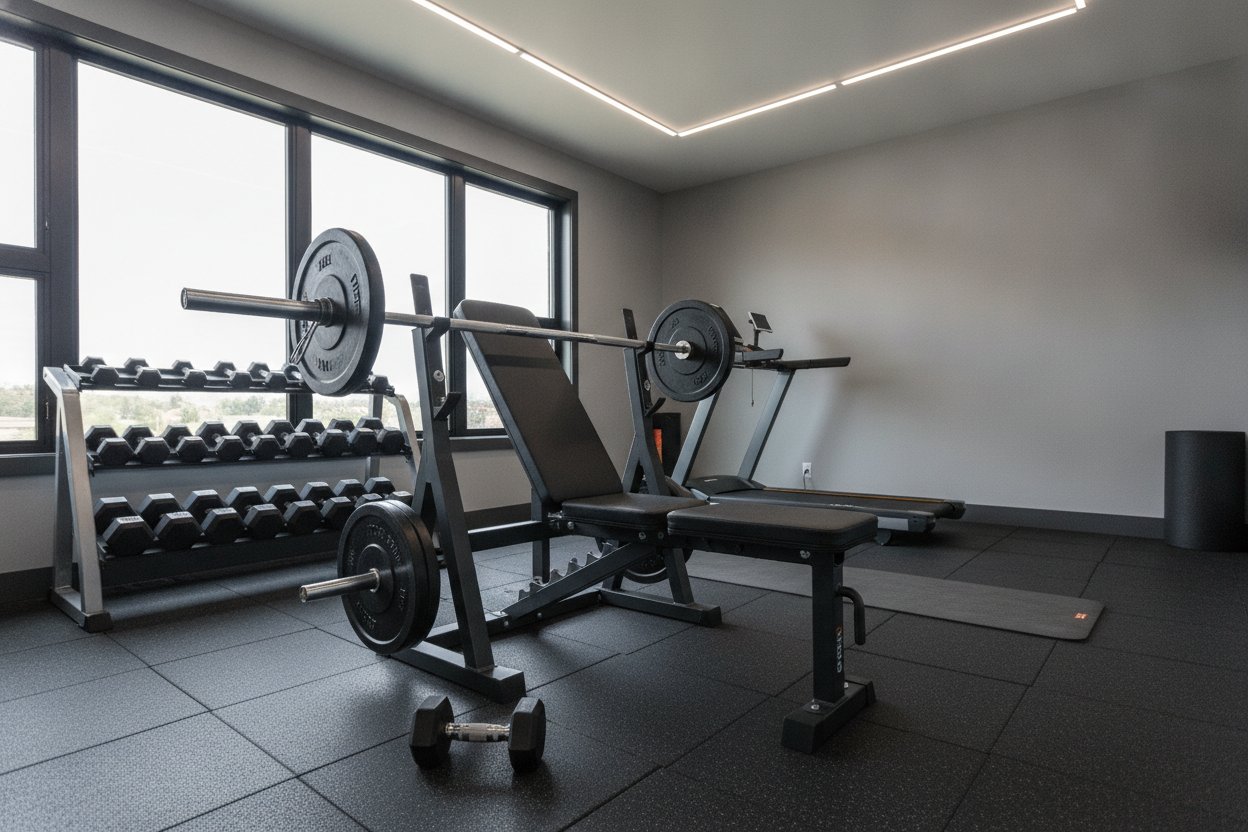
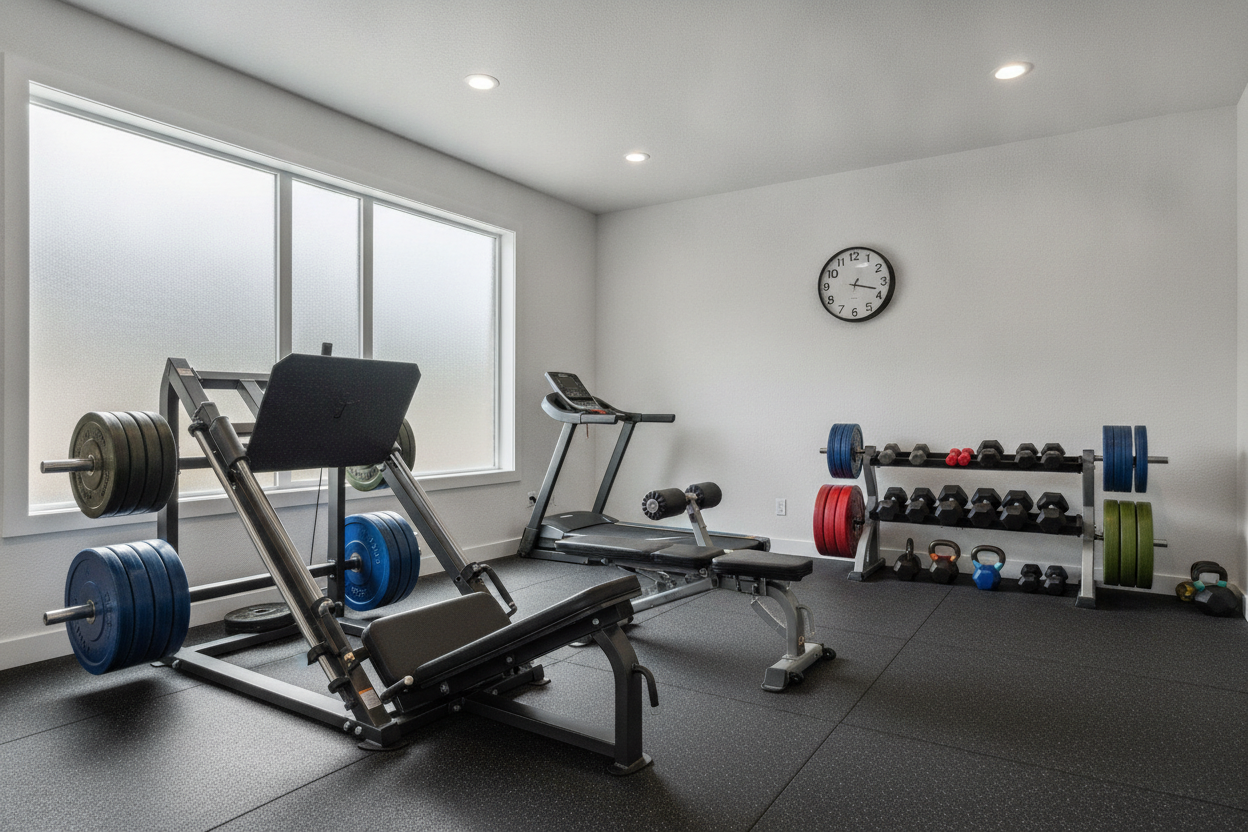
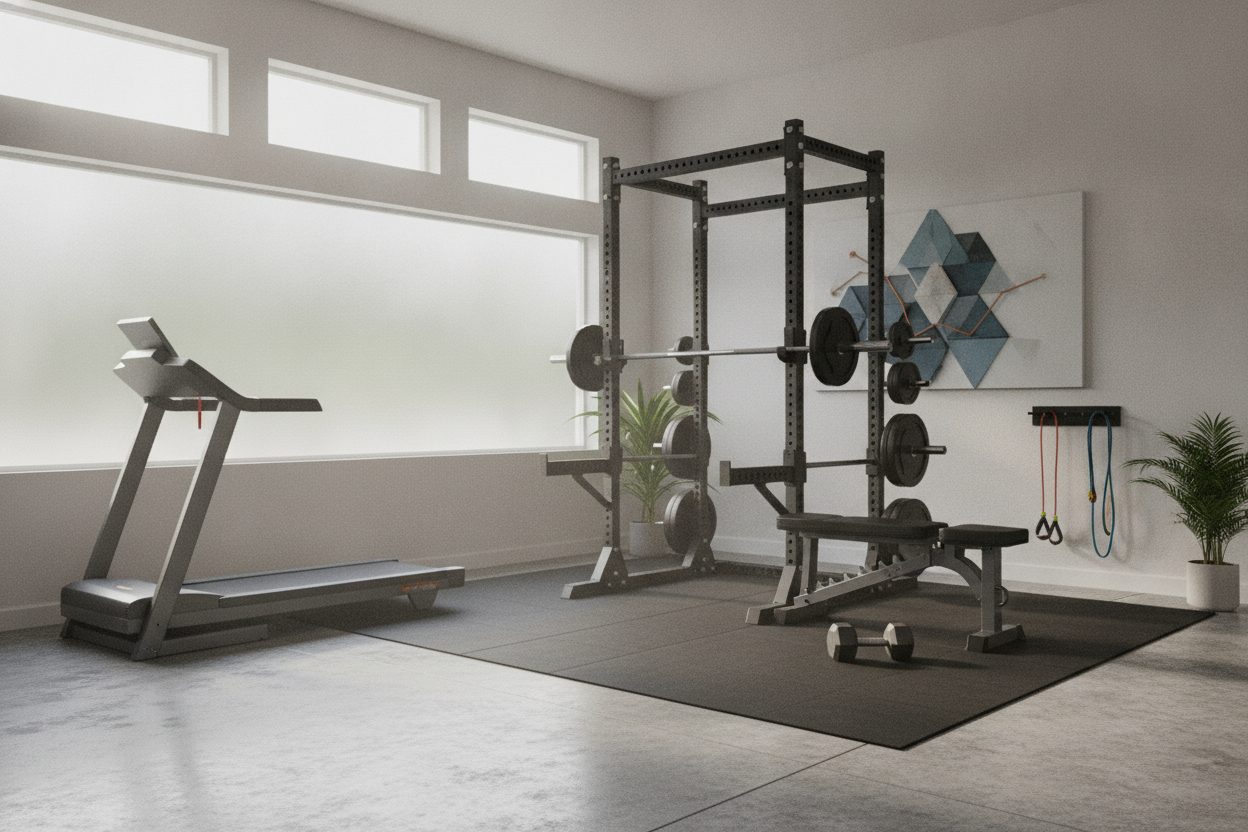
In a home gym, your environment matters more than you think. I’ve seen guys try to pull heavy deadlifts on squishy carpet or slippery concrete. This creates 'energy leaks.' If your feet are sliding or your foundation is unstable, your brain will subconsciously throttle your power output to keep you from falling over. You’re literally sabotaging your ability to apply force.
Investing in a high-quality, large exercise mat is one of those 'unsexy' upgrades that actually changes your lifting trajectory. A grippy, dense surface allows for maximum force transfer from your legs into the floor. When you feel planted and secure, you can focus entirely on the movement rather than your footing. It’s a small detail that makes a massive difference when you’re pushing toward failure on a heavy set of squats or overhead presses.
Variable 3: The Unsexy Reality of Time
We live in an era of 30-day transformations and 'get jacked fast' hacks. It’s all garbage. The biological process of building new contractile tissue is slow. Even with a perfect formula for muscle growth, a natural lifter is lucky to put on a pound or two of actual muscle tissue a month after their first year of training. Most of the 'weight' people gain in short bursts is just water, glycogen, and fat.
The real secret weapon is unbroken consistency. It’s not about the one 'epic' workout you had three weeks ago; it’s about the 150 'pretty good' workouts you do over the next year. You have to be willing to look the same in the mirror for weeks at a time while trusting the process. If you change your program every time you see a new trend on Instagram, you are resetting your progress bar to zero. Pick a proven path and stay on it until the wheels fall off.
Putting the Muscle Gain Formula Together
So, here it is: High Mechanical Tension + Sufficient Recovery + Long-Term Consistency. That is the equation. If you are missing any one of these three, the whole thing falls apart. You can have the best routine, but if you don't sleep, you won't grow. You can have the best recovery, but if you don't push your sets close to failure, you won't grow. And you can have both, but if you quit after six weeks, you definitely won't grow.
Stop looking for the magic supplement or the secret rep scheme. Focus on getting stronger in the 5-12 rep range, eat more than you think you need, and give it a year. The results will follow.
Personal Experience: My Biggest Mistake
The biggest mistake I ever made was trying to run a high-volume professional bodybuilder's split while working a 50-hour week and raising a toddler. I was doing 25 sets per body part. I looked like I didn't even lift because I was so chronically inflamed and over-reached. Once I cut my volume in half and focused on the quality of my 'top sets,' I actually started putting on size. More isn't better; better is better.
FAQ
How many days a week should I train for muscle gain?
For most people, 3 to 4 days is the sweet spot. This allows for high intensity during your sessions and plenty of days off for your nervous system to recover. Quality over quantity always wins.
Do I need to do heavy singles or triples?
Not if your goal is pure muscle growth. While strength is great, sets of 6-12 reps generally provide a better balance of tension and metabolic stress for hypertrophy without beating your joints into a pulp.
Can I gain muscle while losing fat?
If you're a beginner or returning from a long break, yes. Otherwise, it's incredibly difficult. You'll get much faster results by picking one goal and committing to it for 3-6 months.