The Only Barbell Chest Workout You Need for Serious Mass
Building a powerful, thick chest doesn't require complex machinery or a rack full of dumbbells. The classic barbell remains the king of upper body development for a reason. It allows for maximum mechanical tension, easier progressive overload, and recruits the maximum amount of muscle fibers. If you are looking to construct a routine centered on a chest workout with barbell, you are on the right path to building a physique that commands respect.
Whether you are training in a high-end commercial gym or looking for a solid home barbell chest workout, the fundamentals remain the same. You need compound movements that allow you to move heavy loads safely. This guide cuts through the noise and breaks down the most effective barbell chest exercises to help you fill out your t-shirt and increase your pushing power.
The Foundation: Flat Barbell Bench Press
No list of barbell exercises for pecs is complete without the flat bench press. It is the primary mass builder. By lying flat, you stabilize the torso, allowing the pectoral muscles to drive the weight up with assistance from the triceps and front deltoids. This is usually the exercise where you can lift the most weight, making it the cornerstone of any chest barbell workout.
Setup is everything here. Retract your scapula (pinch your shoulder blades together) to protect your shoulders and create a stable base. Plant your feet firmly on the ground. When you lower the chest exercise bar, aim for the lower part of your pecs, roughly at the nipple line. Press back up in a slight arc toward your eyes. Consistency with this movement is the fastest way to progress your chest workout with a barbell.
Targeting the Upper Shelf: Incline Barbell Press
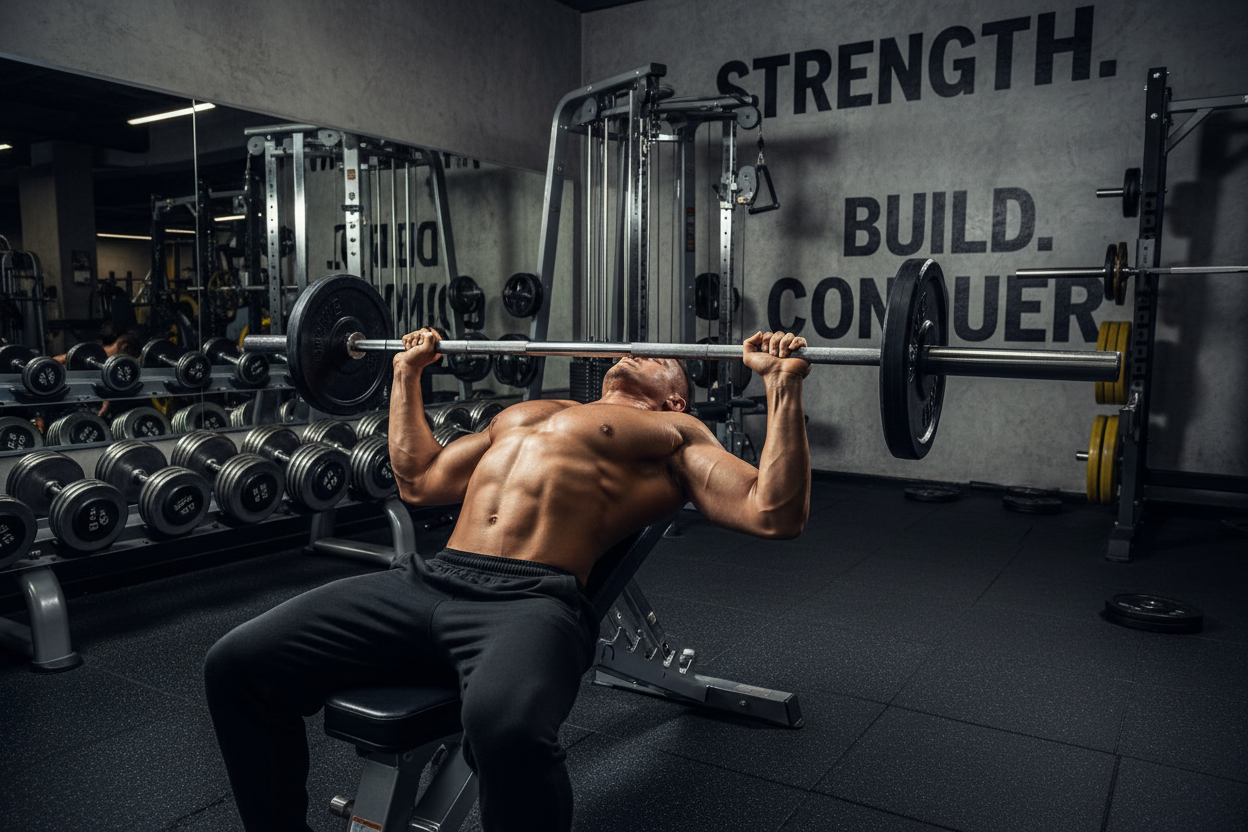
To get that "armored plate" look, you cannot neglect the upper clavicular head of the pectorals. The Incline Bench Press is the superior chest with barbell movement for this area. Set your bench to an angle between 30 and 45 degrees. Any higher, and the load shifts too much onto your shoulders.
Because of the angle, you will likely lift less weight here than on the flat bench. That is normal. Focus on a controlled descent and a powerful contraction at the top. This barbell exercise for chest fills in the gap near the collarbone, giving the chest a fuller, more aesthetic appearance.
The Floor Press: The Ultimate Home Option
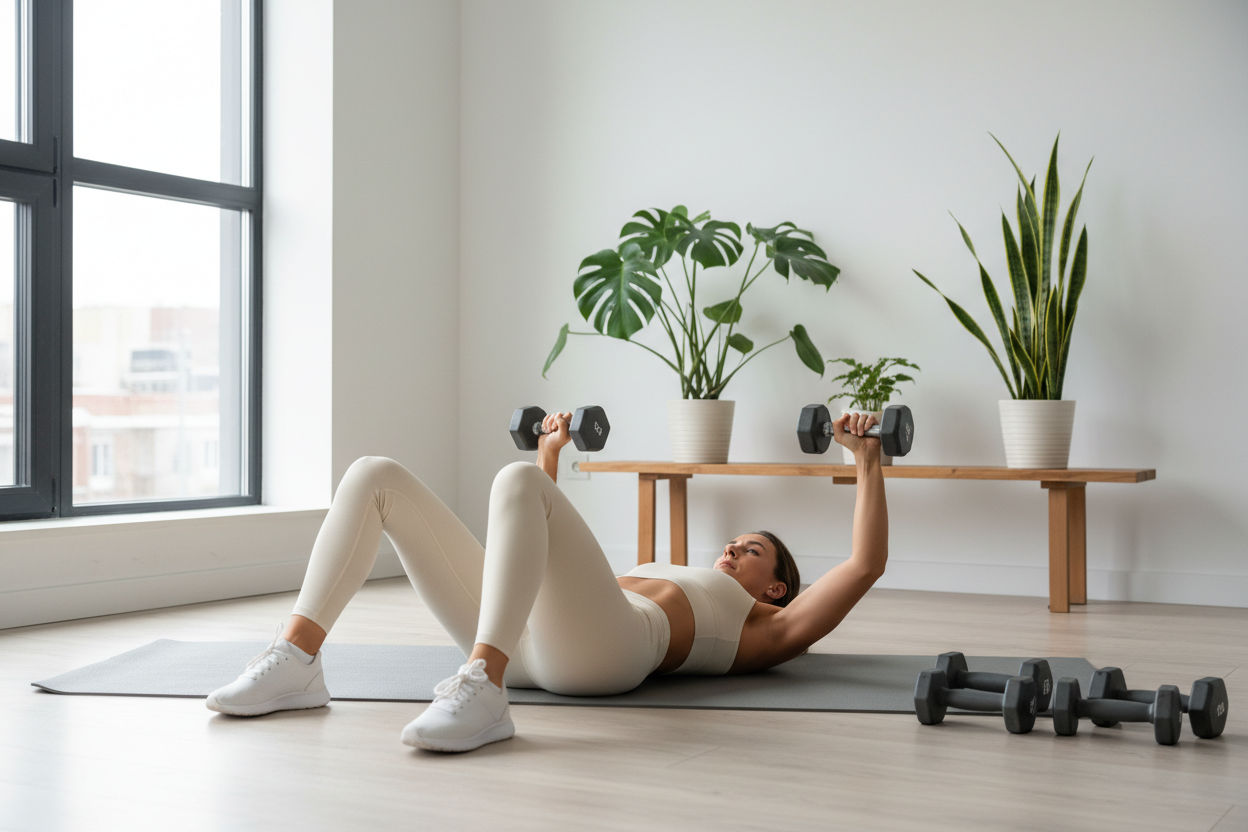
Not everyone has access to a safety rack or a spotter. If you are attempting a chest workout at home with barbell setups that lack a bench, the Floor Press is your best friend. It is an old-school powerlifting move that limits the range of motion, saving your shoulders while overloading the triceps and chest.
Lie on the floor with your knees bent. Unrack the weight (or have a partner hand it to you) and lower the bar until your triceps touch the floor. Pause for a split second to kill the momentum, then explode up. This is a fantastic chest workout bar movement for breaking through sticking points. It proves that a barbell chest workout at home can be just as intense as one in the gym.
Standing Barbell Chest Exercises: The Landmine Press
Most lifters think you have to be lying down to train pecs, but a standing barbell chest workout provides unique benefits. The Landmine Press involves jamming one end of the barbell into a corner (or a landmine attachment) and pressing the other end upwards and forwards with one or two hands.
This bar exercise for chest creates a unique pressing angle that is incredibly friendly to the shoulder joints. It emphasizes the upper chest and forces you to engage your core for stability. If you have nagging shoulder injuries that make standard benching painful, incorporating this chest workout using barbell mechanics can keep you training pain-free.
A Note From the Trenches
I spent the first three years of my lifting journey ignoring compound movements in favor of machines and cables. My chest development was practically non-existent. It wasn't until I stripped everything back and focused solely on chest exercises with a barbell that I saw real growth. I remember specifically struggling with shoulder pain during bench pressing. I thought the exercise was the problem.
It turned out my form was loose. I wasn't keeping my back tight. Once I learned to treat the chest barbell press as a full-body movement—driving with my legs and keeping my lats tight—my pain vanished, and my numbers skyrocketed. There is a raw feeling of power you get from a heavy chest workout with a bar that machines simply cannot replicate. It taught me that simplicity, executed with intensity, wins every time.
Structuring Your Routine
You don't need to do every exercise in every session. A well-structured chest barbell workout prioritizes energy management. Here is a sample routine for hypertrophy and strength:
-
Flat Barbell Bench Press: 3 sets of 5-8 reps (Focus on heavy load)
-
Incline Barbell Press: 3 sets of 8-12 reps (Focus on the stretch)
-
Landmine Press (Standing): 3 sets of 12-15 reps (Focus on the squeeze)
If you are doing a home barbell chest workout without a bench, swap the flat press for the Floor Press and use the Landmine Press for volume.
Safety and Mechanics
When performing chest exercises using barbell, safety is paramount. The bar path is dictated entirely by you, not a machine track. Always use collars on the bar to prevent plates from sliding. If you are benching heavy without a spotter, do not use clips; this allows you to dump the weights sideways if you get pinned, though this is a last resort.
Grip width matters. A wider grip on your chest exercise barbell places more stress on the pecs but also the shoulders. A narrower grip shifts focus to the triceps. For most chest barbell workouts, a grip slightly wider than shoulder-width offers the best balance of power and safety.
Final Thoughts on Barbell Training
The barbell is an unforgiving tool, but it is also the most rewarding. Whether you are performing a standing barbell chest workout or grinding out reps on the floor, the feedback is immediate. You either lift the weight, or you don't.
Focus on adding small increments of weight over time. Eat enough to support muscle growth, and prioritize sleep. By centering your routine around these proven barbell chest exercises, you will build a chest that looks powerful in a sweater and impressive on the beach. Grab the bar, get tight, and press.
Frequently Asked Questions
Can I build a big chest with only a barbell?
Yes, absolutely. A chest workout with barbell movements allows for the heaviest loads and greatest mechanical tension, which are the primary drivers of muscle growth. While dumbbells and cables are useful for isolation, the barbell is sufficient for building significant mass and strength.
How often should I do a barbell chest workout?
For most natural lifters, training chest twice a week is the sweet spot. This frequency allows you to hit different chest barbell workouts (like a heavy day and a volume day) while providing enough recovery time for the muscles to repair and grow.
What if I feel the bench press in my shoulders instead of my chest?
This usually indicates a form issue where the scapula isn't retracted, or the elbows are flaring out too wide. To fix this chest barbell exercise, pinch your shoulder blades together against the bench and tuck your elbows slightly toward your ribcage as you lower the bar.