The Only 7 Pieces of Equipment You Actually Need for a Home Gym That Works
You don't need to spend thousands of dollars or turn your spare bedroom into a commercial fitness center to get an effective workout at home. The truth is, most people who build elaborate home gyms end up using only a fraction of their equipment regularly. After helping dozens of friends set up their workout spaces and maintaining my own home gym for the past several years, I've learned that simplicity wins every time.
The essentials for at home gym success come down to versatility, durability, and actual usage. If you're going to invest in equipment, it needs to serve multiple purposes and fit naturally into your routine. Let me walk you through what actually matters.
Resistance Bands: Your Most Versatile Investment
If I could only recommend one piece of simple equipment for home exercise, it would be a quality set of resistance bands. These unassuming loops of latex or fabric can replace an entire rack of dumbbells while taking up less space than a shoebox. You can perform over a hundred different exercises with them, from bicep curls and shoulder presses to squats and deadlifts.
The beauty of resistance bands lies in their progressive tension. Unlike free weights where gravity dictates the resistance, bands create increasing tension throughout the movement, challenging your muscles differently. I keep a set hanging on my bedroom door, and that accessibility means I actually use them during short breaks throughout the day.
Look for a set that includes multiple resistance levels, door anchors, and handles. The investment typically runs between $30 to $60 for a comprehensive set that will last years with proper care.
Adjustable Dumbbells: The Space-Saving Powerhouse
Among the at home gym equipment essentials, adjustable dumbbells rank near the top for anyone serious about building strength. Traditional dumbbell sets require enormous amounts of space and money, but adjustable versions condense 10-15 pairs of weights into a single compact unit.
These aren't the clunky spin-lock dumbbells your dad had in the garage. Modern adjustable dumbbells use quick-change mechanisms that let you switch from 5 pounds to 50 pounds in seconds. This efficiency keeps your workout flowing without long breaks between exercises.
The price point can seem steep initially—quality adjustable dumbbells range from $200 to $500—but compare that to buying individual pairs of dumbbells at $1-2 per pound. You'll break even quickly while saving floor space.
A Reliable Exercise Mat
Don't underestimate this foundational piece of workout equipment you need at home. A good exercise mat transforms any floor into a comfortable workout surface for yoga, stretching, core work, and bodyweight exercises. Beyond comfort, it protects your flooring from sweat and provides grip for stability during planks, push-ups, and other floor exercises.
Choose a mat that's at least 6mm thick for adequate cushioning. Extra-long mats (around 72 inches) accommodate taller individuals and provide more space for dynamic movements. I learned this lesson the hard way when my first cheap mat would bunch up during burpees and slide across my hardwood floor during mountain climbers.
Jump Rope: Cardio Without the Footprint
For cardio that doesn't require a treadmill or stationary bike, a jump rope delivers incredible results in minimal space. This is genuinely must have exercise gear for anyone looking to improve cardiovascular fitness, coordination, and burn serious calories.
Ten minutes of jumping rope can burn as many calories as 30 minutes of jogging, and you can do it in your garage, basement, or even outside. Modern speed ropes with adjustable lengths and comfortable handles cost between $10 and $30.
The learning curve might frustrate you initially if you haven't jumped rope since elementary school, but stick with it. Start with 30-second intervals and gradually build your endurance.
Pull-Up Bar: Upper Body Development Made Simple
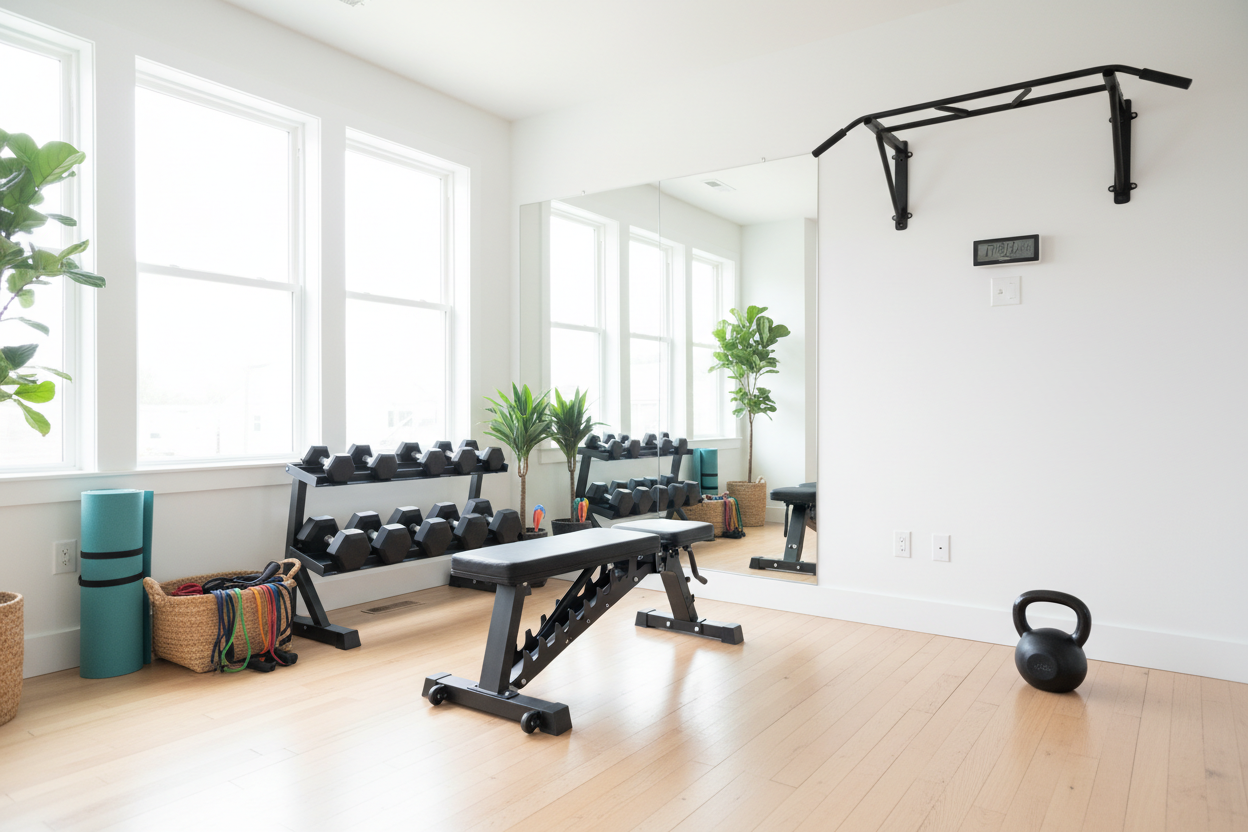
The gym at home essentials list wouldn't be complete without a pull-up bar. This single piece of equipment targets your back, biceps, shoulders, and core more effectively than almost any other exercise. Doorway-mounted pull-up bars install without permanent hardware and cost between $25 and $50.
Can't do a pull-up yet? That's fine. Use the bar for dead hangs to build grip strength, negative pull-ups to develop the necessary muscles, or pair it with resistance bands for assisted pull-ups. The bar also serves as an anchor point for suspension trainers and resistance bands, multiplying its utility.
Foam Roller: Recovery Equipment That Pays Dividends
Recovery deserves equal attention to the workout itself, making a foam roller one of the essentials for at home workout routines. This cylindrical piece of foam helps release muscle tension, improve flexibility, and reduce soreness through self-myofascial release.
I used to skip foam rolling, thinking it was optional. Then I started experiencing persistent lower back tightness and hip discomfort. Five minutes of daily foam rolling made a noticeable difference within a week. Now it's as much a part of my routine as the workout itself.
Standard foam rollers cost $15-30 and last for years. Textured or vibrating rollers offer additional benefits but aren't necessary for beginners.
Kettlebell: The All-in-One Strength and Cardio Tool
Rounding out the at home workout essential equipment is a single kettlebell. This cast-iron weight with a handle enables hundreds of exercises that build strength, power, and endurance simultaneously. Kettlebell swings alone provide a full-body workout that elevates your heart rate while strengthening your posterior chain.
For most people, a 35-pound kettlebell (men) or 20-pound kettlebell (women) serves as an excellent starting point. As you progress, you might add one heavier and one lighter weight to your collection, but a single kettlebell provides tremendous value.
The compact footprint means you can store it in a closet or under a bed. The cost ranges from $30 to $100 depending on quality and weight.
Building Your Home Gym Strategically
You don't need to buy everything at once. Start with one or two pieces that align with your current fitness goals and gradually expand your collection. I started with just resistance bands and a mat, adding equipment every few months as I identified genuine gaps in my training.
The total investment for these seven items runs approximately $400-800, which might seem significant until you compare it to a year of gym memberships, gas money, and time spent commuting. More importantly, this simple equipment for home exercise removes every excuse. No more skipping workouts because the gym is crowded or the weather is bad.
Quality matters more than quantity. One well-made kettlebell will outlast five cheap ones. Read reviews, check weight limits, and buy from reputable manufacturers. Your equipment should last years, making the cost-per-use incredibly low.
The effectiveness of your home gym depends less on what you own and more on how consistently you use it. These seven pieces provide everything necessary for strength training, cardio, flexibility, and recovery. They accommodate beginners and challenge advanced athletes. Most importantly, they'll actually get used instead of becoming expensive clothes hangers.
FAQ
How much space do I really need for a functional home gym?
You can create an effective workout space in as little as 6x6 feet. The equipment listed above stores in a closet or corner when not in use, and you only need enough floor space to lie down with arms extended. A spare bedroom, garage corner, or even a living room can work perfectly.
Should I buy used equipment or always buy new?
Dumbbells, kettlebells, and pull-up bars are excellent candidates for buying used since they're nearly indestructible. However, resistance bands, mats, and foam rollers degrade over time and with use, so buying new ensures proper performance and hygiene. Check local marketplaces for deals on weights, but invest in fresh bands and mats.
Can I really get the same results at home as I would at a commercial gym?
Absolutely. Muscle growth and fitness improvements come from progressive overload and consistency, not from expensive machines. These basic tools provide enough resistance and variety to challenge any fitness level. The convenience of home workouts often leads to better consistency, which matters more than having access to dozens of machines you rarely use.