The Only 4-Day Workout Routine for Mass You Need at Home
I remember the day I finally cancelled my commercial gym membership. I was tired of paying $60 a month to wait for a squat rack while some guy in a stringer tank top spent twenty minutes taking selfies. I moved my training to the garage, bought a used barbell, and quickly realized that my workout routine for mass didn't need twenty different cable machines to actually produce results.
The truth is, most people overcomplicate hypertrophy. They think they need 'muscle confusion' or a dozen different angles for their lateral delts. In reality, you need a handful of heavy movements, a way to track your progress, and enough food to fuel the fire. This is about stripping away the fluff and getting back to the basics that actually build tissue.
Quick Takeaways
- Focus on big, multi-joint compound movements to maximize mechanical tension.
- Four days a week is the sweet spot for balancing high intensity with full recovery.
- Prioritize progressive overload—if you aren't adding weight or reps, you aren't growing.
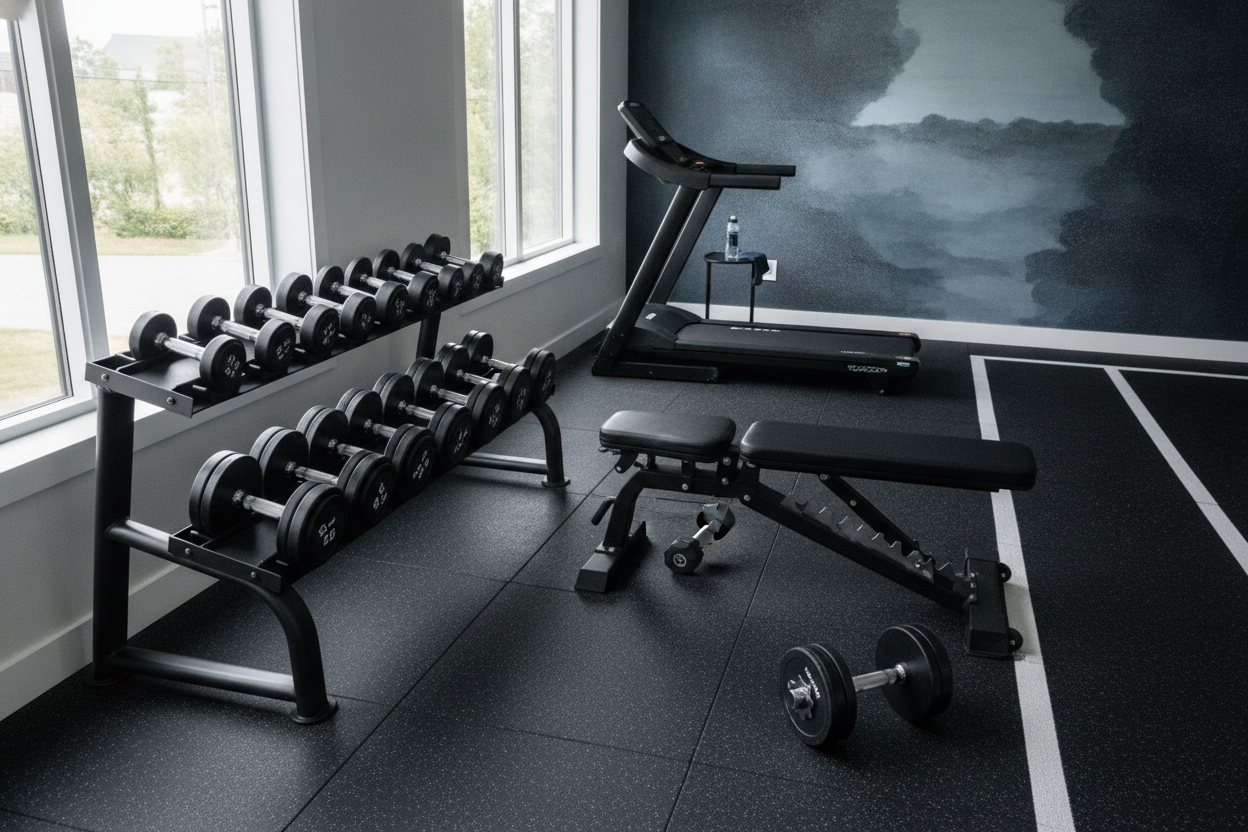
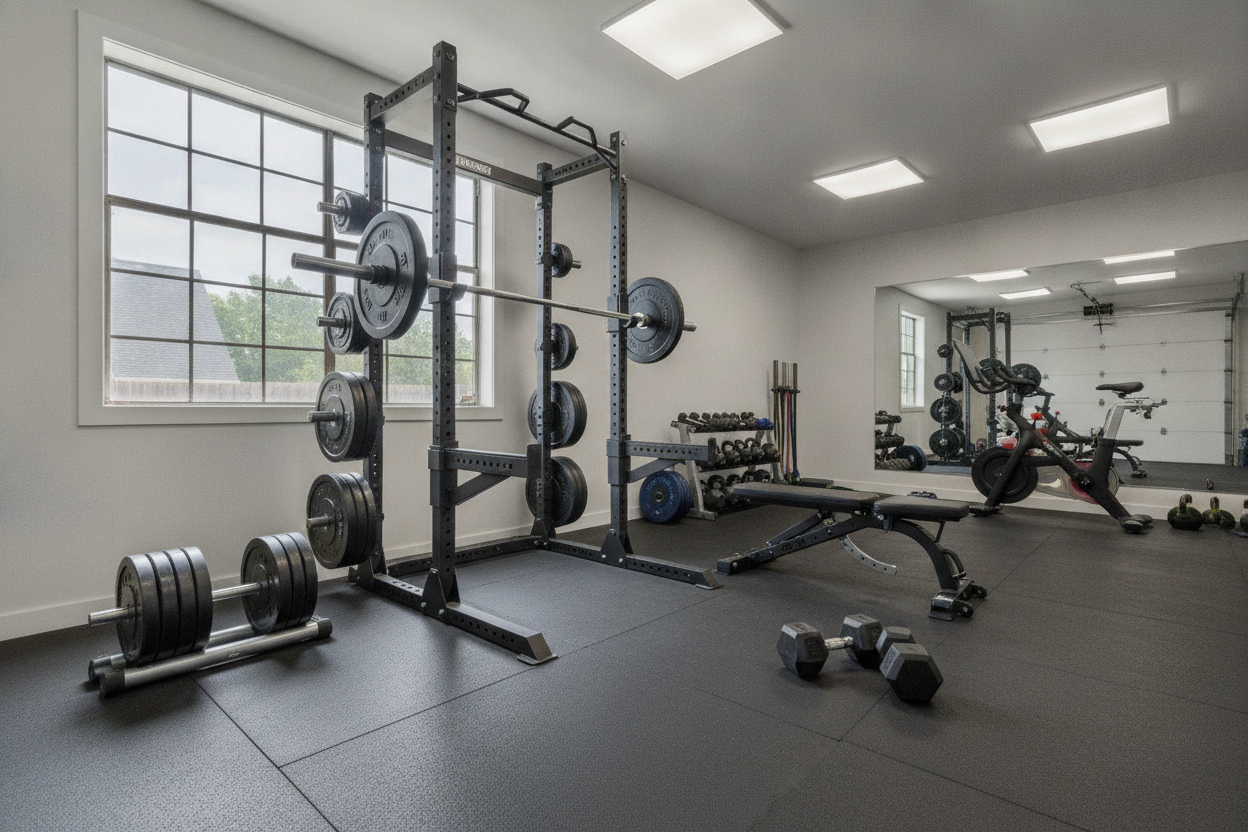
- Keep your home gym setup simple: a rack, a barbell, and some floor space are all you need.
The Commercial Gym Trap vs. The Home Gym Reality
Most 6-day body part splits you find online are designed for people with access to a $500,000 inventory of specialized machines. When you're training at home, trying to replicate a 'Chest and Triceps' day with just a bench and some dumbbells often leads to a lot of junk volume. You end up chasing a pump because you can't create enough raw tension.
In a garage gym, we trade variety for intensity. Instead of doing four different types of flyes, we get really good at pressing heavy. Mechanical tension—stretching a muscle under a heavy load—is the primary driver of growth. When you stop worrying about 'confusing' the muscle and start worrying about adding 5 pounds to the bar, you'll see why a simple workout routine to get big is often the most effective one.
The Core Rules of a Workout Plan to Get Bigger
To make a workout plan to get bigger actually work, you have to follow a few non-negotiable rules. First, you must prioritize multi-joint movements. Think squats, presses, and rows. These allow you to move the most weight and recruit the most motor units. Second, you need to standardize your rest periods. Resting for 90 seconds one day and 4 minutes the next makes it impossible to track if you're actually getting stronger.
Fatigue management is the other side of the coin. If you're constantly red-lining your central nervous system, you'll stall out in three weeks. You can find more detailed programming templates and equipment deep-dives in our Workout Hub once you've mastered these fundamentals.
Why Less Volume Actually Equals More Tissue
The biggest mistake I see is the 'more is better' mentality. If you do 10 sets of mediocre bench press, you're just making yourself tired, not bigger. Three hard sets taken close to technical failure are worth more than a dozen sets where you're just going through the motions. You need to Stop Lifting to Failure in Your Workout to Get Big every single session, because leaving one or two reps in the tank allows you to recover faster and hit the same muscle group again sooner.
The 4-Day Bare-Bones Workout Routine for Mass
This routine follows an Upper/Lower split. You’ll train two days on, one day off, two days on, two days off. This ensures every muscle group gets hit twice a week, which is the gold standard for hypertrophy. Before you start loading the bar, make sure you have a stable surface. I use a heavy-duty gym flooring for home workout setup to ensure my feet don't slide during heavy squats and my foundation doesn't crack when I set the bar down.
Upper Body Days: Pushing Heavy and Pulling Strict
On Upper days, we focus on the big three: a horizontal press, a vertical press, and a heavy pull. Start with the Barbell Overhead Press. It builds massive shoulders and a stable core. Follow that with weighted dips or close-grip bench press. For the back, stick to strict Barbell Rows. No body momentum—just raw pulling power. Keep your sets in the 6-10 rep range for the main lifts and 10-15 for the accessories.
Lower Body Days: Squats, Hinges, and Grit
Lower body days are where the real growth happens. We lead with the Back Squat or Front Squat. If you have lower back issues, the Front Squat is a godsend for quad development. Follow this with Romanian Deadlifts to target the hamstrings and glutes. Finish the session with loaded carries. Walking 50 yards with the heaviest dumbbells you can hold will build a level of 'farm boy strength' and trap density that no cable machine can match.
Consistency Is the Ultimate Mass Builder
You can have the most scientifically optimized program in the world, but if you skip your Friday leg session because you're tired, you won't grow. The hardest part of training at home isn't the lack of equipment; it's the proximity to your couch. You have to learn how to get into a workout routine at home and treat your garage like a sanctuary, not just an extension of your living room.
Personal Experience
I spent two years trying to follow a high-volume 'pro' split in my 200-square-foot garage. I was doing 25 sets per workout and wondering why my joints hurt and my weight wasn't moving. The turning point was when I cut my volume in half and focused entirely on the weight on the bar. My squats went from a shaky 225 to a solid 315 for reps, and my frame finally filled out. My biggest mistake was thinking I could out-work a bad plan. You can't.
FAQ
Do I need a power rack for this routine?
Yes. For heavy squats and presses, a rack is a safety requirement. If you're training alone at home, you need those spotter arms to catch the bar if you hit a wall.
Can I build mass with just a barbell?
Absolutely. Some of the biggest physiques in history were built with nothing but a barbell and heavy plates. Machines are a luxury, not a necessity.
How long should I rest between sets?
For the big compound lifts, rest 2-3 minutes. You want your breathing to recover so your lungs aren't the limiting factor in your next set. For smaller accessory moves, 60-90 seconds is plenty.