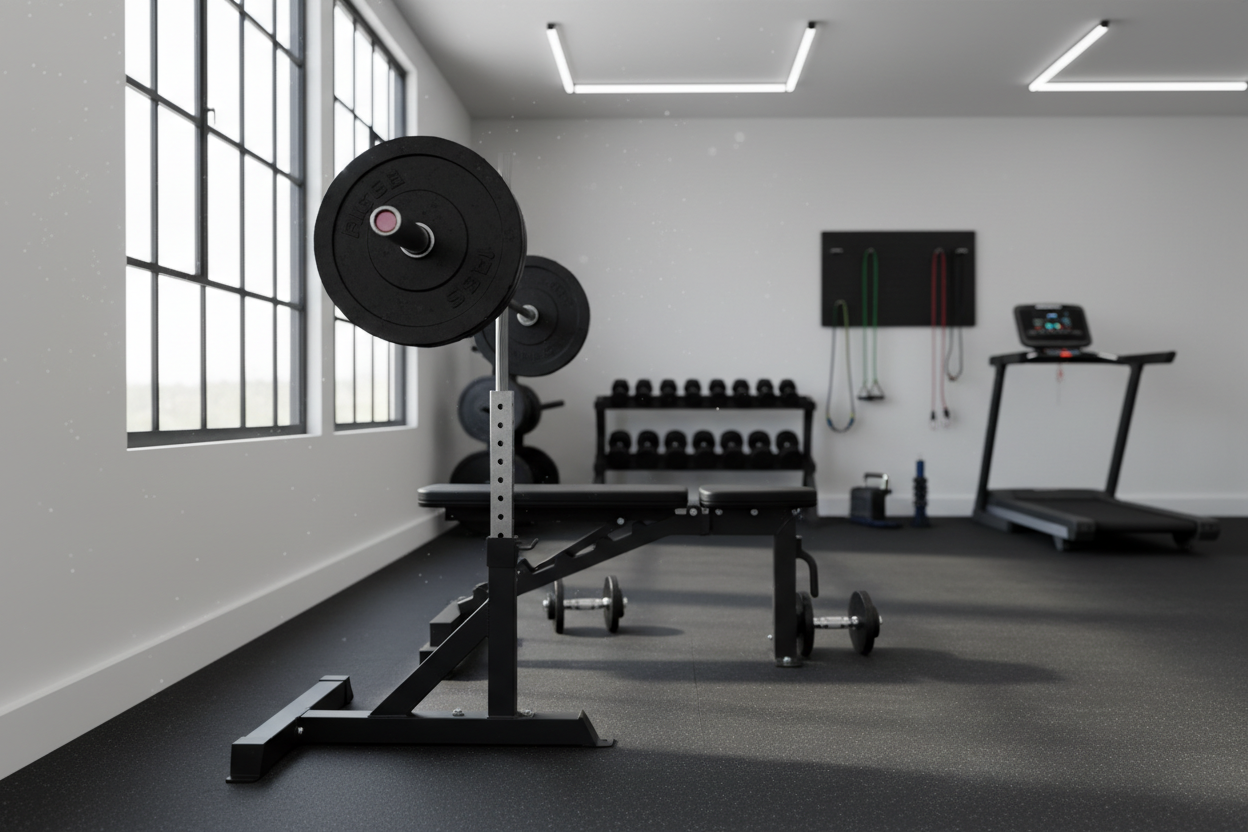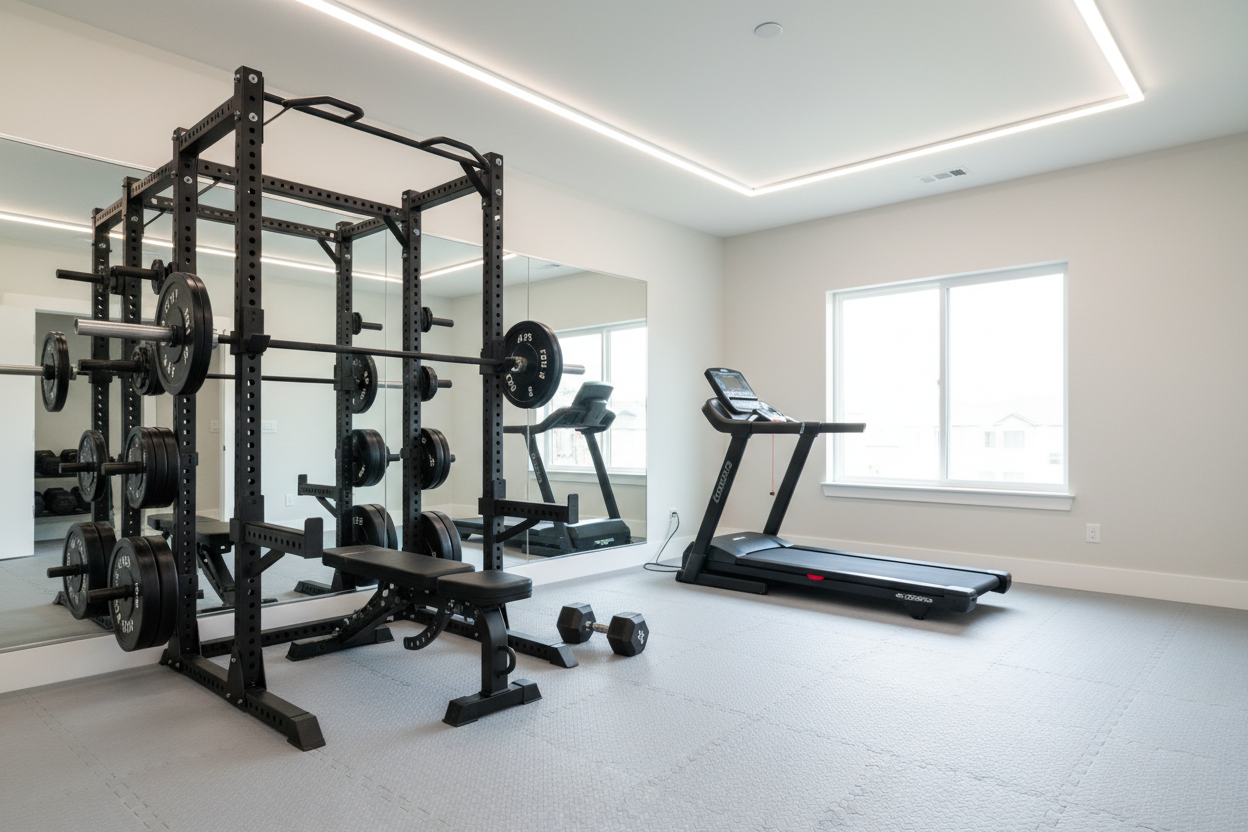
The Only 3 Bodybuilder Splits That Work in a Basic Home Gym
I remember standing in my garage three years ago, staring at a single barbell and a pair of adjustable dumbbells that topped out at 50 pounds, trying to figure out how to run a pro-level 'Arm Day.' It was a disaster. I spent 90 minutes doing seven different types of curls because that is what the magazine told me to do. By the end, my biceps weren't bigger; I was just bored and my elbows hurt.
Most bodybuilder splits you find online are designed for people with access to a 15,000-square-foot commercial gym filled with $5,000 isolation machines. When you try to force those routines into a garage gym, you end up with 'Bro-Split Bankruptcy.' You're doing too much junk volume with limited tools and waiting too long between sessions to actually grow.
Quick Takeaways
- Stop training one muscle group per day; you don't have the machines to make it effective.
- Frequency is king in a home gym—hit muscle groups at least twice a week.
- Prioritize compound movements (Squats, Presses, Rows) over endless isolation.
- Focus on progress, not the 'pump' from fifteen different cable fly variations.
Why the Classic 5-Day 'Bro Split' Fails in a Garage
The traditional bodybuilding split routine—Chest Monday, Back Tuesday, Shoulders Wednesday, and so on—relies on variety. In a commercial gym, you can hit chest from six angles using a Pec Deck, a Hammer Strength press, and a cable crossover. In a home gym, you usually have a bench and some dumbbells. If you try to do a 5-day split at home, you end up doing 'junk volume.' You’re just repeating the same movement pattern because you ran out of equipment options.
This creates a massive gap in frequency. If you only hit your back on Tuesday, you're waiting 168 hours before you stimulate those fibers again. Unless you are using 'chemical assistance' or have world-class recovery, that’s not enough. Full Body Training Routine Why Split Workouts Are Failing You if you're stuck in the mindset that more days equals more gains. Consolidating your work into fewer, more intense sessions is the real secret to home hypertrophy.
Split 1: The Push/Pull/Legs (PPL) Workhorse
The PPL is arguably the best training split bodybuilding enthusiasts can run in a power rack. It’s simple: one day you push (chest, shoulders, triceps), one day you pull (back, biceps, rear delts), and one day you hit legs. You can run this as a 3-day or a 6-day rotation depending on your schedule.
The beauty of PPL in a home gym is that it organizes your equipment needs. Push day is all about the rack and the bench. Pull day is where you get creative with rows and pull-ups. I recommend picking up some Strength Training Accessories like a landmine attachment or a set of quality handles. These allow you to turn a basic barbell into a rowing machine or a T-bar station, making your 'Pull' days far more effective than just doing standard curls.
Split 2: The Upper/Lower Heavy Hitter
If you have a life outside the garage, the Upper/Lower bodybuilding split routine is your best bet. You train four days a week: Upper, Lower, Rest, Upper, Lower. This ensures you hit every muscle group twice every seven days, which is the sweet spot for muscle protein synthesis.
Home lifters often overcomplicate things by worrying about 'peak contraction' or 'muscle insertions.' I fell into this trap early on. How Anatomy and Bodybuilding Books Ruined My First Split is a cautionary tale about why trying to be too scientific usually leads to worse results than just getting strong on the basics. Focus on heavy rows and presses on your upper days, and squats or RDLs on your lower days. The simplicity is what makes it work.
Split 3: The Heavy-Light-Medium (HLM) Consolidation
The HLM is the best bodybuilding split workout for the guy who only has three days to train and wants to stay fresh. You perform full-body movements every session but vary the intensity. Monday is 'Heavy' (low reps, max weight), Wednesday is 'Light' (high reps, isolation focus), and Friday is 'Medium' (moderate reps and weight).
This is perfect if you have a limited plate collection. You don't need 500 lbs of iron for your light day; you just need to focus on time under tension. It prevents the central nervous system burnout that often happens when home lifters try to max out their squat in a cold garage every single session. It’s a sustainable, long-term approach to a body building split that actually sticks.
Matching Your Routine to Your Equipment
Before you commit to the best workout split for bodybuilding, look at your floor. Seriously. If you're planning a heavy leg day with 400-lb deadlifts on a bare concrete garage floor, you're going to crack the slab and piss off your spouse. You need a dedicated surface like a 6X8Ft Exercise Mat Yoga Mat Gym Flooring For Home Workout to provide the traction and protection required for high-intensity splits.
Also, be realistic about your 'Pull' movements. If you don't have a lat pulldown, your bodybuilding splits need to be heavy on pull-ups and various row angles. Don't try to program cable crossovers if you only own a pair of 25-lb dumbbells. Adapt the split to the iron you actually own, not the gym you wish you had.
My Honest Take: The 'Ego' Mistake
I once tried to run a high-volume 6-day 'Pro Split' while working a full-time job and renovating my house. I thought I was being hardcore. In reality, my joints felt like they were filled with sand, and I was actually getting weaker. I switched to a 4-day Upper/Lower split, cut my 'fluff' exercises, and focused on adding 5 lbs to my main lifts every two weeks. I looked better in two months than I did in two years of 'bro-splitting.' Don't let your ego dictate your volume.
FAQ
What is the absolute best bodybuilder split for a beginner?
Start with an Upper/Lower split 4 days a week. It provides the best balance of recovery and frequency without the complexity of a 6-day PPL.
Do I need a cable machine for a bodybuilding split at home?
No. You can replicate almost any cable movement with high-quality resistance bands or a simple loading pin and pulley system hung from your rack.
How long should a home bodybuilding session last?
Aim for 45 to 75 minutes. If you’re going longer than that at home, you’re likely resting too much or doing too many low-impact isolation moves that aren't driving growth.