
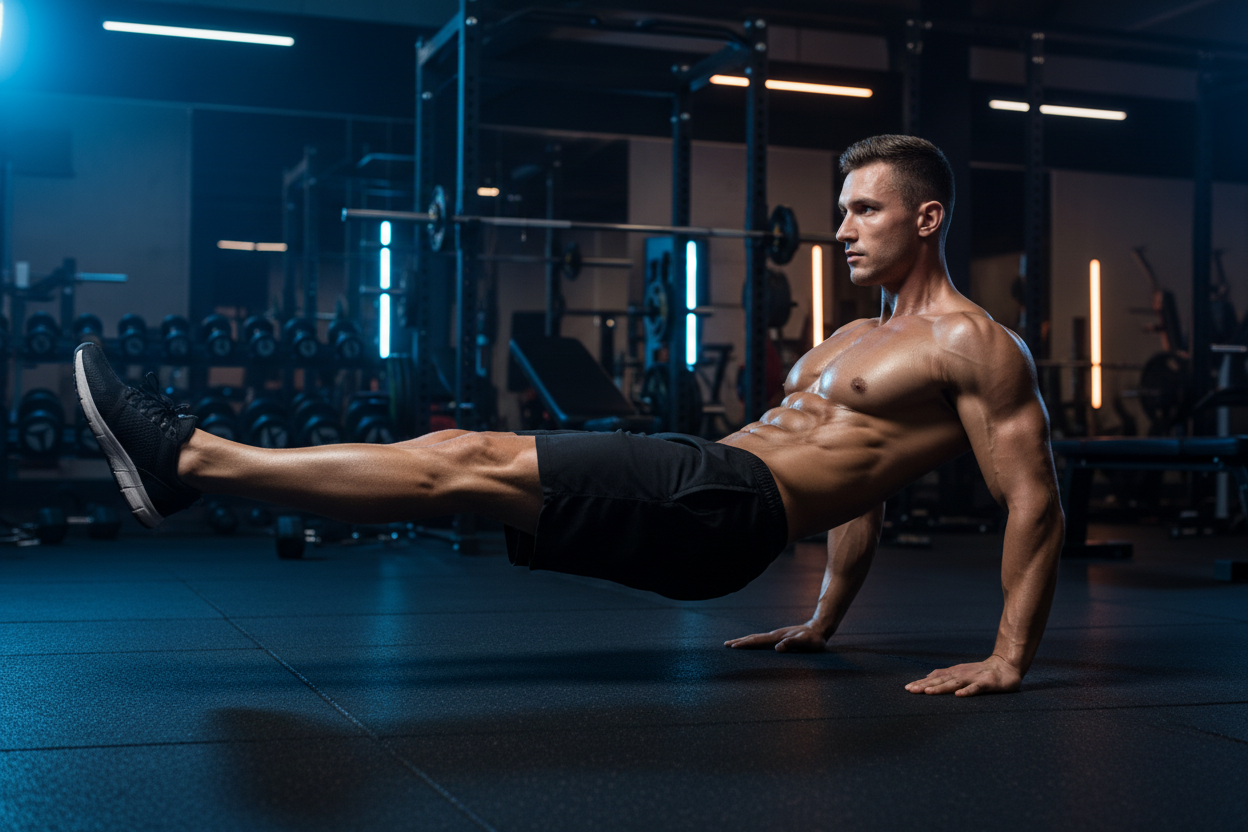
The "Legs Out" Core Technique Most Lifters Get Wrong
Most gym-goers treat the seated knee tuck as a throwaway warmup or a lazy finisher at the end of a session. They bounce through the reps, utilizing momentum rather than muscle. But here is the reality: the legs out phase of this movement is one of the most effective ways to challenge your transverse abdominis and lower rectus abdominis—if you actually control it.
When you extend your legs away from your center of mass, you create a massive lever arm that your core must stabilize against gravity. If your lower back takes the hit, you are wasting your time. If your abs are screaming, you are doing it right. Let’s break down how to turn this simple movement into a powerhouse exercise.
Key Takeaways: Mastering the Movement
- Control the Eccentric: The effectiveness of the leg out exercise comes from the slow extension, not the tuck in.
- Posterior Pelvic Tilt: You must round your lower back slightly to disengage the hip flexors and engage the deep core.
- Breathing Mechanics: Exhale sharply as you tuck in; inhale slowly as you extend the legs out.
- Hand Placement: Placing hands too far back reduces core activation. Keep them close to your hips for better isolation.
The Science Behind the "Legs Out" Mechanism
Why is fully extending your legs so difficult? It comes down to torque. When your knees are tucked into your chest, the lever arm is short, requiring minimal force to maintain position. As you transition into the extension phase, the weight of your legs moves further from the fulcrum (your hips).
To prevent your torso from falling backward or your spine from hyperextending, your core must act as an anti-extension brake. This is why leg in and outs are often superior to standard crunches; they train the abs to stabilize the spine under load, which is the primary function of your core during heavy compound lifts like squats and deadlifts.
How to Execute the Perfect Leg Out Exercise
Forget high reps. We are aiming for high tension. Follow this protocol to stop relying on your hip flexors.
1. The Setup
Sit on the edge of a bench or on the floor. Place your hands slightly behind your hips for balance, but do not dump your weight into your wrists. Lean back until your torso is at a 45-degree angle. Lift your feet off the ground.
2. The Extension (The "Out")
Slowly extend your legs straight out. This is the critical part. As your feet move away, fight the urge to arch your lower back. Imagine pulling your belly button through to your spine. Hold the fully extended position for a one-second count.
3. The Contraction (The "In")
Drive your knees toward your chest while simultaneously bringing your chest slightly toward your knees. Squeeze your abs hard at the top. This completes one rep of the leg outs workout.
Common Mistakes Killing Your Gains
The "Lower Back Arch"
If you feel a sharp pinch in your lumbar spine, stop immediately. This means your abs have failed, and your psoas (hip flexor) is tugging on your lower vertebrae. To fix this, reduce the range of motion. Don't extend your legs fully until you possess the strength to keep your spine neutral.
The "Speed Demon"
Bouncing in and out uses the elasticity of your tendons, not muscle fibers. Slow down. A tempo of 2-0-2 (two seconds out, no pause, two seconds in) will humble you quickly.
My Training Log: Real Talk
I want to be transparent about my history with this movement. For years, I avoided leg in and outs because they consistently hurt my tailbone. I was doing them on the thin rubber flooring of a commercial gym, and the friction caused a literal raw spot on my skin just above the glutes—the classic "gym burn" no one warns you about.
Beyond the skin irritation, I realized I was cheating. I remember a specific session where I tried to hit 50 reps unbroken. By rep 30, my quads were burning, but my abs felt fine. That was the lightbulb moment: I wasn't training my core; I was just doing a seated leg extension. Once I started putting a yoga mat down (to save my tailbone) and focused on curling my pelvis under rather than just kicking my feet, the shake in my abs was uncontrollable by rep 12. If you don't feel that deep, uncomfortable vibration in your stomach, you're likely just working your hip flexors.
Conclusion
The "legs out" movement isn't just a beginner regression; it is a fundamental test of your ability to control your own body weight. By focusing on the extension and locking down your ribcage, you turn a simple motion into a complex stability challenge. Stop counting reps and start counting the seconds of tension. Your lower back will thank you.
Frequently Asked Questions
What muscles does the leg out exercise target?
It primarily targets the rectus abdominis (the "six-pack" muscle) and the transverse abdominis (deep core). However, it also heavily involves the hip flexors and quads, which is why form is crucial to ensure the abs do the majority of the work.
Why does my back hurt during leg in and outs?
Back pain usually occurs because the core is too weak to support the weight of the extended legs. This causes the pelvis to tilt forward (anterior tilt), compressing the lumbar spine. Engage your core before you start moving and reduce how far you extend your legs.
Can I do this exercise with added weight?
Yes, but proceed with caution. Once you can perform 20 slow, controlled reps, you can hold a light dumbbell between your feet. However, adding weight increases the leverage significantly, so ensure your lower back remains stable throughout the movement.

