The Invisible Workout: Why Squeezing Your Glutes Actually Matters
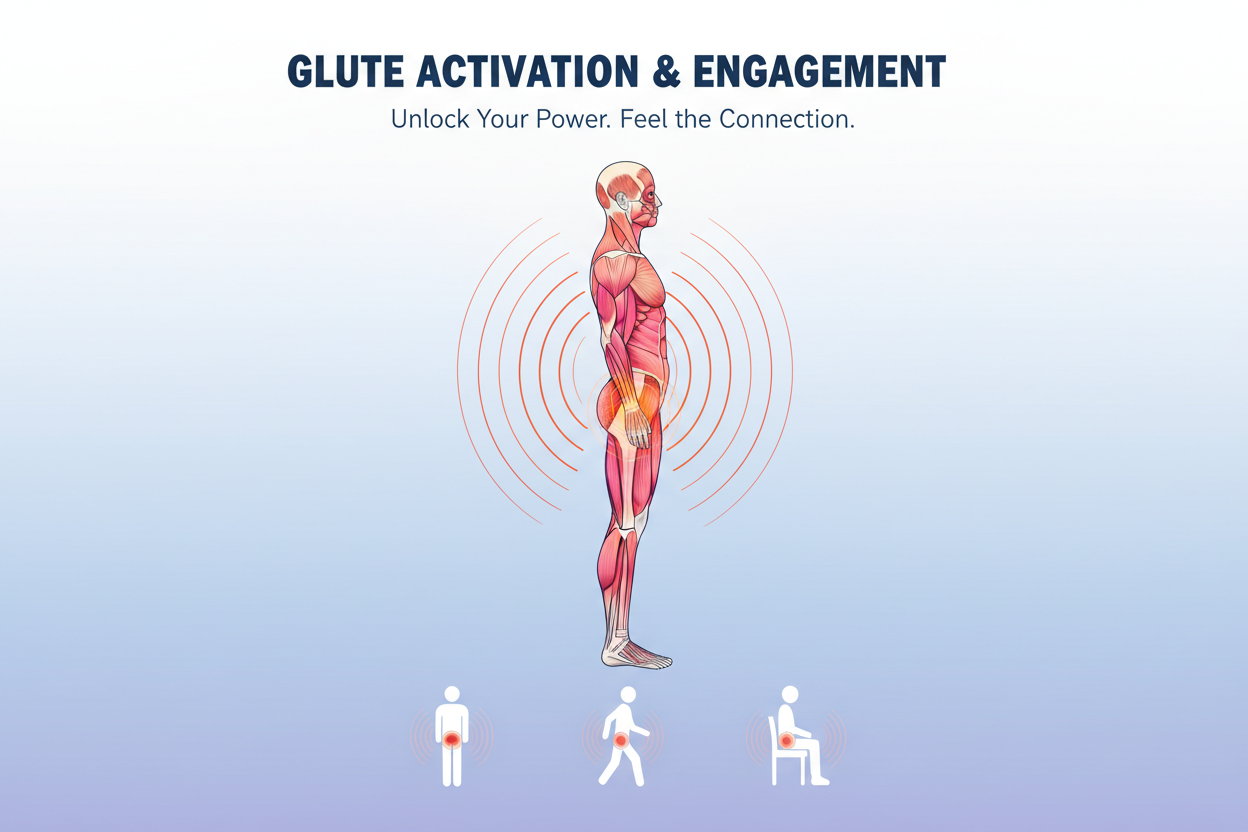
You might be wondering if something as subtle as tensing your backside actually makes a difference in your fitness journey. The short answer is yes. Does squeezing glutes help? Absolutely, but primarily for muscle activation and posture correction rather than massive size gains. If you spend most of your day sitting in a chair, your posterior chain likely suffers from "gluteal amnesia," meaning your brain has forgotten how to properly engage those muscles. A deliberate glute squeeze is the wake-up call they need.
I learned this the hard way a few years ago after developing nagging lower back pain. My physical therapist didn't hand me a heavy barbell immediately; instead, she instructed me to simply stand there and engage my glutes. It felt ridiculous at first. I struggled to find the connection, realizing my hamstrings and lower back were doing all the work my glutes were supposed to handle. Once I mastered the basic standing glute squeeze, my back pain subsided, and my heavy lifts improved significantly because the right muscles were finally firing.
How to Squeeze Your Glutes Correctly
It sounds intuitive, but many people perform this movement incorrectly. If you ask a room full of people how do you squeeze your glutes, most will simply clench their cheeks together as hard as possible. While this creates tension, it often leads to over-tucking the pelvis, which can strain the lower back.
Learning how to squeeze your glutes effectively requires nuance. Stand with your feet hip-width apart. Instead of just pinching the middle, imagine you are trying to rotate your thighs outward without moving your feet. You should feel a deep tension wrap around the sides and back of your hips. This external rotation cues the gluteus maximus more effectively than a simple clench. When performing a standing glute squeeze, keep your ribcage down and avoid arching your lumbar spine.
The Real Benefits of the Buttock Squeeze Exercise
Understanding what does squeezing your glutes do requires looking at the role of the hip. Your glutes are the primary extensors of the hip. When they are weak or inactive, your pelvis can tilt forward, leading to the dreaded "anterior pelvic tilt." This posture protrudes the abdomen and compresses the lower spine.
One of the primary squeezing buttocks benefits is the restoration of neutral pelvic alignment. By engaging these muscles isometrically (creating tension without changing length), you remind your body what a neutral spine feels like. Furthermore, clenching buttocks benefits your stability. A strong isometric contraction stabilizes the sacroiliac joint, which is a common source of pain for runners and lifters.
Is squeezing your glutes good for your knees? Surprisingly, yes. Because the gluteus medius controls the position of the femur, a proper squeeze prevents your knees from caving inward (valgus collapse) during movements like squats or even walking up stairs. The glute squeeze benefits extend far beyond just the muscle itself; they protect the entire kinetic chain.
Hypertrophy vs. Activation: Do Glute Squeezes Work for Growth?
This is where expectations need to be managed. Does clenching glutes build muscle? If you are looking to add significant mass or shape, isometric squeezes alone won't be enough. Muscle growth (hypertrophy) generally requires progressive overload—moving weight through a range of motion causing mechanical tension and metabolic stress.
However, the butt squeeze exercise is a critical precursor to growth. If you cannot voluntarily contract a muscle hard without weight, you likely won't recruit it effectively when you have 200 pounds on your back. Think of the glutes squeeze exercise as the ignition switch. You can't drive the car fast if you haven't turned the engine on. If you look at glute squeezes before and after results, the visual difference usually comes from better posture (standing taller and less anterior tilt) rather than actual tissue growth from the squeezing alone.
Integrating the Butt Squeeze Exercise into Your Routine
You don't need a gym membership to start. You can perform a subtle glutes squeeze exercise while brushing your teeth, waiting in line at the grocery store, or standing at your desk. This high-frequency, low-intensity work helps rewire the brain-muscle connection.
For a more structured approach, try the bridge variation:
- Lie on your back with knees bent and feet flat on the floor.
- Before you lift, squeeze your glutes.
- Maintain that tension as you lift your hips toward the ceiling.
- Hold the top position for 5-10 seconds.
- Lower down slowly, only relaxing the squeeze once your hips touch the floor.
This specific application answers the question of what does squeezing buttocks do in a dynamic setting: it ensures the glutes drive the movement rather than the lower back taking over.
Common Mistakes When You Squeeze Your Glutes
When learning how to squeeze your glutes, avoid the "turtle shell" posture. This happens when you clench so hard that your shoulders round forward and your head juts out. Tension should be localized to the hips. Another error is holding your breath. Your core and pelvic floor should work in tandem with your glutes, but you must be able to breathe through the contraction.
Additionally, do not confuse the glute squeeze with the sphincter squeeze. While they are neighbors, the target is the large muscular mounds of the buttocks, not just the pelvic floor. If you feel the tension primarily internally rather than in the meat of the muscle, reset your stance and try the thigh-rotation cue again.
Final Thoughts on Isometric Glute Training
So, do glute squeezes work? They work wonders for activation, injury prevention, and waking up dormant tissue. They are the foundation upon which strong squats and deadlifts are built. While simply sitting on the couch and performing a buttock squeeze exercise won't turn you into a bodybuilder, it will save your lower back and prepare your body for the heavier lifts that do build muscle.
Make it a habit to squeeze your glutes periodically throughout the day. It is a simple, invisible tool that combats the negative effects of our sedentary lifestyles and keeps your hips healthy and functional.
Frequently Asked Questions
Can squeezing my glutes too much cause problems?
Yes, constant gripping or clenching can lead to a hypertonic pelvic floor or tight hip muscles, which might actually cause back or hip pain. Aim for intentional activation during exercise or short bursts to correct posture, rather than holding a squeeze all day long.
How long does it take to see results from glute squeezes?
In terms of neuromuscular connection (feeling the muscle work), you can feel results almost immediately or within a few sessions. Postural improvements usually take a few weeks of consistent practice, while visible muscle growth requires adding resistance training to the squeezes over several months.
Is it better to squeeze glutes sitting or standing?
Standing is generally better because your hips are in extension, which is the primary function of the gluteus maximus. While you can squeeze while sitting, it is often harder to get a full contraction, and it doesn't mimic the functional patterns used in walking or running.