The grip tweak that actually makes pull ups for shoulders work
I spent three years staring at my reflection in a dusty garage mirror, wondering why my lats looked like wings while my shoulders looked like deflated tennis balls. I was hitting heavy sets of five on the bar every other day, but the 'boulder shoulder' look just wasn't happening. Most people will tell you that pull ups for shoulders are a waste of time because the latissimus dorsi is a massive, greedy muscle that steals all the tension.
They aren't entirely wrong, but they're missing the nuances of grip and elbow path. If you just grab the bar and pull, your back wins every time. To make a shoulder pull-up actually build mass, you have to stop thinking about pulling your chest to the bar and start thinking about driving your elbows into a specific arc.
- Standard pull-ups are lat-dominant; you need mechanical disadvantages to hit the delts.
- Grip width is your primary lever for shifting tension to the posterior and medial heads.
- The 'elbow flare' is usually a sin in back training, but it's your best friend for shoulder growth.
- Scapular health is the prerequisite; you can't build shoulders on a shaky foundation.
The big question: Do overhead pulls actually build shoulder mass?
Let's be real: if you want massive front delts, you go press a heavy barbell overhead. But do pull-ups work shoulders? Absolutely, just not in the way most people think. The shoulders—specifically the rear and middle deltoids—act as crucial stabilizers during any hanging movement. The problem is that in a standard chin-up or pull-up, they are secondary players.
To answer 'does pull ups build shoulders,' we have to look at the 'why.' A standard pull-up uses the lats to drive the humerus down and back. To get the shoulders to grow, we need to force them to handle the brunt of the stabilization and the initial 'break' from the dead hang. It won't replace your overhead press, but the right shoulder pull-up variation will add a level of thickness to the back of your shoulder that presses simply can't touch.
Biomechanics 101: Why your back keeps stealing the show
Your body is a master of efficiency. It wants to use the biggest, strongest muscle available to finish a task. When you hang from a bar, your brain looks at the lats and says, 'You're up.' This is why most people find that their back gets pumped long before their shoulders even wake up. Standard form is literally designed to bypass the shoulders to move you from point A to point B as efficiently as possible.
If you want to dive deeper into how these muscles interact, check out our workout hub for a full breakdown of upper body mechanics. To reverse-engineer this, we have to make the movement less efficient for the lats. We do this by manipulating the scapula. Instead of a hard retraction (squeezing the shoulder blades together), we want to focus on the rotation of the shoulder joint itself. By altering the angle, we can make do pull-ups work shoulders by forcing the delts to fight for control against gravity.
How to modify your grip to target the deltoids
If you keep your hands at shoulder width, you're in lat territory. To move into shoulder territory, you need to play with the extremes. We aren't just changing where we hold the bar; we are changing the entire mechanical pull. These aren't about hitting high reps; they're about time under tension and feeling the deltoids scream.
The ultra-wide rear delt pull
Take your grip out as wide as the bar allows—I'm talking well past your shoulder line. Instead of pulling your elbows down to your ribs, pull them out to the sides. This 'elbow flare' is usually a form error, but here it's the goal. It shortens the range of motion but places an immense load on the posterior deltoid. This is the best pull up for shoulders if you're looking for that 3D look from the side. You won't get your chin over the bar, and that's fine. Focus on the squeeze at the top of the partial rep.
The active hang shoulder shrug
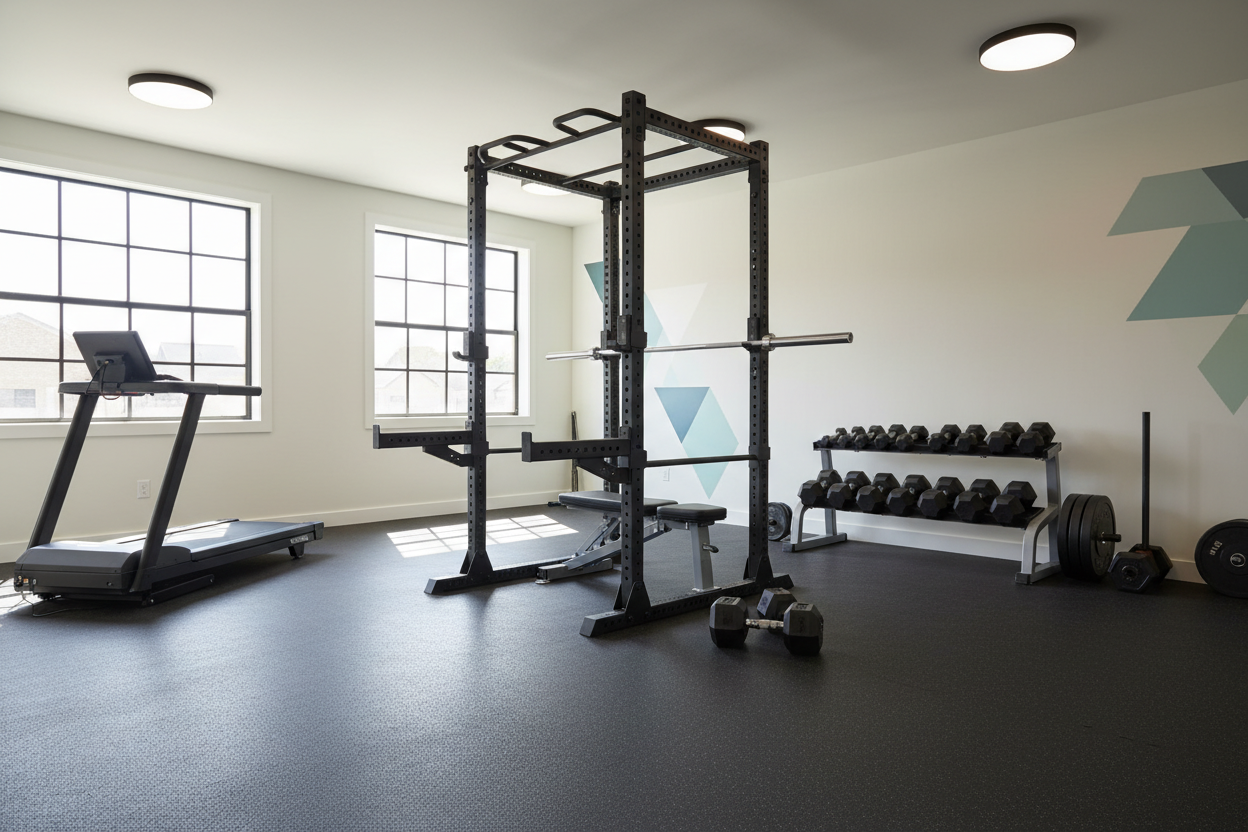
This is often called a scapular pull-up, and it's the ultimate shoulder pull up bar exercise. From a dead hang, keep your arms straight and pull your shoulder blades down and back, then slowly release. It sounds simple, but doing this for high volume builds the kind of stability that prevents impingement. I usually perform these on a heavy-duty power rack weight bench barbell package because you need a rock-solid bar that doesn't wobble when you're creating that much tension from a dead stop.
Programming this into your garage gym routine
Don't replace your entire back day with these. Instead, use them as 'finishers' or 'primers.' I like to lead with my heavy compound movements and then move into these tweaked pull-ups for 3 sets to failure. Because these are more taxing on the smaller shoulder joints, you need to be smart about recovery. Avoid doing these the day before a heavy overhead press session.
I’ve found that supersetting these with core work is a massive time-saver. You're already hanging, so why not hit the abs? Pairing a wide-grip pull with leg lifts on pull up bar creates a massive amount of tension through the entire anterior and posterior chains. It’s a brutal way to end a workout, but it’s effective.
What if you are traveling or lack the right equipment?
If you’re stuck in a hotel or don’t have a rack yet, you can still mimic these patterns. You won't get the same vertical pulling force, but you can work on the same shoulder-to-lat ratio. For those days, I usually point people toward a back and shoulder workout at home no weights. It uses floor-based slides to mimic the wide-grip pull-up tension, which is a solid bridge until you get back to your bar.
FAQ
Are pull ups good for shoulders or will they cause injury?
They are excellent for stability if done with control. If you have existing impingement, avoid the ultra-wide grip and stick to neutral grip active hangs. Always warm up the rotator cuffs first.
What pull-ups work shoulders the most?
The ultra-wide grip pull-up with flared elbows is the king for the posterior deltoid. For the medial delt, the slow, controlled eccentric (the way down) on a standard pull-up is where the work happens.
Can I do a pull up bar stretch for shoulder pain?
Yes, a 'dead hang' is one of the best ways to decompress the spine and stretch the tight lats that often pull shoulders out of alignment. Just don't go totally limp; keep a tiny bit of tension in the shoulders to protect the joint capsule.