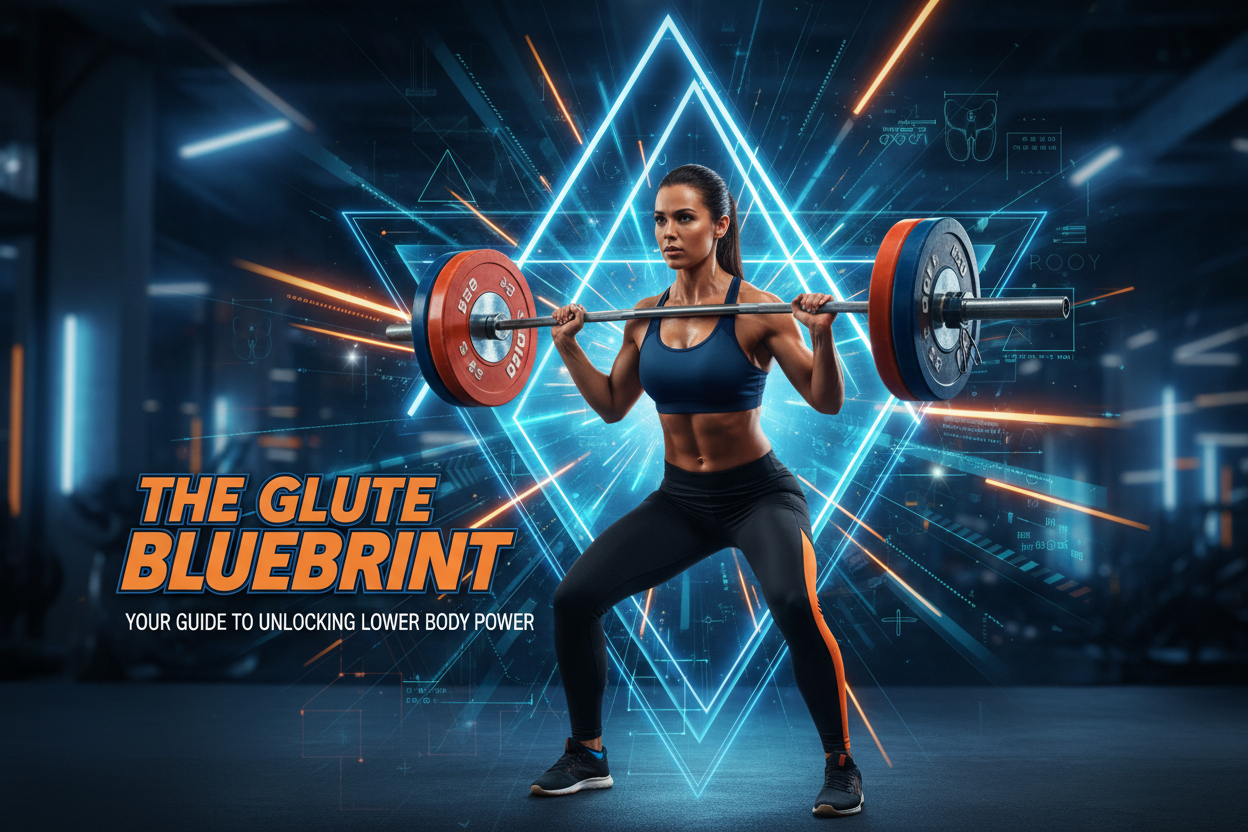
The Glute Blueprint: How to Build Power, Shape, and Function Without Wasting Time
Most people spend the majority of their day sitting on the very muscles they are trying to build. This sedentary lifestyle leads to a condition often called "gluteal amnesia," where your posterior chain simply forgets how to fire correctly. If your goal is to build a stronger backside, you cannot simply go through the motions. Effective training requires a deep understanding of hip extension, abduction, and rotation. Building these muscles isn't just about aesthetics; strong glutes are the engine of your body, protecting your lower back from injury and improving athletic performance in almost every sport.
To see real changes, you need to prioritize compound movements that allow for progressive overload while incorporating isolation movements that target the specific subdivisions of the muscle group. The gluteus maximus is the powerhouse, but neglecting the medius and minimus will leave you with instability and an incomplete physique. Let’s break down how to construct a routine that actually delivers results.
The Anatomy of a Good Workout for Glutes
Understanding what you are training changes how you train it. The backside is composed of three main muscles. The maximus creates the shape and drives hip extension (think sprinting or standing up from a chair). The medius and minimus are located on the side and are responsible for stabilizing the pelvis and moving the leg away from the body. A comprehensive workout for the glutes must hit all three heads.
Many lifters make the mistake of relying solely on squats. While squats are fantastic, they are often quad-dominant depending on your anatomy. To truly target the posterior, you need to introduce exercises that challenge the muscle in both the lengthened position (stretched) and the shortened position (contracted).
The King of Isolation: The Hip Thrust
If you look at the biomechanics of the hip, the hip thrust is arguably the most effective exercise to work glutes directly. Unlike a standing squat where tension decreases at the top of the movement, the hip thrust places maximum tension on the glutes when they are fully contracted.
Set up with your upper back against a bench and a barbell across your hips. Keep your chin tucked to your chest and your ribs down. Drive through your heels to lift the bar. The key here is not to hyperextend your lower back. You should feel a distinct cramping sensation in the glutes at the top. This is a staple in any serious glute workout because it isolates the maximus without putting excessive strain on the lower back.
The Stretch: Romanian Deadlifts (RDLs)
While the thrust handles the contraction, the Romanian Deadlift handles the stretch. This movement causes significant muscle damage (the good kind) which is essential for hypertrophy. Keep a slight bend in your knees, push your hips back as far as possible, and lower the weight only until your hips stop moving backward. If you go lower than that, your lower back takes over. When performed correctly, RDLs are among the best exercises that work the glutes in their lengthened state.
My Personal Battle with Glute Activation
For years, I suffered from chronic lower back pain whenever I tried to deadlift heavy. I thought my back was weak, so I added more back extensions. It didn't help. It wasn't until I saw a physical therapist that I realized my glutes were completely dormant. My lower back was doing all the work that my hips were supposed to handle. I had to strip the weight off the bar and spend weeks doing bodyweight activation drills. It was humbling, but necessary. Once I learned how to mentally connect with the muscle during a workout for glute activation, my back pain vanished, and my squat numbers shot up by 50 pounds. This experience taught me that working out glutes is as much a mental game of connection as it is a physical game of lifting weights.
Unilateral Training: Fixing Imbalances
Bilateral movements (using both legs) are great for moving heavy loads, but they can hide imbalances. If your right side is stronger, it will compensate for the left. This is where workouts that focus on glutes specifically benefit from single-leg work. The Bulgarian Split Squat is the exercise everyone loves to hate, but its effectiveness is undeniable.
To bias the glute during a split squat, lean your torso forward slightly (about 45 degrees) and ensure your front shin stays relatively vertical. Deep stretching at the bottom of the rep recruits more muscle fibers. This movement challenges your balance, forcing the gluteus medius to fire hard to keep you upright. It is a complete exercise glute builder that addresses size, strength, and stability simultaneously.
Structuring Your Routine
You shouldn't try to cram every exercise into one session. Instead, aim for frequency. Hitting the muscle group 2 to 3 times a week is generally superior to one massive "leg day" that leaves you unable to walk for a week. A good workout for glutes balances heavy mechanical tension with metabolic stress.
Here is a sample structure for a high-yield session:
- Activation: Banded Clamshells or Glute Bridges (2 sets of 20 reps). This wakes up the neural pathways.
- Compound Lift (Heavy): Barbell Hip Thrusts or Sumo Deadlifts (4 sets of 6-8 reps). Focus on moving weight.
- Unilateral Movement: Reverse Lunges or Bulgarian Split Squats (3 sets of 10-12 reps per leg).
- Lengthened Focus: Dumbbell RDLs or 45-degree Hyperextensions (3 sets of 12-15 reps).
- Burnout/Pump: Cable Kickbacks or Seated Abductions (2 sets of 20+ reps).
Common Mistakes When Working Out Glutes
The most frequent error is sacrificing range of motion for weight. Half-reps on a squat or leg press will predominantly work the quads. To engage the posterior chain, you must achieve adequate depth. Another issue is speed. Using momentum to swing the weight up during exercises for the glutes removes the tension from the muscle. Slow down the eccentric (lowering) portion of the lift. Control is the primary driver of growth.
Furthermore, foot placement dictates muscle recruitment. In leg presses or squats, a wider stance with feet slightly turned out generally increases gluteal activation compared to a narrow, toes-forward stance. When planning your workout glutes sessions, pay attention to these small technical details; they make the difference between a wasted set and a productive one.
Consistency and Progression
There is no magic exercise to work glutes that will transform your physique overnight. The secret lies in progressive overload. This means doing more volume over time—whether that is adding weight to the bar, doing more reps, or decreasing rest times. Keep a logbook. If you are hip thrusting 135lbs today, you should aim for 140lbs or an extra rep next week.
Nutrition also plays a vital role. You cannot build muscle tissue in a significant calorie deficit. Ensure you are consuming enough protein to support repair and recovery. Combining a caloric surplus with heavy compound lifting is the only proven path to significant muscle growth.
FAQ
How often should I train my glutes for maximum growth?
Most people see the best results training glutes 2 to 3 times per week. This frequency allows for high-quality volume while giving the muscles roughly 48 hours to recover and grow between sessions.
Why do I feel my lower back taking over during glute exercises?
This usually happens due to poor core bracing or lifting too heavy, causing you to hyperextend the lumbar spine to move the weight. Lighten the load, tuck your chin, keep your ribs down, and focus on squeezing the glutes to initiate the movement rather than arching your back.
Can I build glutes with just bodyweight exercises?
Beginners can see initial progress with bodyweight movements, but glutes are large, powerful muscles that adapt quickly. To continue seeing significant changes in size and strength, you will eventually need to add external resistance (weights or heavy bands) to provide the necessary stimulus.