The Exact Math Behind Beginner Muscle Building (No BS)
I remember staring at a $70 tub of 'Mass Gainer 5000' in my early 20s, convinced that powder was the secret to finally not being the smallest guy in the room. I choked down that chalky sludge for a month and gained exactly zero pounds of muscle, though my bathroom trips certainly got more frequent. The supplement industry thrives on the idea that beginner muscle building is a dark art, but after a decade of testing racks and breaking bars, I can tell you it is actually just basic arithmetic.
Quick Takeaways
- Caloric Surplus: Eat 300-500 calories over maintenance.
- Protein Target: Aim for 0.8g to 1g of protein per pound of body weight.
- Progressive Overload: Add weight or reps to your logbook every single week.
- Equipment: Prioritize a stable floor and heavy compound movements.
You Don't Need Another Supplement (You Need a Calculator)
Supplement companies want you to believe building muscle mass for beginners is a mystery solved by proprietary blends and 'anabolic' windows. It is not. Whether you are using a machine only workout program for beginners or a rusty barbell in your garage, the physics of growth remain identical. Your body needs a reason to change (mechanical tension) and the raw materials to build (calories and protein).
Stop looking for the magic pill. If you aren't tracking your lifts and your intake, you're just exercising—you aren't training. Muscle building for beginners is about creating a predictable environment for your body to adapt. If the math adds up, the muscle follows. If it doesn't, you're just getting sweaty for no reason.
The Caloric Equation for Building Muscle Mass for Beginners
You cannot build a house without bricks, and you cannot build muscle without a caloric surplus. Most guys failing at muscle gain for beginners simply aren't eating enough. Find your maintenance calories—the amount where your weight stays dead even—and add 300 to 500 calories to that number. This provides enough energy for protein synthesis without causing you to put on ten pounds of pure gut fat in a month.
If you aren't gaining about 0.5 to 1 pound of scale weight per week, you aren't in a surplus. It doesn't matter how 'full' you feel or how many clean meals you eat; if the scale isn't moving over a two-week average, you need to add another peanut butter sandwich to your daily routine. This is the foundation of how to build muscle beginners often ignore because they're afraid of losing their abs. Trust me, you can't flex bone.
Protein Math: How Much Do You Actually Need?
You don't need 300 grams of protein, and you certainly don't need six shakes a day. For how to gain muscle for beginners, the sweet spot is 0.8 to 1 gram of protein per pound of body weight. If you weigh 160 pounds, hitting 140-160 grams of protein is plenty. Anything more is just expensive fuel.
Focus on whole foods: chicken, lean beef, eggs, and Greek yogurt. I’ve found that relying too heavily on powders leads to bloating and skipped real meals. Use a shake when you're in a rush, but let solid food do the heavy lifting for your muscle gain for beginners. Consistency in hitting this number daily is infinitely more important than the 'quality' of the protein source.
Progressive Overload Is Your Only Training Metric
The biggest mistake I see in home gyms is people chasing a 'pump' or a 'burn' instead of a number. If you did 135 pounds for 10 reps last week, you must do 140 pounds for 10 or 135 pounds for 11 this week. This is gym math, and it’s the only metric that matters. I’ve seen guys spend years 'feeling the muscle' without ever getting bigger because why chasing soreness ruins your plan is a lesson they haven't learned yet.
Fatigue is a side effect, not the goal. Your body is an adaptation machine; if you keep asking it to move the same 20-pound dumbbells, it has zero reason to grow larger fibers. Track every single set in a notebook or an app. If the numbers aren't trending up over a 4-week period, you aren't building muscle—you're just maintaining.
Setting Up Your First Home Gym Hypertrophy Zone
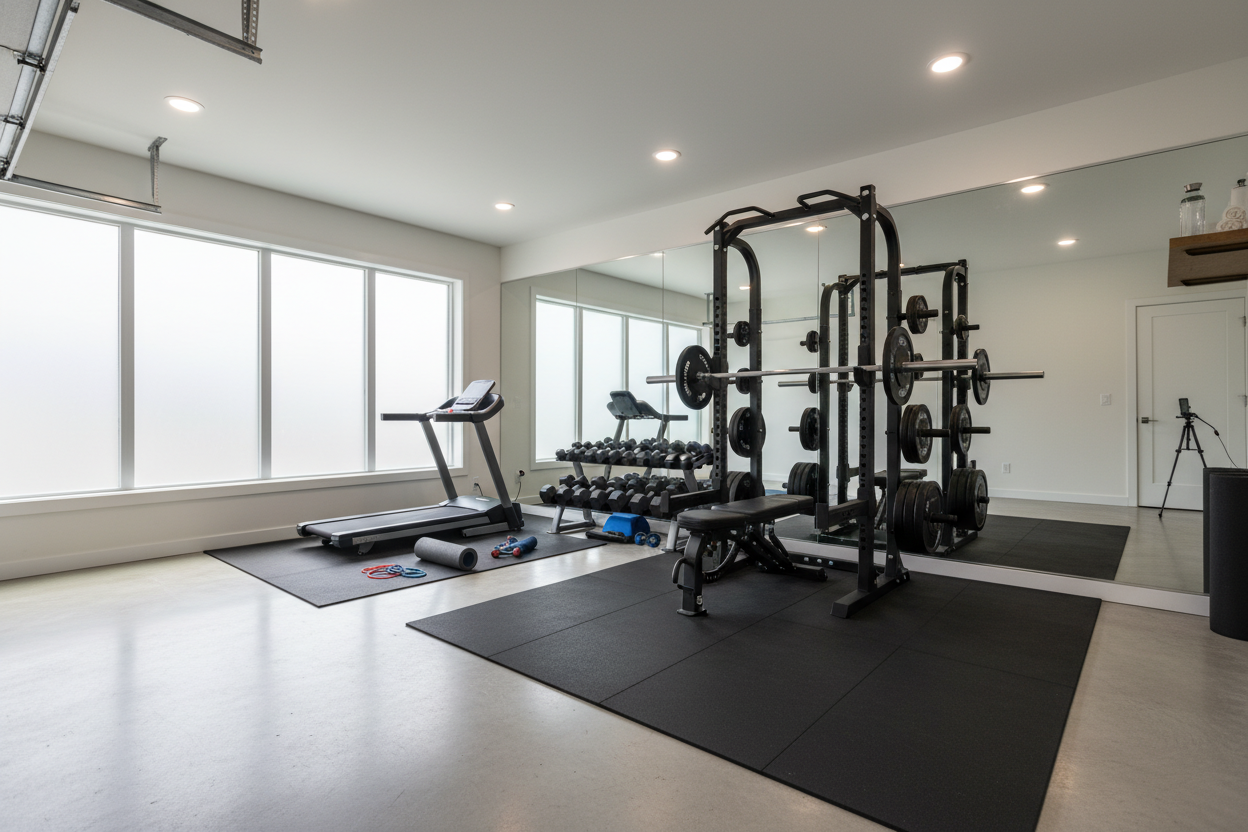
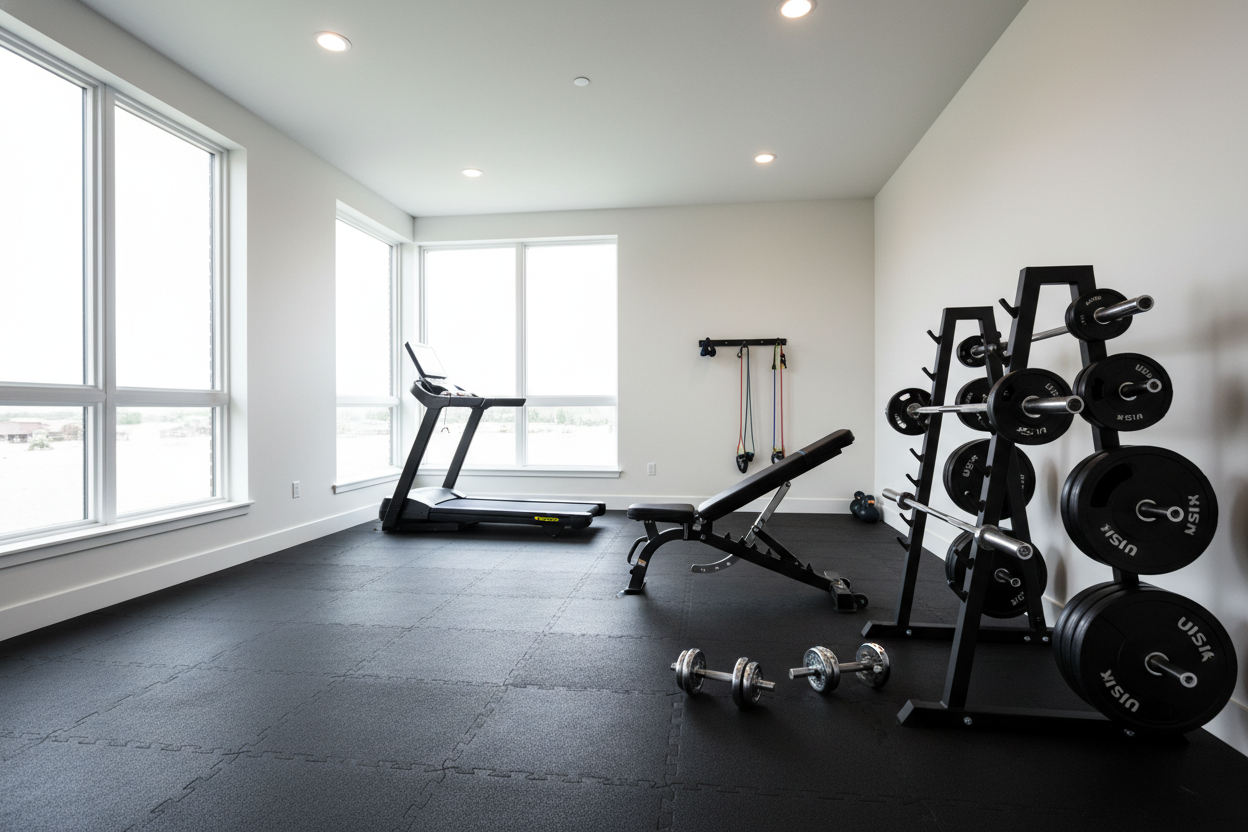
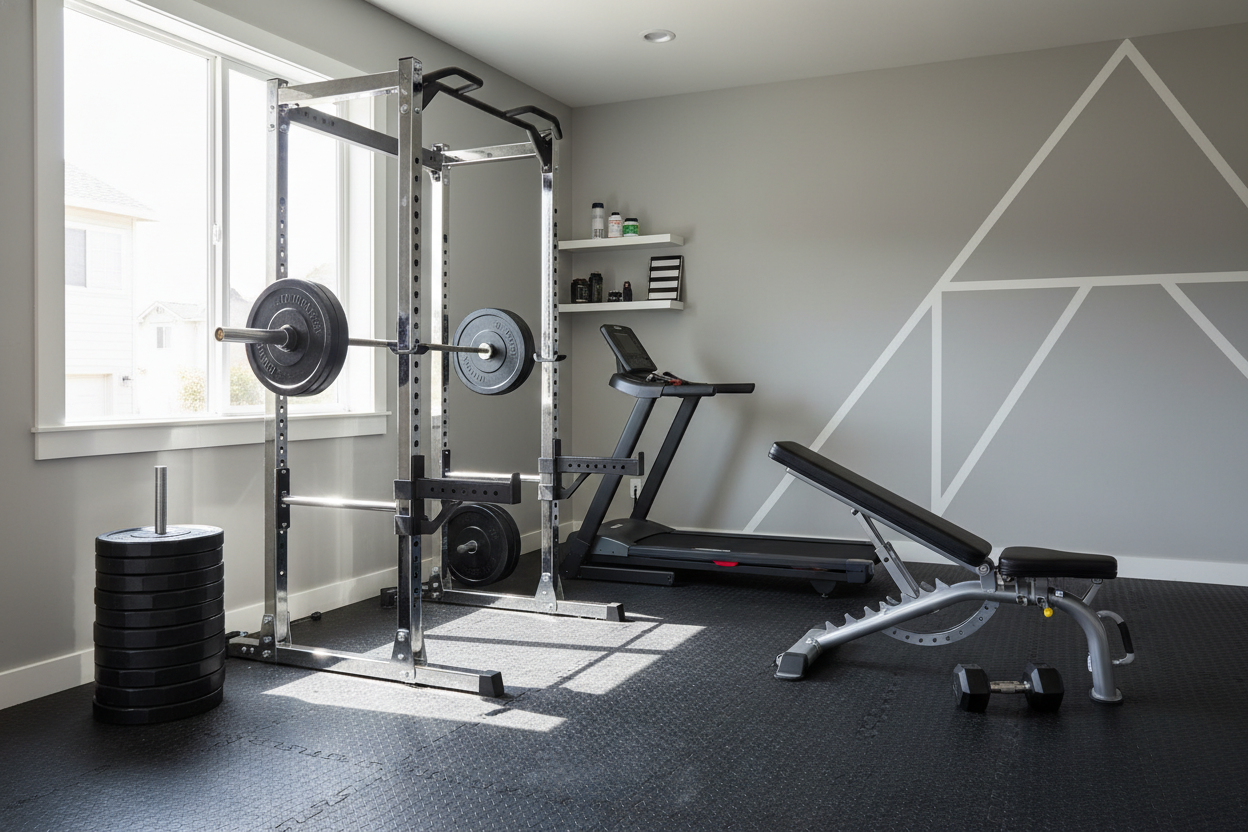
You don't need a $5,000 functional trainer to start. You need a rack, a bench, and a floor that doesn't slide. I always tell people to invest in a large exercise mat for home gym setups before they buy fancy accessories. If your feet are slipping during a heavy set of squats or overhead presses, your nervous system will actually 'muffle' your strength to keep you from falling. Traction equals force.
Focus on equipment that allows for micro-loading. If your dumbbell set only jumps in 10-pound increments, you're going to hit a wall fast. Look for plates or adjustable dumbbells that let you add 2.5 or 5 pounds at a time. That small, incremental math is how you sustain a 12-week growth cycle without hitting a plateau or getting injured.
The 12-Week Timeline You Need to Accept
How to build muscle for beginners takes longer than a social media montage suggests. Your body needs time to reinforce tendons, dense up bones, and actually lay down new contractile tissue. Give yourself a full 12 weeks of following the math before you even think about changing your program. Muscle-building for beginners is a marathon of boring consistency, not a sprint of high-intensity gimmicks.
My Personal Experience
When I started, I was obsessed with 'muscle confusion.' I changed my workout every week because I thought I was outsmarting my body. In reality, I was just preventing myself from getting good at any specific lift. I stayed the same weight for a year. It wasn't until I stuck to a basic 5x5 program and forced myself to add 5 pounds to the bar every session that I actually saw my chest and shoulders grow. My biggest mistake was valuing variety over the logbook.
FAQ
Do I need to do cardio while building muscle?
You can, but keep it low-impact. A 20-minute walk is great for recovery. If you're running marathons, you're just making the caloric math much harder for yourself.
What if I don't have a barbell?
How to build muscle mass for beginners is possible with dumbbells or even heavy bands, provided you can still apply progressive overload. The tool matters less than the tension.
Can I build muscle and lose fat at the same time?
Only if you are a true beginner. This 'recomposition' is the holy grail, but it usually only lasts for the first 3-6 months of training. Eventually, you'll have to pick a lane.