The Exact Beginner Workout at Home I Give to My Unfit Friends
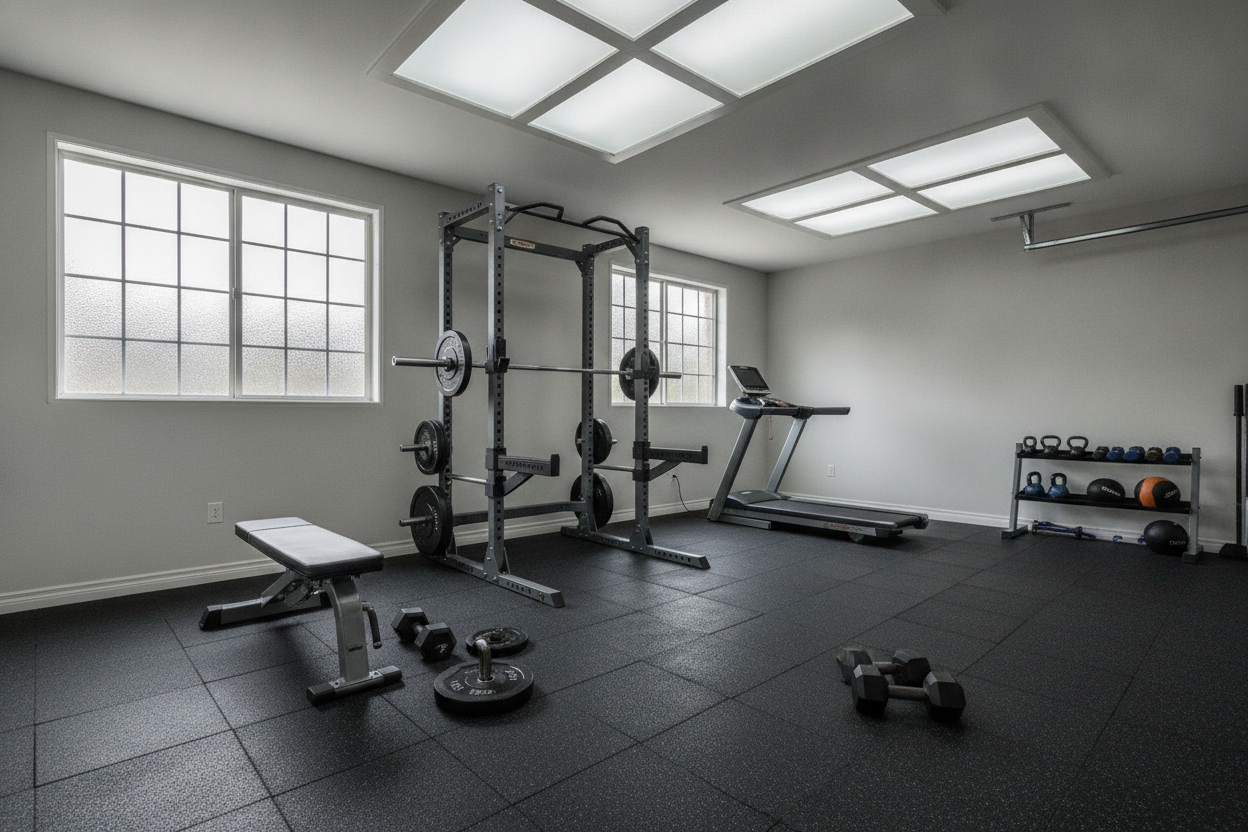
I have spent thousands of dollars on 11-gauge steel power racks and calibrated plates, but whenever a friend asks me how to start, I never tell them to buy a barbell. Usually, they come to me after a wake-up call—maybe they saw a photo of themselves they didn't like, or they realized they get winded walking up a flight of stairs. They want to go 'beast mode' immediately, but that is the fastest way to fail a beginner workout at home before the first week is even over.
Quick Takeaways
- Consistency is the only metric that matters for the first 21 days.
- If you are too sore to move the next day, you did too much.
- Bodyweight movements are plenty for building a solid foundation.
- You do not need a pile of expensive gear to see results.
The Trap of the 'Hardcore' Day One
The biggest mistake new lifters make is trying to replicate what they see on social media. You see an influencer doing 100 burpees and 50 pull-ups and think that is the entry fee for fitness. It isn't. If you haven't trained in a decade, that level of volume will cause severe delayed onset muscle soreness (DOMS) that makes you miserable for a week. When you are in pain, you don't want to work out. When you don't work out, you lose momentum. Momentum is the only thing keeping you going in the beginning.
I have seen people quit entirely because they couldn't sit on the toilet without groaning for four days straight. Your goal for day one isn't to 'crush it.' Your goal is to do just enough to signal to your body that it is time to change, without triggering a full-scale inflammatory response. We are building a habit, not a highlight reel.
The 'Minimum Effective Dose' Philosophy
I tell my friends that their first few sessions should feel surprisingly easy. You should finish your workout feeling like you could have done twice as much. This is intentional. We are training your nervous system to move correctly before we ask your muscles to move heavy loads. A smart workout routine at home for beginners should leave you feeling energized and capable, not like a car wreck victim.
Think of it as the 'minimum effective dose.' If one aspirin cures your headache, you don't take twenty. In the same way, if two sets of squats get your legs moving, you don't need ten. By keeping the volume low, you avoid burnout and keep your motivation high for the next session.
The Anti-Soreness Living Room Routine
This is the exact 3-day-a-week schedule I give to my friends who haven't touched a weight in years. Do this on Monday, Wednesday, and Friday. Keep every rep perfect. If your form breaks, the set is over.
- Bodyweight Squats: 2 sets of 10 reps. Sit back into your hips, keep your chest up, and don't let your heels leave the floor.
- Incline Push-ups: 2 sets of 8 reps. Use your kitchen counter or the back of a sturdy sofa. The higher the surface, the easier the movement.
- Plank: 2 holds for 20-30 seconds. Keep your glutes squeezed and don't let your lower back sag.
- Glute Bridges: 2 sets of 12 reps. Lie on your back and drive your hips toward the ceiling.
That is it. It takes about 15 minutes. It doesn't look like much, but for a true beginner, it is the perfect amount of stimulus to start seeing changes in posture and strength without the crippling soreness.
What You Actually Need to Start (Hint: Almost Nothing)
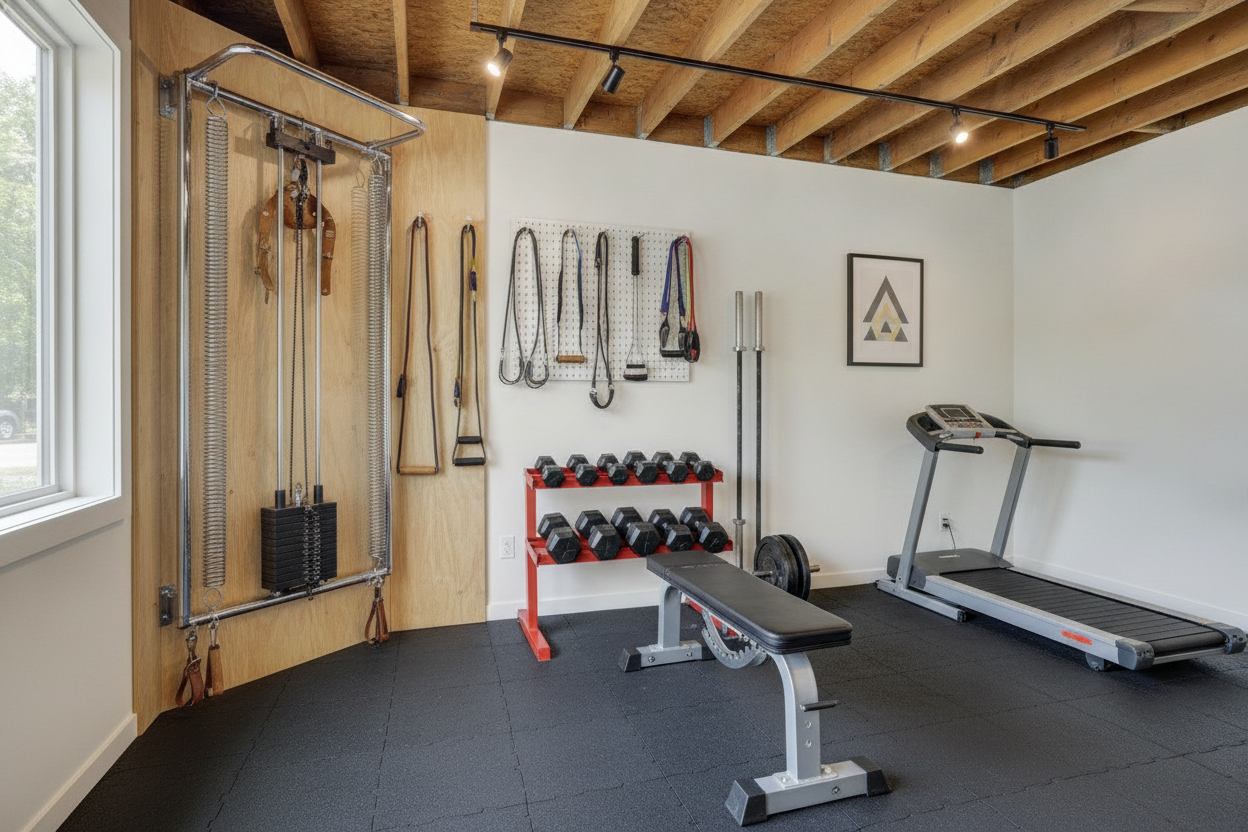
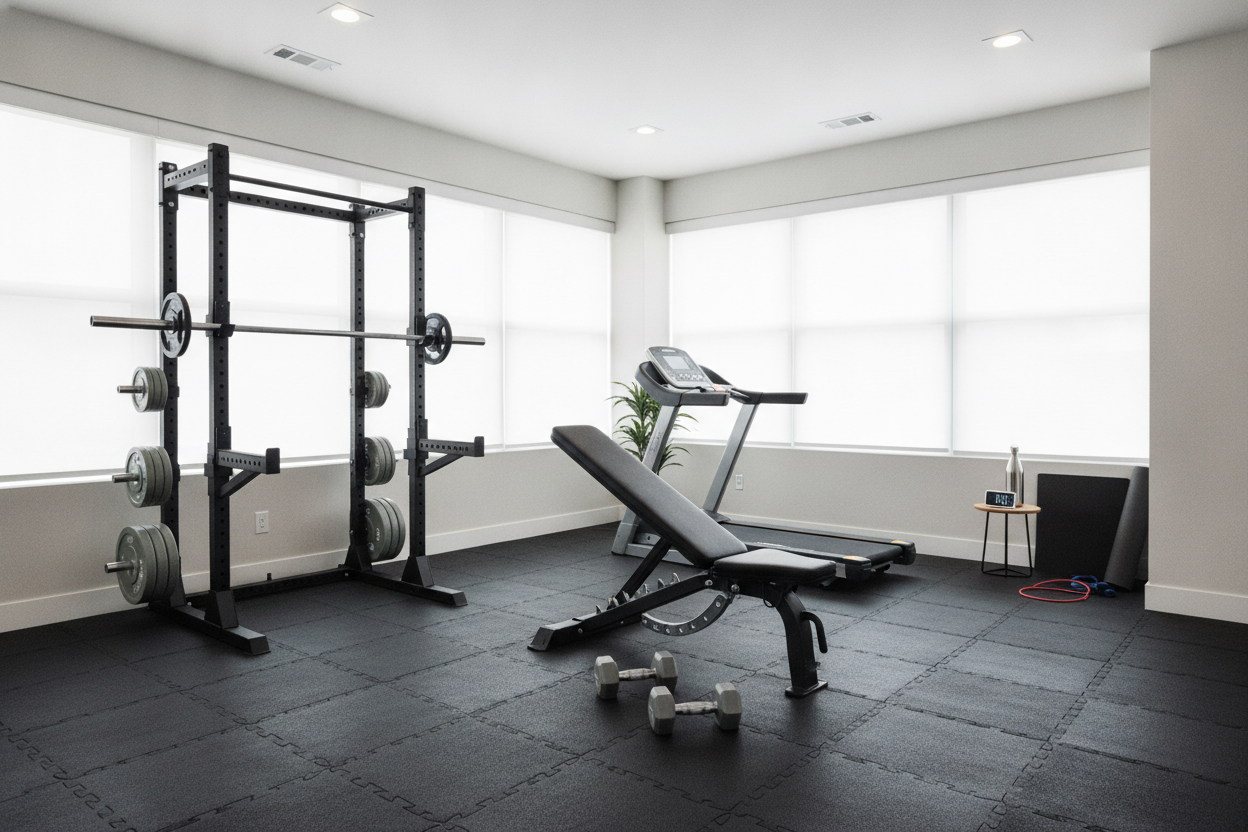
You don't need a 5-50lb dumbbell set or a commercial-grade treadmill yet. In fact, buying too much gear early on can actually be a distraction. You spend more time researching equipment than actually moving. The only thing you really need is a space where you won't slip or bruise your joints. I usually recommend picking up a large exercise mat for home gym use. Hardwood floors are brutal on the knees during planks, and carpet can be slippery when you start sweating. Having a dedicated mat also creates a 'gym zone' in your house—when you step on it, it's time to work.
How to Know When It's Time to Graduate
Once you have mastered the basics, you'll get bored. That is a good sign. If you can do 15 perfect push-ups on the floor (not the counter) and 20 deep squats without your heart rate hitting the ceiling, you have graduated from the 'unfit' phase. You are no longer just trying to survive; you are training.
At that point, you can look into a more structured 45 minute workout routine for beginners that introduces more variety and higher volume. But don't rush there. Spend at least three to four weeks on the bare-minimum plan. Build the foundation first, and the house will stand forever.
Personal Experience: My Biggest Mistake
Years ago, I tried to help my brother start working out. I was into powerlifting at the time and gave him a 'basic' linear progression program with a barbell. He was so sore he couldn't walk up the stairs to his apartment for three days. He didn't touch a weight again for two years. I realized then that my 'easy' was his 'impossible.' Now, I start everyone on the counter-top push-up plan. It works every time because it's impossible to fail.
FAQ
Can I do this workout every day?
No. Your muscles need 48 hours to recover and adapt. Stick to three days a week. On your off days, just go for a 20-minute walk.
What if I can't do a single push-up?
Start with wall push-ups. Stand a few feet from a wall, lean forward, and push off. As you get stronger, move your feet further back or move to a lower surface like a table.
Do I need to buy protein powder?
Not yet. Just focus on eating real food and drinking water. Supplements are the last 5% of the puzzle; we are still working on the first 95%.