The Definitive Guide to the Best Home Exercise Equipment for Beginners
Walking into a sporting goods store—or scrolling through Amazon—can feel like trying to read a map in a foreign language. You want to get fit, but you are bombarded with thousands of options, from $2,000 smart mirrors to $10 resistance bands. The paralysis of choice is real, and it often stops people before they even start.
You don't need a garage full of machines to see results. In fact, starting with too much gear often leads to clutter rather than fitness. The best home exercise equipment for beginners is versatile, durable, and scalable. This guide cuts through the marketing noise to focus on the tools that actually yield returns on your physical investment.
Quick Summary: The Essentials
If you are looking for the most efficient path to a functional home gym, here is the core equipment checklist that offers the highest value for beginners:
- Adjustable Dumbbells: Replaces 15 pairs of weights; essential for progressive overload.
- Resistance Bands (Loop & Tube): Best for mobility, warming up, and joint-friendly strength training.
- Kettlebell (One Moderate Weight): Superior for functional movement and conditioning.
- High-Density Yoga Mat: Critical for floor work and protecting your joints.
- Adjustable Bench: Unlocks incline and decline variations for chest and back development.
- Jump Rope: The most space-efficient cardio tool available.
Prioritizing Versatility Over Gadgets
When selecting beginner home gym equipment, the golden rule is versatility. If a piece of gear only allows you to do one specific movement (like an ab cruncher), it is a waste of money and floor space. You want tools that allow for compound movements—exercises that use multiple muscle groups at once.
The Power of Adjustable Resistance
Space is usually the biggest constraint for home gym equipment for beginners. This is why adjustable dumbbells are non-negotiable. Instead of buying a rack of fixed weights that takes up an entire wall, adjustable sets sit in a corner.
From a physiological standpoint, these allow for "progressive overload." As you get stronger, you simply click a dial or move a pin to increase the weight. This is the primary driver of muscle growth. Weight lifting equipment for beginners doesn't need to be fancy, but it must allow you to get heavier over time.
Cardio Without the Footprint
Many people assume home workout equipment for beginners implies a treadmill or an elliptical. Unless you have a dedicated room and a large budget, these are often mistakes. They are maintenance-heavy and dominate a room.
For a fraction of the cost, a speed rope or a weighted jump rope provides a higher calorie burn per minute than steady-state running. It improves coordination and foot speed, which machines cannot do. If low-impact is the goal, heavy resistance bands can be used for high-tempo circuit training to spike your heart rate without the joint pounding.
The "Hidden" Essentials: Stability and Recovery
Often overlooked when browsing fitness equipment for beginners is the environment you are training in. You cannot perform a proper deadlift or pushup if you are slipping on hardwood or sinking into deep carpet.
The Foundation
A high-density rubber mat is technically workout gear for beginners, even if you don't lift it. It provides the tactile feedback necessary for balance. Cheap foam mats shred under sneakers; look for PVC or dense rubber.
The Adjustable Bench
While you can do floor presses, an adjustable bench significantly increases your range of motion. It allows you to target different angles of the pectoral muscles and provides support for rows. This is a staple piece of at home workout equipment for beginners that bridges the gap between calisthenics and serious weightlifting.
Common Buying Mistakes to Avoid
The market is flooded with workout stuff for beginners that promises quick fixes. Here is what to avoid:
- All-in-One Home Gym Stations: These cheap, cable-based towers usually have poor resistance curves and jerky movements.
- Toning Devices: Electric pulse pads or vibrating belts do not burn fat.
- Lightweight "Studio" Dumbbells: Buying only 2lb and 5lb weights limits you immediately. You are stronger than you think; buy gear you can grow into.
My Training Log: Real Talk
Let's step away from the specs for a second. I want to share my personal experience with the best beginner exercise equipment, specifically regarding adjustable dumbbells and benches.
When I first built my home setup, I bought a budget adjustable bench from a big-box store. It looked fine in the photos. But the first time I laid back with 50lbs in each hand, I felt the backpad wobble side-to-side. It wasn't just annoying; it was terrifying. I spent more energy trying to balance the bench than lifting the weight. That instability kills your confidence.
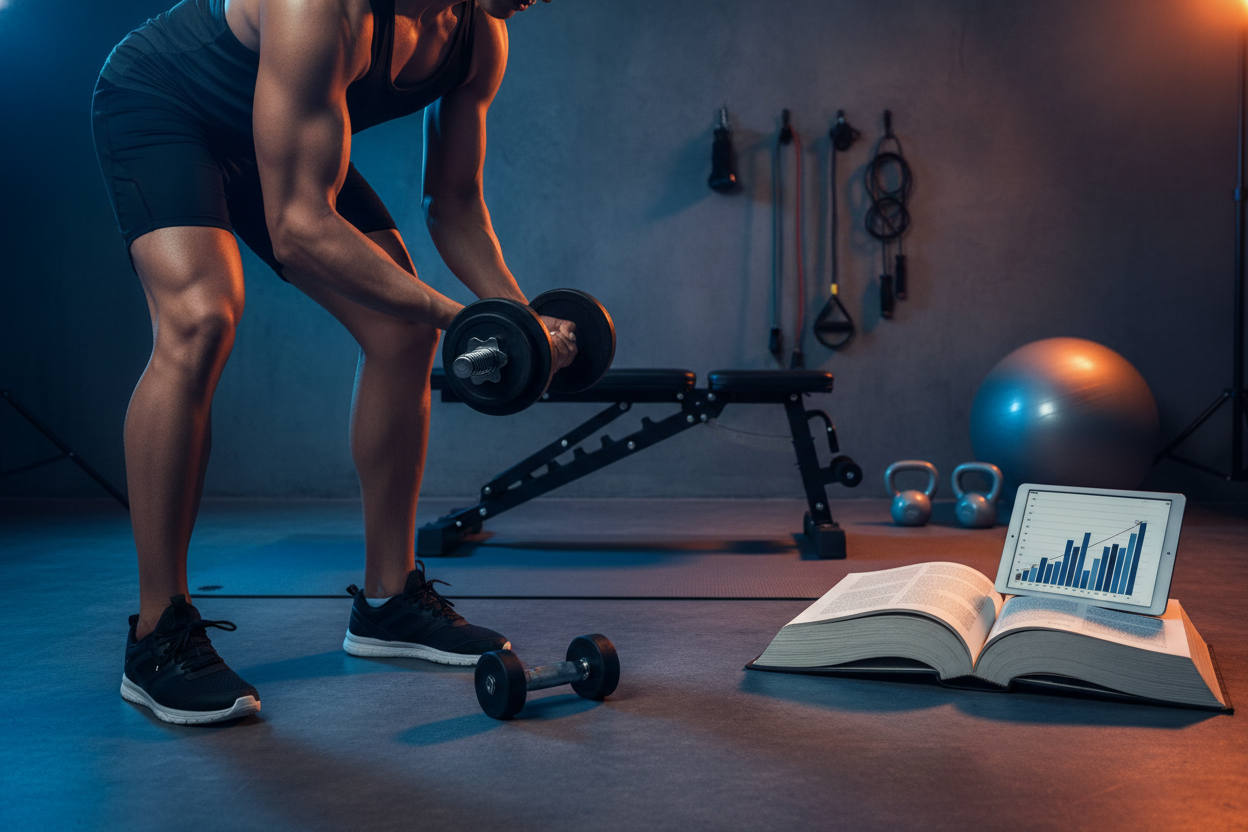
Also, regarding adjustable dumbbells: I used a set with a selector dial system. They are great, but nobody tells you about the "rattle." When you are doing bicep curls or shoulder presses, the plates shift slightly. It makes a clanking sound that can be jarring if you're used to the solid iron of a commercial gym. Furthermore, the dumbbells are physically long, even at light weights. I remember bruising my wrists multiple times trying to bring them up to my shoulders because the ends clipped each other. These are the unpolished realities of home training—you learn to adjust your grip and your setup, but don't expect it to feel exactly like the health club.
Conclusion
Building a home gym is a journey, not a one-time purchase. The best exercise equipment for beginners is the gear that removes friction from your life and encourages consistency. Start with a mat, a set of adjustable dumbbells, and a jump rope. Master those, and you will build a physique that rivals anyone training in a commercial facility.
Frequently Asked Questions
How much space do I need for a beginner home gym?
You need less space than you think. A 6x8 foot area is sufficient for most beginner exercise equipment. If you are using dumbbells and a mat, you just need enough room to lie down fully extended and enough width to extend your arms to the side without hitting a wall.
Is bodyweight training enough, or do I need equipment?
Bodyweight training is excellent, but workout equipment for beginners like resistance bands or dumbbells accelerates results. External weight allows you to target specific muscle groups (like the back and biceps) that are difficult to stimulate with body weight alone.
What is the first piece of equipment I should buy?
If you only buy one item, make it a set of adjustable dumbbells. They offer the most versatility for best at home workout equipment for beginners, allowing you to train legs, chest, back, shoulders, and arms effectively within a single square foot of floor space.